Wrike is enterprise-grade
maybe too enterprise
Wrike handles complex cross-functional work at scale. But if your team ships code and bills clients, you're paying for enterprise features you'll never touch. GitScrum gives tech teams exactly what they need.
Enterprise vs
developer-native
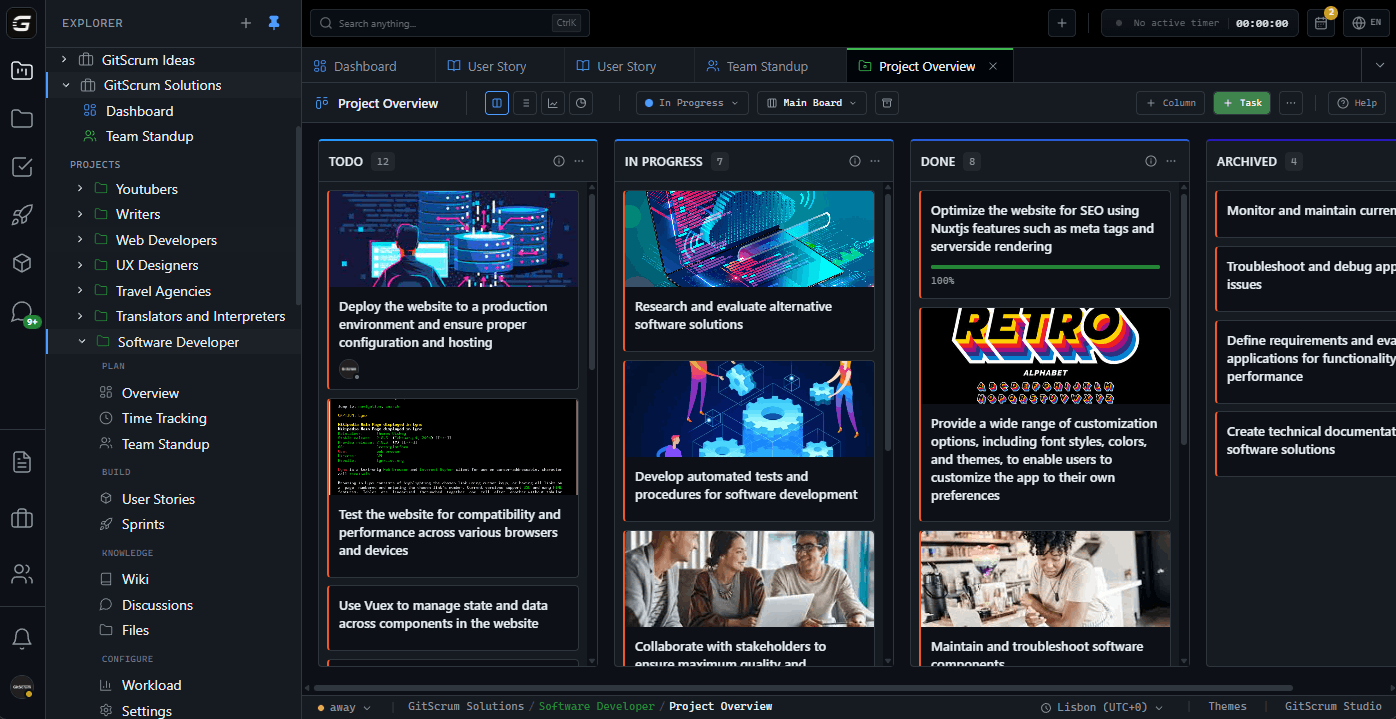
Wrike was built for marketing teams and PMOs managing cross-functional initiatives. GitScrum was built by developers for teams that write code. Different DNA, different outcomes.
GitScrum fits if you
- Ship code in release cycles
- Need GitHub/GitLab integration
- Bill clients for dev work
- Want delivery pace tracking built-in
Wrike fits if you
- Run cross-functional campaigns
- Need advanced resource planning
- Manage 500+ person orgs
- Want Gantt charts and workload views
"Wrike is enterprise PM software priced like it. I've seen agencies pay $25/user for features they'll never use: resource management, proofing, demand management. GitScrum gives agencies what they actually need—releases, time tracking, invoicing, client portals—without the enterprise overhead."
Renato Marinho
Founder, GitScrum
Feature comparison unfiltered
Wrike packs enterprise features. GitScrum focuses on what tech teams actually use daily.
| Capability | GitScrum | Wrike |
|---|---|---|
| Task Management | Boards + Lists | Everything views |
| Release Planning | Native delivery pace | Requires setup |
| Git Integration | GitHub, GitLab, Bitbucket | Limited |
| Gantt Charts | Basic timeline | Advanced native |
| Resource Management | Team capacity | Enterprise-grade |
| Time Tracking | Native | Native |
| Invoicing | Native | Not available |
| Client Portals | Native | External users |
| Custom Workflows | Simple | Highly complex |
| Proofing & Approvals | Task-based | Visual proofing |
| Automation | Core rules | 400+ automations |
| Reports | Release-focused | Enterprise analytics |
| Setup Complexity | Minutes | Days to weeks |
| Starting Price | $4.20/user | $9.80/user |
Features you pay for
but never use
Wrike's power comes with weight. If you're a 10-person dev shop, you're paying for enterprise machinery designed for Fortune 500 PMOs.
Similar price
different value
Per-user costs look similar. But Wrike's best features require Business or Enterprise tiers. GitScrum includes everything in one plan.
10 × $4.20
10 × $24.80 (Business)
- Custom workflows
- Resource management
- Time tracking
- Advanced reporting
- Proofing tools
Built around
how devs actually work
Wrike assumes project managers drive everything. GitScrum assumes developers ship code and need tools that stay out of their way while keeping stakeholders informed.
Built for different workflows
PMO-Centric vs Dev-Centric
Wrike centers on project managers coordinating work. GitScrum centers on developers shipping code with minimal overhead. PM tools exist—they just don't dominate.
Configuration vs Convention
Wrike lets you configure everything. GitScrum makes opinionated choices for dev workflows. Less flexibility, but you're productive in minutes instead of days.
Campaign vs Code
Wrike shines for marketing campaigns, creative projects, cross-functional launches. GitScrum shines for release-based software development with client billing.
Revenue Pipeline
Agencies need time → invoice → payment flow. GitScrum builds this natively. Wrike requires Harvest, QuickBooks, or custom integrations.
Tech teams billing for delivered work
Software agencies with retainer clients
Track release work, log time automatically, generate invoices from logged hours. The pipeline Wrike can't provide without 3 integrations.
Startups doing real agile
Two-week releases, story point estimation, delivery pace tracking, progress dashboard visualization. Actual scrum, not project plans pretending to be agile.
Freelance dev teams
Small teams that can't afford Wrike Business tier but need professional project management with client visibility.
Teams escaping configuration hell
If you spent weeks configuring Wrike and still can't get it right, GitScrum's opinionated approach is refreshing.
Where Wrike wins (honestly)
Marketing and creative ops
Campaign management, creative proofing, cross-team coordination. Wrike was built for this and it shows.
Large cross-functional programs
When you need 50 people across 5 departments aligned on one initiative, Wrike's enterprise machinery makes sense.
Resource-heavy planning
Advanced capacity planning, workload balancing across teams, utilization forecasting. Wrike's resource tools are exceptional.
Organizations needing 400+ automations
If you have complex multi-step approval chains and cross-project dependencies, Wrike's automation depth is unmatched.
Migrate without the drama
Your team can be productive on GitScrum in a single afternoon
Export Wrike data
Download projects as CSV/Excel
Map to GitScrum
Tasks become tasks, folders become projects
Connect your repos
Link GitHub, GitLab, or Bitbucket
Run your first release
Start shipping with delivery pace tracking
Questions from Wrike users
How do dev agencies use GitScrum instead of Wrike?
Wrike is built for enterprise PMOs—resource management, proofing, 400+ automations. Dev agencies need: Git integration, release boards, time-to-invoice flow. GitScrum delivers exactly that. A 10-person agency: Wrike Business at $248/month vs GitScrum at $89/month. You save $1,908/year and get features that actually match your workflow.
What's the real pricing difference between Wrike and GitScrum?
Wrike Pro: $9.80/user (limited). Wrike Business: $24.80/user (what most teams need). 10-person team on Business: $248/month. GitScrum: $89/month total with everything—releases, time tracking, invoicing, client portals. Annual savings: $1,908. Plus you avoid paying for enterprise features you'll never touch.
Can I import my Wrike workspace to GitScrum?
Yes. Export Wrike as CSV/Excel, import into GitScrum. Tasks become tasks, folders become projects, custom fields map where applicable. Most teams migrate in 3-4 hours. The relief? Instant—no more navigating enterprise complexity for agency-sized work.
Is GitScrum as powerful as Wrike for enterprise use?
No—and we don't try to be. Wrike excels at 500-person cross-functional organizations with complex resource planning. GitScrum excels at 5-100 person dev teams that ship code and bill clients. Different tools for different scales. If you're enterprise, stay with Wrike. If you're an agency, you're overpaying.
How long does it take to migrate from Wrike to GitScrum?
Data migration: 2-3 hours. Team productivity: same day. The biggest adjustment: going from Wrike's configuration-heavy approach to GitScrum's opinionated defaults. Most teams report feeling 'lighter' immediately—fewer menus, faster navigation, focused features.
When should I NOT switch from Wrike to GitScrum?
Stay with Wrike if: you manage 200+ people across departments, you need advanced Gantt charts with resource leveling, you require 400+ automation triggers, or visual proofing for creative assets is critical. Wrike's enterprise machinery justifies its cost at scale. Under 100 people shipping code? GitScrum is the right fit.
Built for teams that ship code
Wrike is excellent for enterprise work management. GitScrum is excellent for technical teams that need to deliver and bill.
No credit card required · Setup in 2 minutes