
Stop Tracking Tax Returns in Spreadsheets and Sticky Notes
If you're the managing partner or operations manager of a boutique accounting firm with 5-20 people, you know tax season is chaos. Return status lives in people's heads. Document checklists exist in 47 different formats. Partners interrupt preparers 12 times/day asking 'what's the status of the Johnson return?' You've looked at CCH Axcess Practice Management—but $800/user/month is insane for a 12-person firm. You need visual return tracking that your entire team will actually use.
The annual upgrade
One-time priceStop managing projects. Start directing agents, as a team.
Annual pricing per user multiplies as your team grows, and fifty seats means thousands of dollars every year. This upgrade puts your entire team on the full platform for one payment of $106.80.
- Up to 50 Pro seats on one annual plan
- One link connects Claude, Cursor, ChatGPT or any MCP client
- You just watch: every agent, every task, every outcome, in one workspace.
$2,500/year
Secure checkout with Stripe
Works on








Built for the agent era, at a price that will not come back.
Pricing
Plans for every stage of your team
Start free with your first projects. Go per user when the board grows, or lock in the full annual plan.
Pro
Most PopularPick your user count in your account
$3.36/user/mo
billed as $40.32/year · Save $10.08/user/year
Enterprise
Volume licensing, SSO and dedicated support for large orgs.
Customtailored to your needs
problem.identify()
The Real Cost of Spreadsheet-Based Return Tracking
Partners Interrupt Preparers 12x/Day = $3,200/Month in Lost Billable Hours
Every 'what's the status of X return?' interruption costs 10 minutes of context switching. 12 interruptions/day × 10 min × 8 preparers = 16 hours/day of lost focus. During 4-month tax season: 16h × 20 days × 4 months = 1,280 hours. At $100/hour realized rate = $128,000/season in lost productivity. Not including the partner's time asking these questions because status doesn't exist in a shared system.
Document Checklists in 8 Different Formats = $4,800/Month in Unbilled Time
Senior preparer uses Excel. Junior uses paper checklist. Partner has Google Doc. New hire asks for template—nobody knows which version is current. Result: 2 hours/week per preparer reconciling document status. 8 preparers × 2h × 4 weeks × $150/hour = $9,600/month in unbilled administrative time chasing down what documents have actually been received.
Missing K-1s Block 40% of Individual Returns in Final Week = Extension Penalty Risk
Wednesday before April 15. Partner discovers 85 individual returns are waiting on K-1s from partnership returns that haven't been completed. Scramble to file extensions. Problem: extensions mean clients get tax bills they didn't budget for (estimated payments shift timing). Angry clients. Preventable if dependency tracking showed which partnership returns needed priority completion 6 weeks earlier.
Senior Preparer Has 180 Returns / Junior Has 45 = Burnout + Turnover
No workload visibility. Senior preparer inherited all complex returns over 3 years. Works 80-hour weeks during tax season while junior preparer is underutilized. Senior burns out, quits in May. Recruitment cost: $15,000. Training cost: 6 months to full productivity. Could have been prevented with workload rebalancing in January.
Sound familiar?
See how GitScrum handles this in 2 minutes.
solution.implement()
Visual Tax Season Pipeline Your Entire Team Will Use
Kanban Board = Partners Stop Interrupting
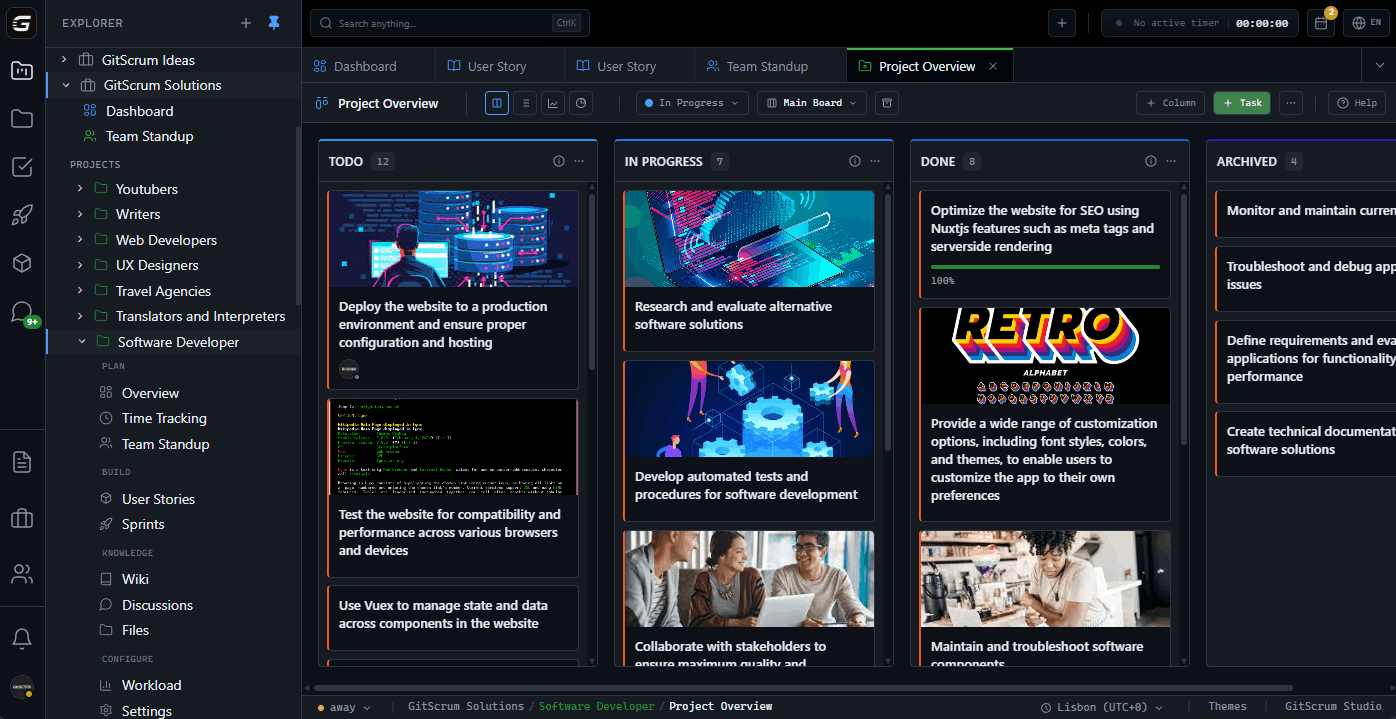
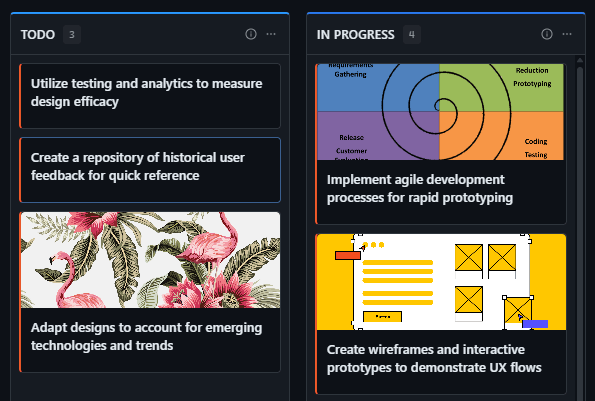
Every return is a card. Columns: Pending Documents → In Preparation → Partner Review → Awaiting Signature → Filed. Partners open the board instead of asking 'what's the status?' Preparers move cards as work progresses. Update takes 5 seconds. Board is always current. No more 12 interruptions/day.
Document Checklist Per Client = One Source of Truth
Standard checklist template: W-2s ☐, 1099s ☐, K-1s ☐, Prior return ☐, ID verification ☐. Check items as documents arrive—from any channel. Card shows 'Documents: 7/11 received.' Everyone uses same format. Preparation starts only when checklist is complete. No more hunting through email to verify what's missing.
Linked Cards for K-1 Dependencies = No April Surprises
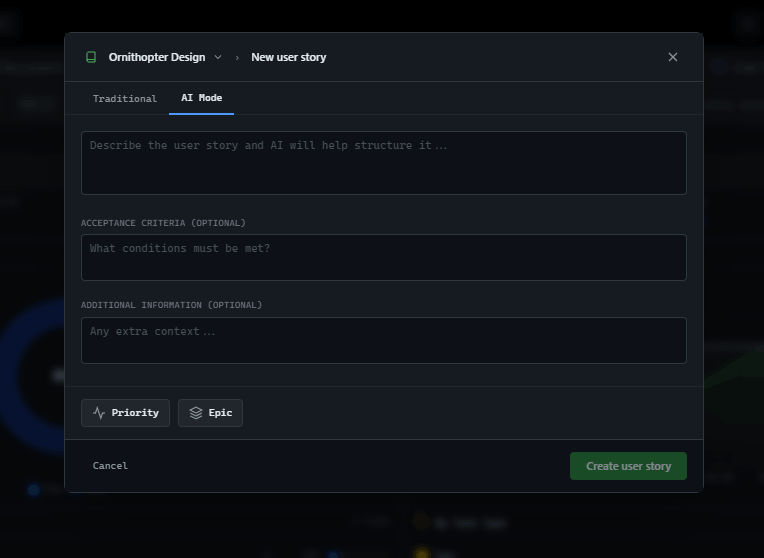
Link individual return cards to their partnership K-1 source. Filter: 'Show individual returns blocked by incomplete partnership returns.' In January, run the filter. Prioritize partnership completion that unblocks the most individual returns. No scrambling the week of April 15 because you can see the dependency chain in January.
Workload View = Prevent Burnout Before It Happens
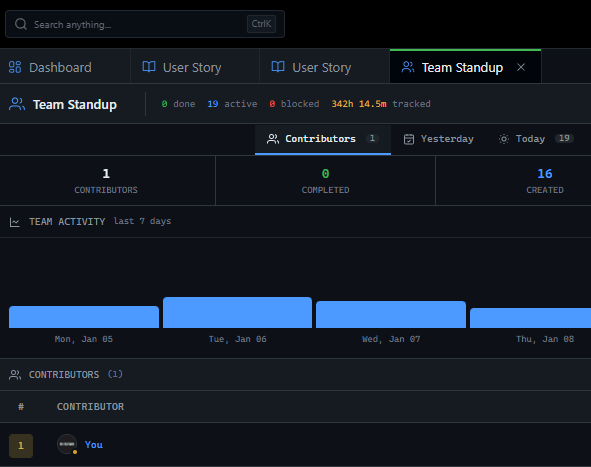
Dashboard shows: Sarah has 180 returns (42 complex), Mike has 65 returns (8 complex). Rebalance in January, not March. Filter by deadline, complexity, return type. Identify who's overloaded before the final push. Prevent the $15,000 replacement cost of losing your senior preparer to burnout.
These solutions work together. Try them today.
Team size GitScrum is built for
For teams up to 2 users
Per user, per month
"We stopped losing hours to status meetings. Now everyone sees progress in real-time."
Sarah Chen
Operations Lead, 15-person team
Frequently Asked Questions
Still have questions? Contact us at customer.service@gitscrum.com
We already have CCH Practice Management. Why switch?
Don't switch. If you're paying $800/user/month for CCH and using its features, keep it. GitScrum is for firms who can't justify $10K/month for practice management software and are stuck tracking returns in Excel. If your alternative is spreadsheets, not CCH—GitScrum is the right fit.
Does this integrate with tax prep software?
No direct integration with ProSystem, UltraTax, or Drake. GitScrum tracks the workflow around returns—document collection, status, assignments—not the return preparation itself. Think of it as replacing your Excel tracking spreadsheet, not your tax software.
How do we handle different return types?
Use separate boards or swimlanes: Individual, Partnership, S-Corp, Trust. Each with appropriate columns for their workflow. Filter by return type when partners want to see specific categories. Dashboard shows totals across all types.
What about client portal for document collection?
GitScrum doesn't have a client-facing document upload portal. You'd still use your current intake method (email, ShareFile, SmartVault). GitScrum tracks what's been received via checklists—not the actual document collection. If you need client portal, keep using your current solution alongside GitScrum.
Ready to solve this?
Start free, no credit card required. Cancel anytime.