
Stop Coordinating Infrastructure Changes Through Slack Threads
If you're the DevOps lead or CTO of a tech company with 5-20 people, you know coordinating infrastructure changes through Slack is chaos. Change requests get lost in threads. Someone deploys to production without telling the team. By the time you standardize ITIL/CAB process, your team revolts because it's too heavy for a small company. You need something in between—lightweight change management that your team will ACTUALLY use.
The annual upgrade
One-time priceStop managing projects. Start directing agents, as a team.
Annual pricing per user multiplies as your team grows, and fifty seats means thousands of dollars every year. This upgrade puts your entire team on the full platform for one payment of $106.80.
- Up to 50 Pro seats on one annual plan
- One link connects Claude, Cursor, ChatGPT or any MCP client
- You just watch: every agent, every task, every outcome, in one workspace.
$2,500/year
Secure checkout with Stripe
Works on








Built for the agent era, at a price that will not come back.
Pricing
Plans for every stage of your team
Start free with your first projects. Go per user when the board grows, or lock in the full annual plan.
Pro
Most PopularPick your user count in your account
$3.36/user/mo
billed as $40.32/year · Save $10.08/user/year
Enterprise
Volume licensing, SSO and dedicated support for large orgs.
Customtailored to your needs
problem.identify()
The Real Cost of Coordinating Changes Through Slack
Undocumented Dependencies Break Production at 2 AM = $4,800 + Customer Churn
Saturday 2 AM. Payment API is down. 6 engineers pulled into Slack war room (weekend 1.5x rate). 4 hours to identify root cause: someone deployed a 'small database schema change' Friday 6 PM without knowing payment service depended on that table. Cost: 6 engineers × 4h × $200/h = $4,800. Worse: 2 high-value customers couldn't complete checkout during outage. The dependency map exists... somewhere in a Confluence page from 2022 that nobody updated.
8 Hours/Week in Status Meetings Nobody Wants
Monday: 1-hour CAB meeting to review changes. Tuesday: 30-min deployment sync. Wednesday: incident review. Thursday: another change review. Friday: release planning. Your DevOps team of 8 people spends 8 hours/week in meetings just to coordinate who's deploying what. That's 1 full engineer-day per week = $800/week = $3,200/month = $38,400/year burned in meetings. And urgent changes still bypass the process because they can't wait for Monday's meeting.
Post-Mortems Get Skipped = Same Incident Repeats in 3 Months
Incident resolved at 4 AM. Team goes to sleep. Post-mortem scheduled for next week. Two weeks later, nobody remembers the details. Post-mortem becomes 15 minutes of 'we should document this better.' Action items never get done. 3 months later: exact same incident. You've now paid for this incident twice. Each repeat: $4,800 + reputation damage + team burnout.
New Hire Takes 3 Weeks to Understand 'Who Owns What'
New SRE joins. Asks: 'Who owns the user-auth service?' Answer: 'Check Slack, maybe ask Pedro, or look at the old Confluence page.' 3 weeks of context-gathering before they can be productive on-call. With 20% annual turnover in DevOps roles, that's 3 weeks × number of new hires × $5,000/week in reduced productivity. For a 10-person team with 2 hires/year = $30,000/year in onboarding friction.
Sound familiar?
See how GitScrum handles this in 2 minutes.
solution.implement()
Lightweight Change Management That Your Team Will Actually Use
Change Request Board (Replaces Slack Threads)
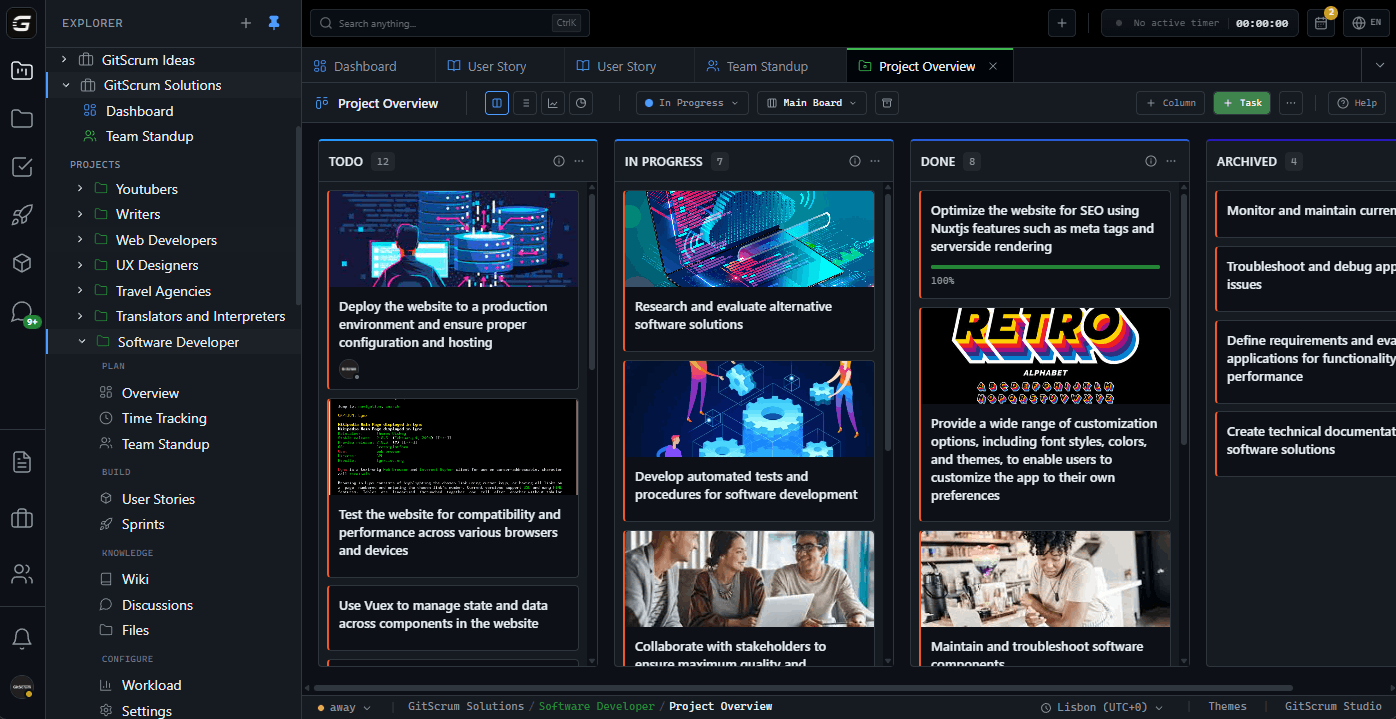
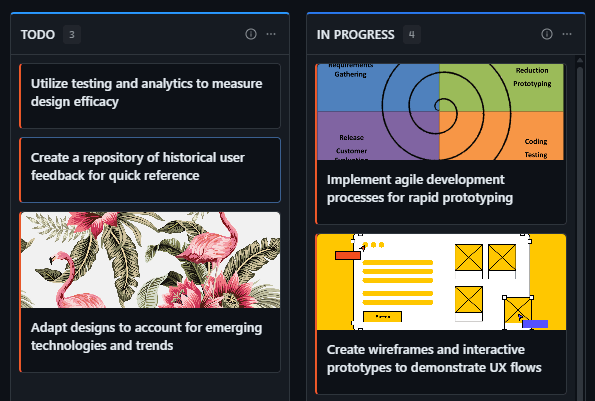
Every infrastructure change becomes a card. Who's deploying, what's changing, what depends on it, rollback plan. Standard changes get fast-tracked (1 approver). High-risk changes require documented impact assessment. Urgent changes have expedited path—single approver from on-call list, mandatory post-change documentation within 24h. Your team sees what's deploying this week in one view.
Dependency Map (Single Source of Truth)
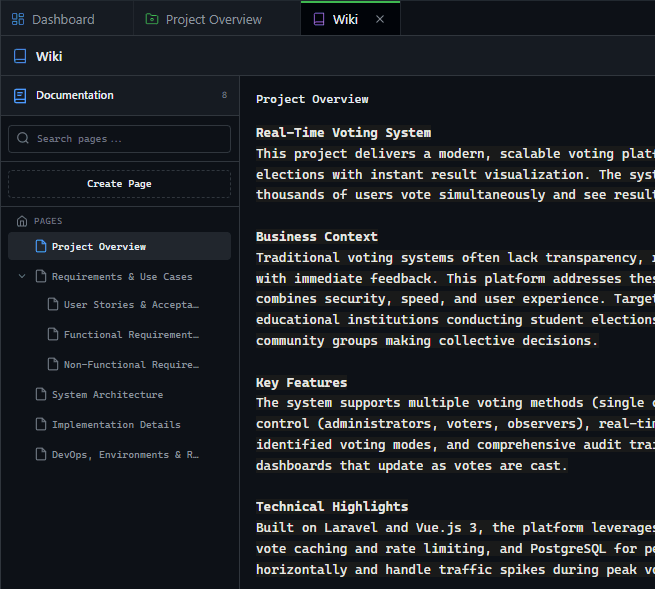
Document service dependencies in the wiki: upstream systems, downstream consumers, impact scope. Before deploying, check the dependency map. During incidents, reference it. When new hire asks 'who owns user-auth?'—it's documented. One source of truth that stays current because it's part of the change process, not a separate documentation task.
Incident Response Runbooks (No Guessing at 3 AM)
On-call engineer opens the runbook for the specific alert type. Step-by-step response documented. Decision thresholds clear: 'If error rate > 5% for > 2 minutes, escalate to senior on-call.' 'If database CPU > 90%, trigger read replica failover.' No guessing at 3 AM about what to do next.
Post-Incident Tasks That Actually Get Done
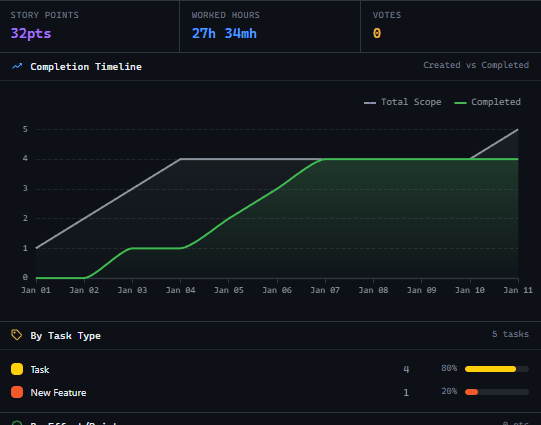
When incident resolves, post-mortem task auto-creates. 72-hour deadline. Template: what happened, why, what we'll change. Action items become tracked tasks with owners and due dates. If action item isn't done in 2 weeks, it escalates. No more 'we should document this better' that never happens.
These solutions work together. Try them today.
Team size GitScrum is built for
For teams up to 2 users
Per user, per month
"We stopped losing hours to status meetings. Now everyone sees progress in real-time."
Sarah Chen
Operations Lead, 15-person team
Frequently Asked Questions
Still have questions? Contact us at customer.service@gitscrum.com
How does this integrate with CI/CD pipelines?
GitScrum tracks the human workflow around changes: approvals, documentation, coordination. Your Jenkins/GitHub Actions/ArgoCD runs the actual deployments. Link commits to change requests for traceability. When someone asks 'what changed before this incident?'—you can trace it.
We already have Jira. Why switch?
Jira Service Management is built for enterprise ITSM with ITIL compliance. If your 15-person team is drowning in Jira workflows, request types, and approval chains designed for 500-person IT departments—GitScrum is the lightweight alternative. Track changes without the enterprise overhead.
What about emergency changes at 2 AM?
Emergency changes have expedited path: single approver from on-call list, abbreviated checklist, mandatory post-change documentation within 24 hours. The process exists for emergencies—just compressed. No excuse to bypass and 'document later' (which means never).
Is this ITIL compliant?
No. GitScrum is explicitly NOT an ITIL-compliant CAB tool. If you need SOC2 audit trails, PCI-DSS compliance workflows, or certified change management—use ServiceNow or Jira Service Management. GitScrum is for small teams who want lightweight change tracking without the compliance theater.
Ready to solve this?
Start free, no credit card required. Cancel anytime.