
Stop Discovering SME Delays 2 Weeks Before Course Launch and Paying $6,000 in Rush Video Reshoots
If you're the content director or founder at an EdTech company with 5-20 people, you know the chaos: course launches January 15th. On January 2nd, you discover 8 modules have no SME scripts—expert was 'too busy.' Video production is blocked. Instructional designer is idle. You rush to find a replacement SME or delay launch. Either way: $6,000 in wasted production time + $12,000 in delayed revenue. You've looked at Articulate 360, Absorb—but $800/month authoring tools when you just need to see 'where's the content?' is overkill. You need one board where every module, every SME deadline, and every production stage is visible.
The annual upgrade
One-time priceStop managing projects. Start directing agents, as a team.
Annual pricing per user multiplies as your team grows, and fifty seats means thousands of dollars every year. This upgrade puts your entire team on the full platform for one payment of $106.80.
- Up to 50 Pro seats on one annual plan
- One link connects Claude, Cursor, ChatGPT or any MCP client
- You just watch: every agent, every task, every outcome, in one workspace.
$2,500/year
Secure checkout with Stripe
Works on








Built for the agent era, at a price that will not come back.
Pricing
Plans for every stage of your team
Start free with your first projects. Go per user when the board grows, or lock in the full annual plan.
Pro
Most PopularPick your user count in your account
$3.36/user/mo
billed as $40.32/year · Save $10.08/user/year
Enterprise
Volume licensing, SSO and dedicated support for large orgs.
Customtailored to your needs
problem.identify()
The Real Cost of Spreadsheet-Based Course Development
Invisible SME Delays = $8,000/Course in Blocked Production
Subject matter expert says 'I'll have the script next week.' Content director marks 'in progress' in spreadsheet. Three weeks later: no script, no update. Video producer has been idle 2 weeks waiting. Discovery happens 2 weeks before launch. 2 weeks × $1,000/week video producer rate = $2,000 idle time + $6,000 rush reshoot costs = $8,000 per course with SME delays.
Late-Stage Feedback = $4,500/Course in Video Reshoots
SME reviews video after production is complete. 'Actually, this explanation is wrong.' Reshoot 3 modules. Original shoot: 2 days × $1,500/day = $3,000. Reshoot: half-day + editing = $1,500. Happens on 60% of courses because feedback loop isn't enforced at script stage. $4,500 in preventable reshoot costs per affected course.
Handoff Context Loss = $3,000/Course in Rework
SME sends script. Instructional designer reformats for learning objectives. Video team loses original SME notes. Editor asks 'What was the target audience?' Nobody knows—context died in email forwarding. 20 hours of rework research per course × $150/hour senior rate = $3,000 in preventable context recovery.
Launch Coordination Chaos = $2,400/Course in Delayed Revenue
Course is ready. LMS isn't configured. Marketing materials aren't done. Support documentation doesn't exist. Launch delays 2 weeks while non-content dependencies scramble. Average course revenue: $4,800/month. 2-week delay = $2,400 in delayed revenue per course launch.
Sound familiar?
See how GitScrum handles this in 2 minutes.
solution.implement()
Every Module Tracked, Every SME Deadline Visible, Every Launch On Time
Visual Content Pipeline = Zero SME Surprise
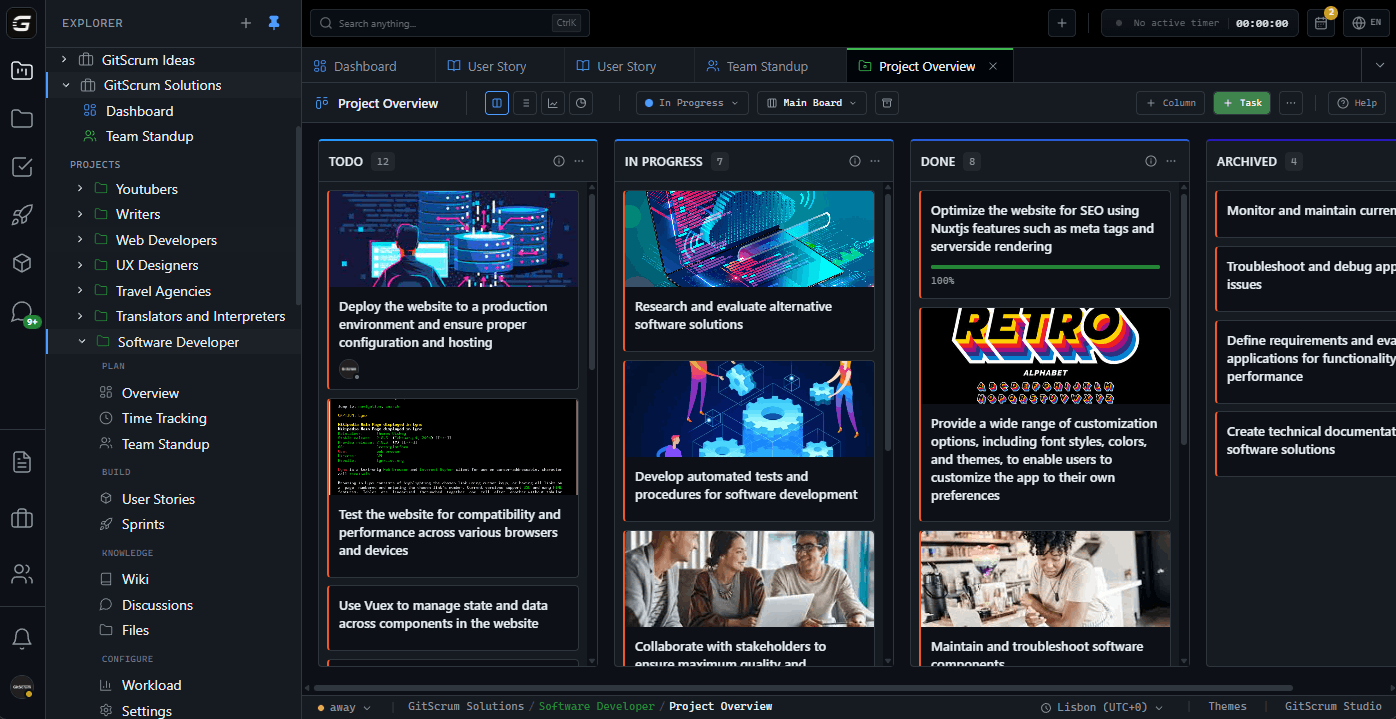
Every module is a card. Columns: SME Draft → ID Review → Script Approved → In Production → Post-Production → QA → Published. Content director sees all 25 modules at once: 10 awaiting SME, 8 in ID review, 5 in production, 2 in QA. SME deadline overdue? Card turns red BEFORE production blocks.
Sprint-Based Course Cycles = Realistic Timelines
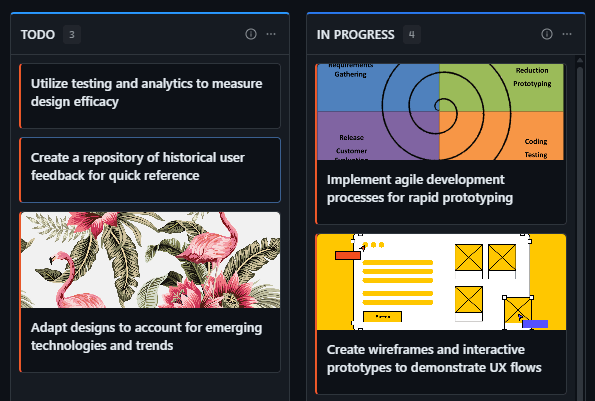
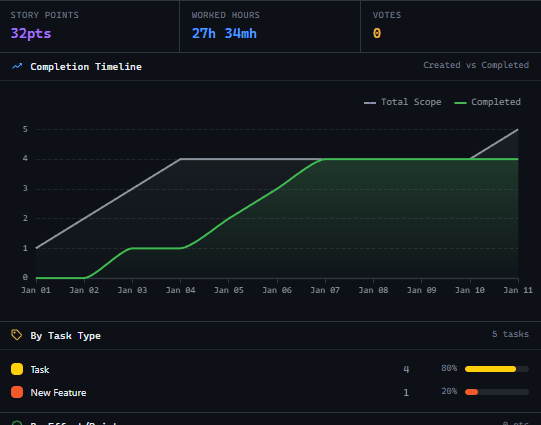
Plan course development in 2-week sprints. SME commits: 'I'll deliver 3 scripts this sprint.' At sprint end: delivered 2, 1 blocked. Velocity tracking shows SME typically delivers 60% of commitments. Plan future courses with realistic SME availability—not optimistic promises.
Threaded Context on Every Module = Zero Information Loss
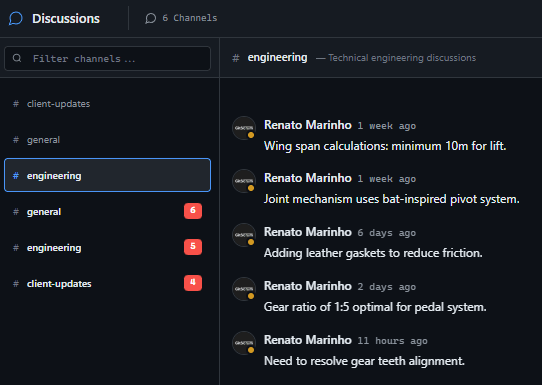
Learning objectives, target audience notes, SME source materials, stakeholder feedback—all attached to the module card. When video team picks up the card, context travels with it. No more 'Who was this course for again?' conversations.
Launch Checklist Dependencies = Complete Launches
Create launch readiness board: Content complete, LMS configured, Marketing ready, Support docs done, Pricing set. Link dependencies. See at a glance: content is green, marketing is red. Don't announce launch until everything is ready.
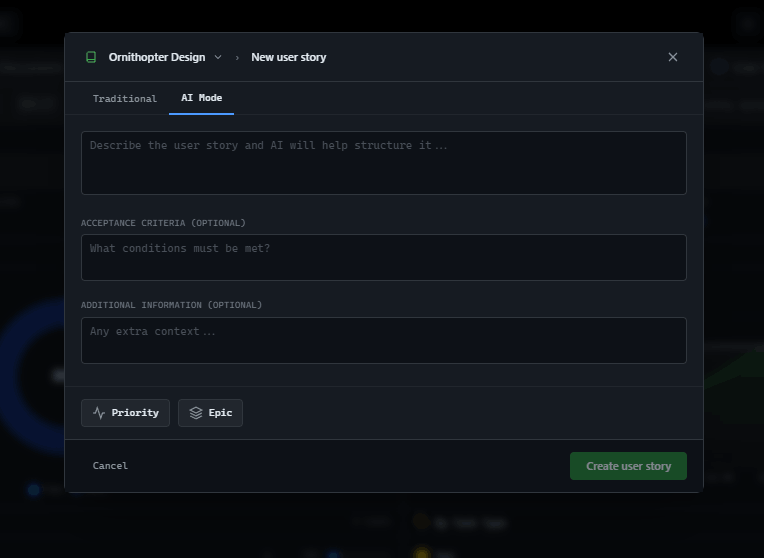
These solutions work together. Try them today.
Team size GitScrum is built for
For teams up to 2 users
Per user, per month
"We stopped losing hours to status meetings. Now everyone sees progress in real-time."
Sarah Chen
Operations Lead, 15-person team
Frequently Asked Questions
Still have questions? Contact us at customer.service@gitscrum.com
Can external SMEs access GitScrum without a full license?
Yes. Invite SMEs with limited access to only their assigned modules. They see their deadlines, upload scripts, respond to feedback—without accessing your full project workspace. No license cost for guest collaborators with restricted access.
How do you handle different content formats (video, text, interactive)?
Create custom columns for each format's production stages. Video content: Script → Shoot → Edit → QA. Text content: Draft → Edit → Review. Interactive: Design → Develop → Test. Same project, different pipelines by content type. All visible on one board.
What about integrating with our LMS (Teachable, Thinkific, etc.)?
GitScrum manages pre-publish workflow—getting content through development. Once modules are approved, your team publishes to your LMS as normal. The board tracks 'Published to LMS' as a completion stage, not a direct integration.
Can we manage multiple courses simultaneously?
Yes. Each course has its own board and sprint cycle. Portfolio view shows all courses with their launch dates, completion status, and bottlenecks. Identify resource conflicts across your entire course catalog.
Ready to solve this?
Start free, no credit card required. Cancel anytime.