
Stop Losing $36,000/Year in ECO Implementation Failures and Recurring Quality Issues
Your 15-person precision machining shop runs 3 CNC cells and handles 40+ active jobs. Engineering approved a tolerance change 6 weeks ago, but second shift is still running the old spec—quality caught it after 200 parts shipped. Same operator makes the same setup error every month, but nobody tracks patterns. Tooling change scheduled for Wednesday but production wasn't told until Monday afternoon. You need production coordination that spans shifts and departments—not MES software that costs $100,000 and takes a year to implement.
The annual upgrade
One-time priceStop managing projects. Start directing agents, as a team.
Annual pricing per user multiplies as your team grows, and fifty seats means thousands of dollars every year. This upgrade puts your entire team on the full platform for one payment of $106.80.
- Up to 50 Pro seats on one annual plan
- One link connects Claude, Cursor, ChatGPT or any MCP client
- You just watch: every agent, every task, every outcome, in one workspace.
$2,500/year
Secure checkout with Stripe
Works on








Built for the agent era, at a price that will not come back.
Pricing
Plans for every stage of your team
Start free with your first projects. Go per user when the board grows, or lock in the full annual plan.
Pro
Most PopularPick your user count in your account
$3.36/user/mo
billed as $40.32/year · Save $10.08/user/year
Enterprise
Volume licensing, SSO and dedicated support for large orgs.
Customtailored to your needs
problem.identify()
The $36,000/Year Leak in Every Small Machine Shop
ECO Implementation Failures = $14,000/Year in Scrap and Rework
Engineering approves spec change. It goes into PLM. But production never gets told the implementation date. Second shift runs old setup for 3 days. 200 parts × $40/part material = $8,000 scrap. Plus 40 hours rework at $150/hour = $6,000. 2 incidents/year = $14,000. Design thinks it's implemented; production never heard about it.
Recurring Quality Issues = $12,000/Year in Hidden Costs
Same operator makes same setup error monthly—but it's in different paper NCRs that nobody correlates. Same tool insert causes out-of-tolerance every 3 weeks—but nobody tracks tool life data. 4 systemic issues × $3,000/year each in scrap, rework, and expedited shipping = $12,000/year in preventable problems that repeat because nobody sees patterns.
Shift Handoff Blindness = $6,000/Year in Lost Production
First shift left urgent notes about tool wear on Machine 4. Second shift didn't see them—verbal handoff got interrupted. Machine crashes, needs 8 hours repair. Plus job delayed, expedite costs $2,000. 3 incidents/year × $2,000 average = $6,000. Information dies between shifts.
Cross-Department Coordination Failures = $4,000/Year in Disruption
Tooling change scheduled for Wednesday. Maintenance knows. Engineering knows. Production doesn't know until Monday 4pm—they'd planned critical job Wednesday morning. Reschedule scramble costs 8 hours manager time. Rush overtime for makeup production. 4 incidents/year × $1,000 average = $4,000 in preventable chaos.
Sound familiar?
See how GitScrum handles this in 2 minutes.
solution.implement()
Production Coordination That Spans Shifts and Departments
ECO Implementation Board with Cross-Department Visibility
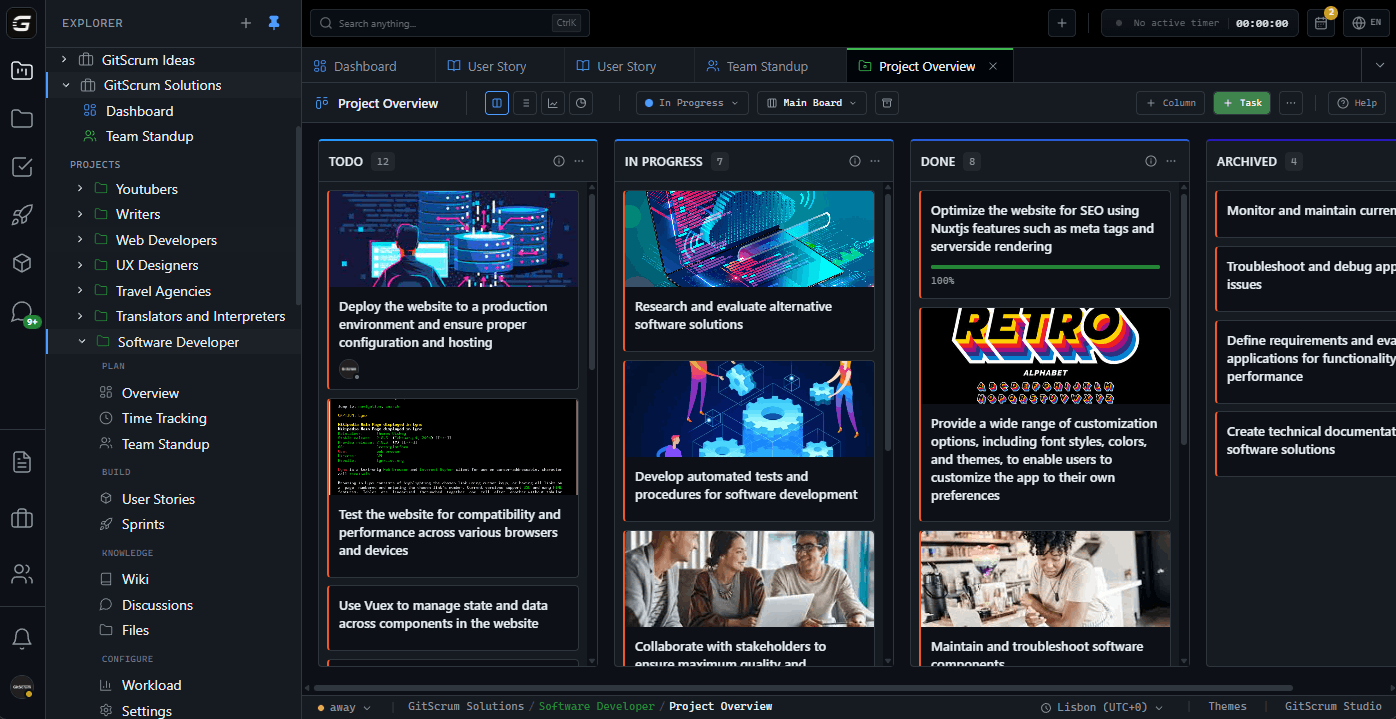
Every ECO becomes a task visible to Engineering, Quality, and Production. Engineering sets implementation date. Production confirms they're ready. Quality schedules first-article inspection. Nobody signs off until all departments confirm. No more 'we didn't know it was changing.'
Quality Issue Tracking with Pattern Analysis
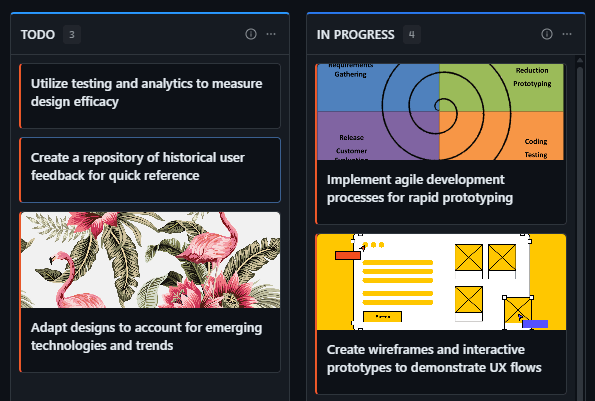
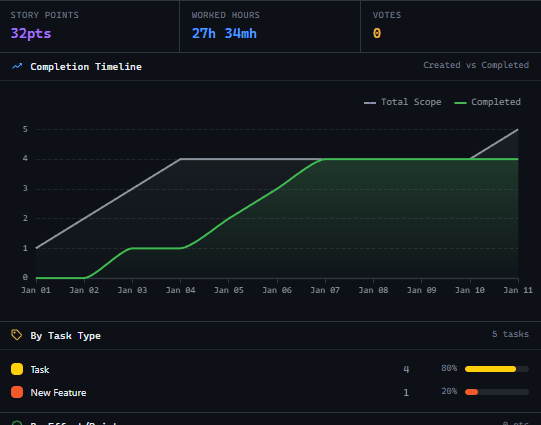
Every NCR logged with operator, machine, tool, job number tags. Weekly report shows patterns: 'Operator Smith has 3x higher setup error rate on Machine 4' becomes training action. 'Insert X from Vendor Y fails 2x faster' becomes purchasing action. Turn firefighting into root cause elimination.
Digital Shift Handoff That Persists
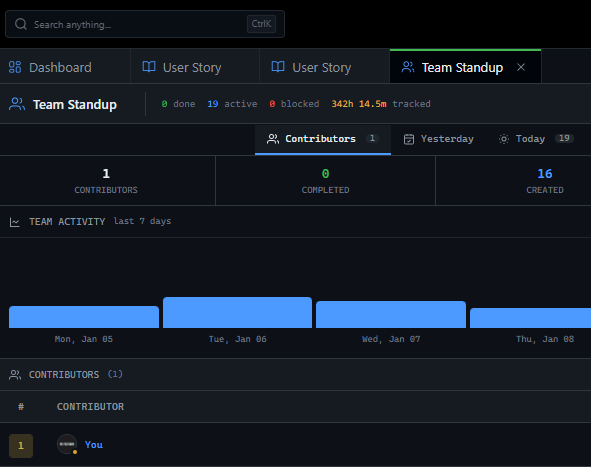
Outgoing shift documents incomplete jobs, machine issues, urgent notes. Incoming shift sees exactly what needs attention. Notes don't get lost or interrupted. Supervisor reviews handoff quality. Accountability is clear when things fall through cracks.
Cross-Department Calendar with Production Impact
Maintenance schedules downtime. Engineering schedules ECO implementation. Tooling schedules changes. Production sees all of it on one calendar—with lead time to adjust schedules. No more Monday afternoon surprises about Wednesday disruptions.
These solutions work together. Try them today.
Team size GitScrum is built for
For teams up to 2 users
Per user, per month
"We stopped losing hours to status meetings. Now everyone sees progress in real-time."
Sarah Chen
Operations Lead, 15-person team
Frequently Asked Questions
Still have questions? Contact us at customer.service@gitscrum.com
Does this replace our ERP or PLM system?
No. Your ERP handles quoting, orders, and invoicing. Your PLM stores drawings and revision control. GitScrum handles the human coordination layer: who needs to do what, when, and making sure information flows between departments and shifts. They work together—each system does what it's best at.
How do shop floor operators access the system?
Mobile-friendly interface works on tablets and smartphones. Operators update job status, log quality issues, and read shift notes from the floor. No running to a computer. Supervisors see real-time progress. You can use shared tablets at workstations or personal devices with the web app.
Can we track quality issues by operator, machine, and job?
Yes. Tag every NCR with multiple dimensions: which operator, which machine, which tool, which job, which defect type. Weekly reports surface patterns automatically. Turn 'we have quality problems' into 'Operator A needs training on Machine 3 setups' or 'Tool insert brand X fails 2x faster than Y.'
What about AS9100 or ISO compliance documentation?
GitScrum provides full audit trail: who changed what, when, with timestamps. ECO sign-offs are documented. NCR resolution is tracked. Export logs for compliance audits. It won't replace your QMS but gives you the traceability data your QMS needs.
Ready to solve this?
Start free, no credit card required. Cancel anytime.