







Monday: team status meeting, 1 hour.
Tuesday: project sync, 45 minutes. Wednesday: cross-team coordination, 1 hour.
Thursday: stakeholder update, 30 minutes. Friday: sprint review, 1.5 hours.
That's nearly 5 hours per week just on status communication—and that's a light schedule compared to some organizations. The fundamental inefficiency is obvious: synchronous verbal communication is the slowest, most expensive way to share status information.
Every attendee trades an hour of their time to hear 5 minutes of relevant updates. Most of the meeting is waiting for information that doesn't apply to them.
Multiply this across every person, every meeting, every week. The aggregate cost is staggering—potentially hundreds of engineering hours per month spent in meetings that could be dashboards.
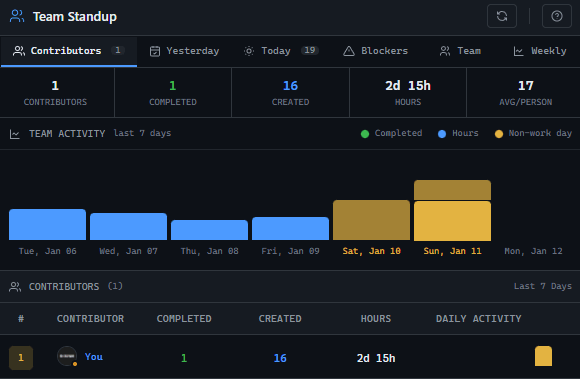
GitScrum makes status visible in real-time. Instead of waiting for meetings to hear what's happening, stakeholders check dashboards.
Instead of interrupting work to attend syncs, developers update tasks and move on. Meetings become optional, for discussion, not mandatory for information transfer.
The GitScrum Advantage
One unified platform to eliminate context switching and recover productive hours.


