The promise of integrations is beautiful: connect your tools and data flows seamlessly between them.
The reality is messier. Building the initial integration takes engineering time—understanding two APIs, handling authentication, mapping data models, managing errors.
Then the ongoing maintenance begins. The source tool updates their API, breaking your integration.
The destination tool changes their webhook format. OAuth tokens expire and need refresh logic.
Rate limits change without warning, causing silent failures. Schema changes invalidate your field mappings.
Organizations often underestimate this maintenance burden. A survey of engineering teams found that 20-30% of integration effort is initial build, while 70-80% is ongoing maintenance.
A team with 15 tools and 20+ integrations can easily spend 10-20 hours weekly just keeping integrations functional—time that should go to building product features. Worse, integration failures often go unnoticed until someone realizes data has been out of sync for days or weeks.
The project board has not reflected code changes. Time tracking has not synced to billing.
Notifications have not reached the right channels. By the time the failure is discovered, manual reconciliation is required.
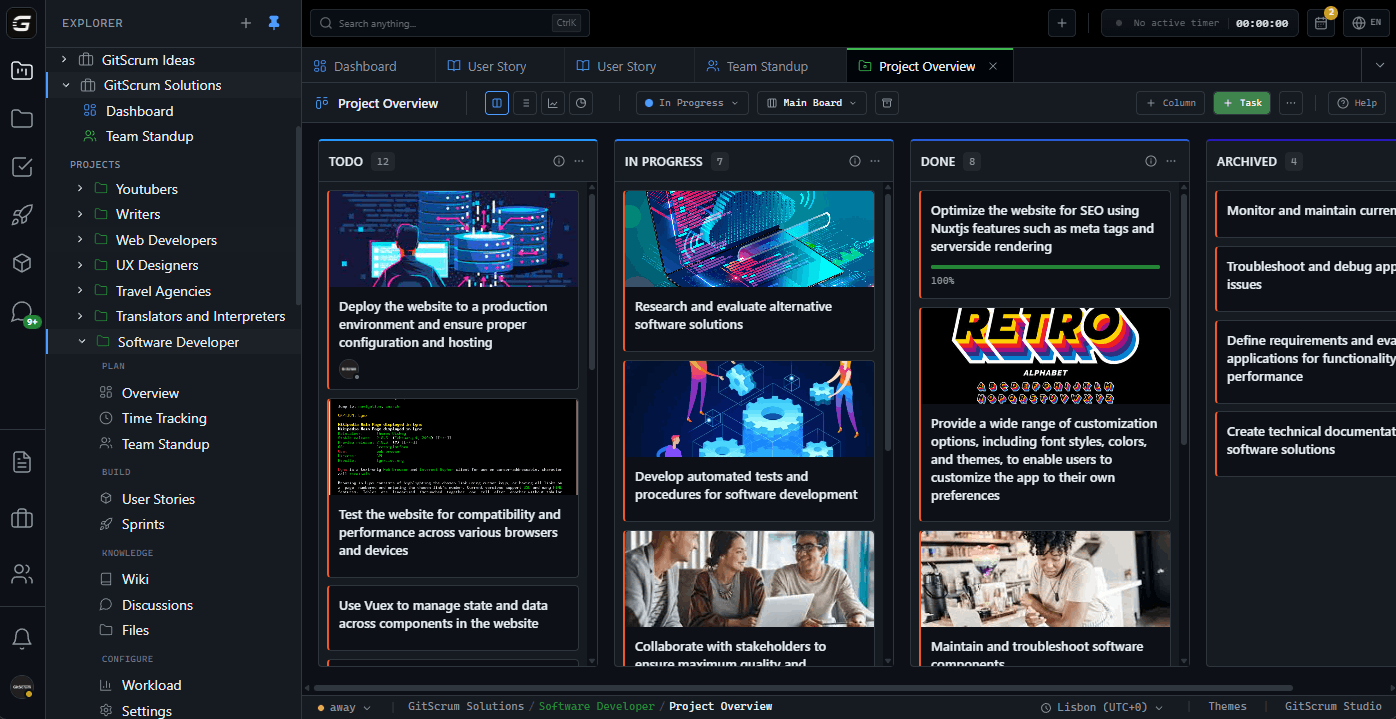
GitScrum eliminates integration maintenance by eliminating integrations. All functionality exists within one platform—project management, time tracking, team collaboration, analytics.
No APIs to maintain, no tokens to refresh, no mappings to update. The data is unified by design.
The GitScrum Advantage
One unified platform to eliminate context switching and recover productive hours.