
Move Fast Without Losing Track of Why
You're shipping weekly. Customers are asking for different features. The board wants to know your metrics. Experiments are running but nobody documented the hypothesis. You pivoted last month and half the team isn't sure what the new direction even is.
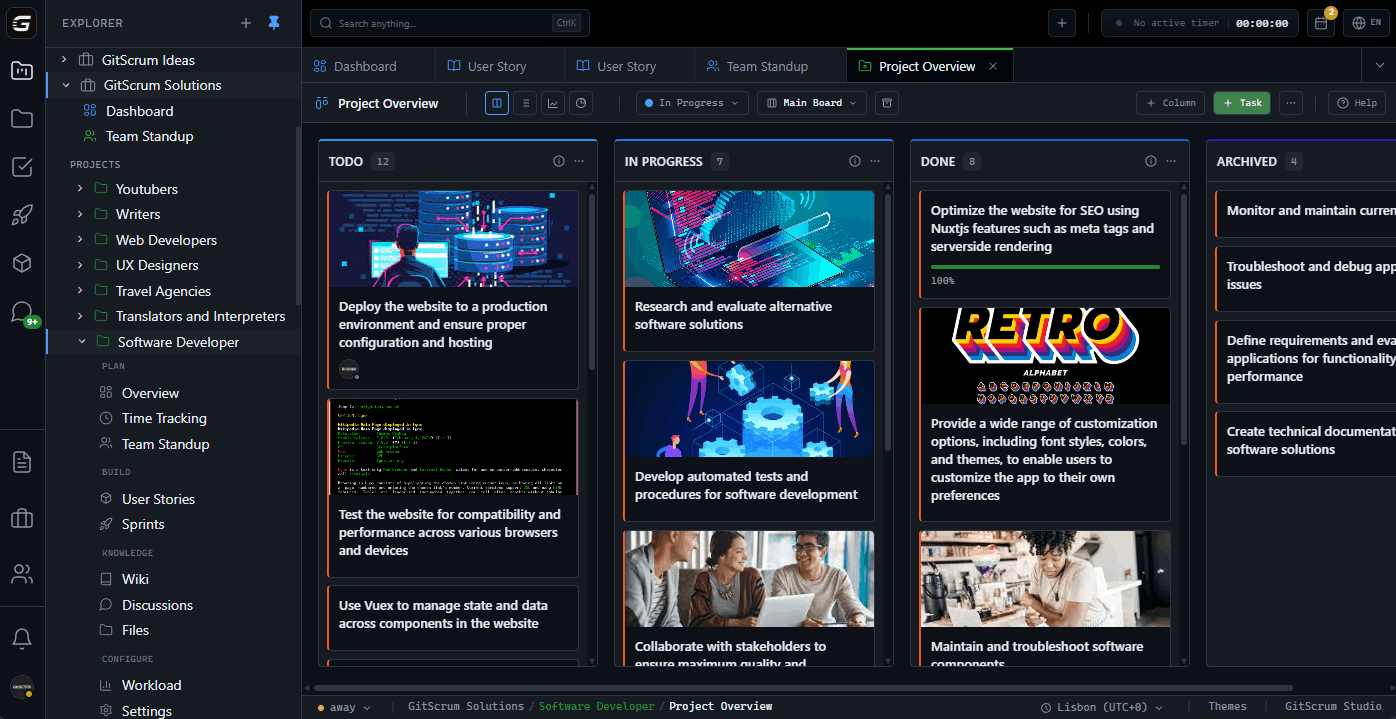
The annual upgrade
One-time priceStop managing projects. Start directing agents, as a team.
Annual pricing per user multiplies as your team grows, and fifty seats means thousands of dollars every year. This upgrade puts your entire team on the full platform for one payment of $106.80.
- Up to 50 Pro seats on one annual plan
- One link connects Claude, Cursor, ChatGPT or any MCP client
- You just watch: every agent, every task, every outcome, in one workspace.
$2,500/year
Secure checkout with Stripe
Works on








Built for the agent era, at a price that will not come back.
Pricing
Plans for every stage of your team
Start free with your first projects. Go per user when the board grows, or lock in the full annual plan.
Pro
Most PopularPick your user count in your account
$3.36/user/mo
billed as $40.32/year · Save $10.08/user/year
Enterprise
Volume licensing, SSO and dedicated support for large orgs.
Customtailored to your needs
problem.identify()
Why Early-Stage Gets Chaotic
Feature Request Overload
Every customer call generates feature requests. Some align with vision, some are edge cases for one user. Without systematic capture, you're either forgetting good ideas or building for one customer instead of the market.
Experiment Tracking Void
You launched the pricing experiment. Did conversion go up or down? What was the hypothesis? What did you actually change? When experiment ends, nobody can find the data to make a decision.
Strategic Context Loss
Why did we stop building Feature X and start Feature Y? Was that a pivot or just prioritization? New engineer joins and doesn't know which direction the company is actually going. Old context is mythology, not documentation.
Investor Update Scramble
Board meeting in days. Need metrics, progress, key decisions. Spend time reconstructing what happened last month instead of actually preparing the narrative. Information is scattered across Slack, Notion, spreadsheets.
Sound familiar?
See how GitScrum handles this in 2 minutes.
solution.implement()
Structured Startup Velocity
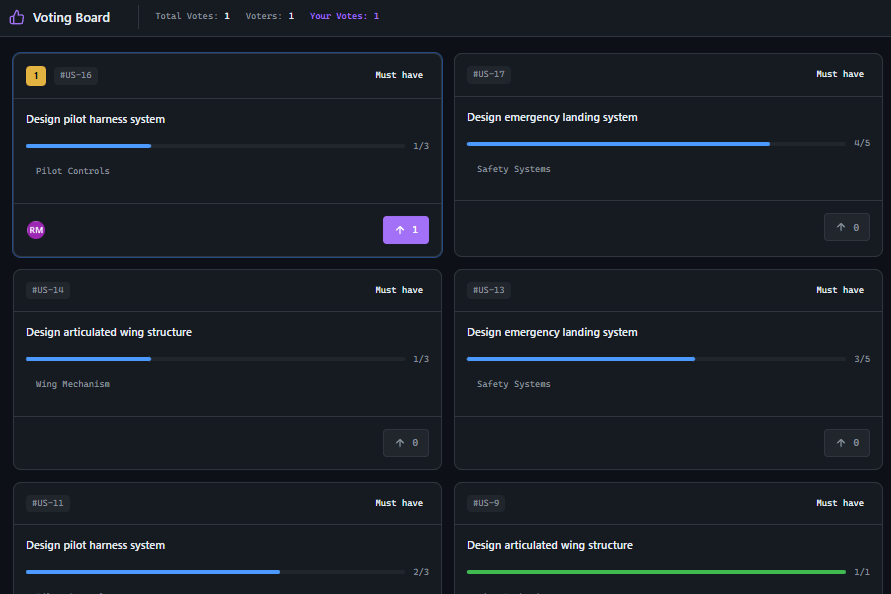
Customer Insight Voting
Capture every feature request. Tag by customer, by theme, by strategic fit. Team votes on priority. See patterns: many customers asked for X, one asked for Y. Build for the market, not the loudest voice.
Experiment Documentation
Every experiment has a card: hypothesis, success metric, start date, end date, results. Searchable history of what you tried. Make decisions based on data, not memory. Don't repeat failed experiments.
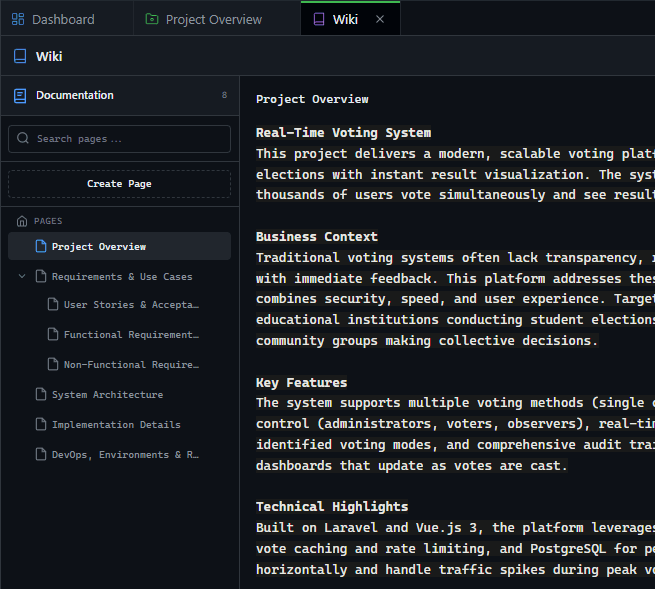
Strategic Decision Log
When you pivot, document why. When you deprioritize, capture the reasoning. New team members read the log, understand the journey. No more 'why did we do that?' conversations every month.
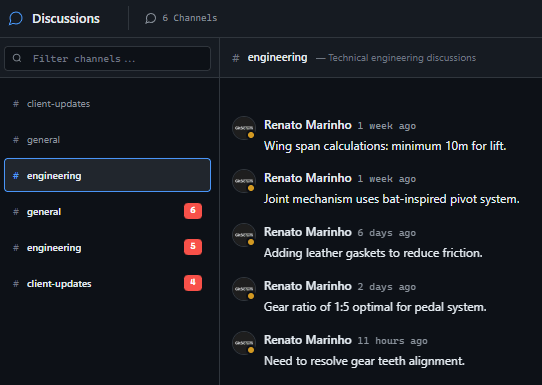
Investor-Ready Dashboards
Current sprint status, key metrics, recent decisions all in one view. When board meeting comes, export the summary. Spend time preparing narrative, not reconstructing facts.
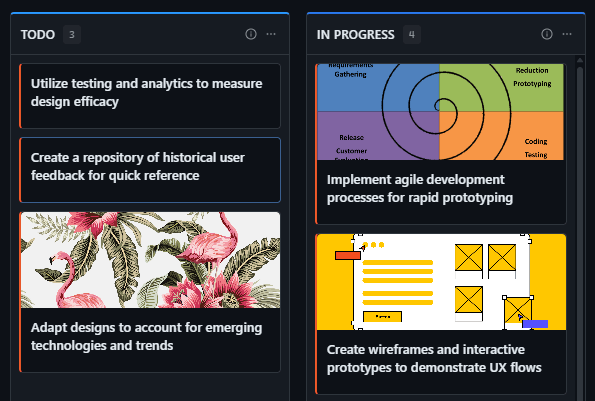
These solutions work together. Try them today.
Team size GitScrum is built for
For teams up to 2 users
Per user, per month
"We stopped losing hours to status meetings. Now everyone sees progress in real-time."
Sarah Chen
Operations Lead, 15-person team
Frequently Asked Questions
Still have questions? Contact us at customer.service@gitscrum.com
We need to move fast. Won't this slow us down?
Documenting as you go is faster than reconstructing later. A few minutes to capture a decision now saves hours reconstructing why you made it later. That's not process overhead—it's investment in institutional memory.
How do you handle rapid pivots?
Pivot is a documented decision, not a crisis. Create a discussion thread explaining what changed and why. Archive the old direction's tasks. Create new ones. The pivot becomes part of your story, not a confusing break in continuity.
Our team is small. Do we need project management?
Even with a small team, information gets lost. Someone is out sick, and their context goes with them. You hire a new person and spend a week explaining everything. GitScrum is lightweight enough for small teams, structured enough to scale.
Ready to solve this?
Start free, no credit card required. Cancel anytime.