The status report said 'green' last week.
It said 'green' the week before. Then, two days before launch: 'We need another three weeks.' Leadership is blindsided.
Customers were promised a date that can't be met. Executives have to explain the miss to the board.
Everyone looks bad. How did this happen?
Often, teams knew there were problems but didn't escalate. Maybe they hoped to catch up.
Maybe they feared the messenger would be shot. Maybe 'green' was easier to report than 'at risk.' Whatever the reason, the result is the same: stakeholders who should have had weeks to react got days—or hours.
This damages trust. Teams appear either incompetent (couldn't predict the problem) or dishonest (hid the problem).
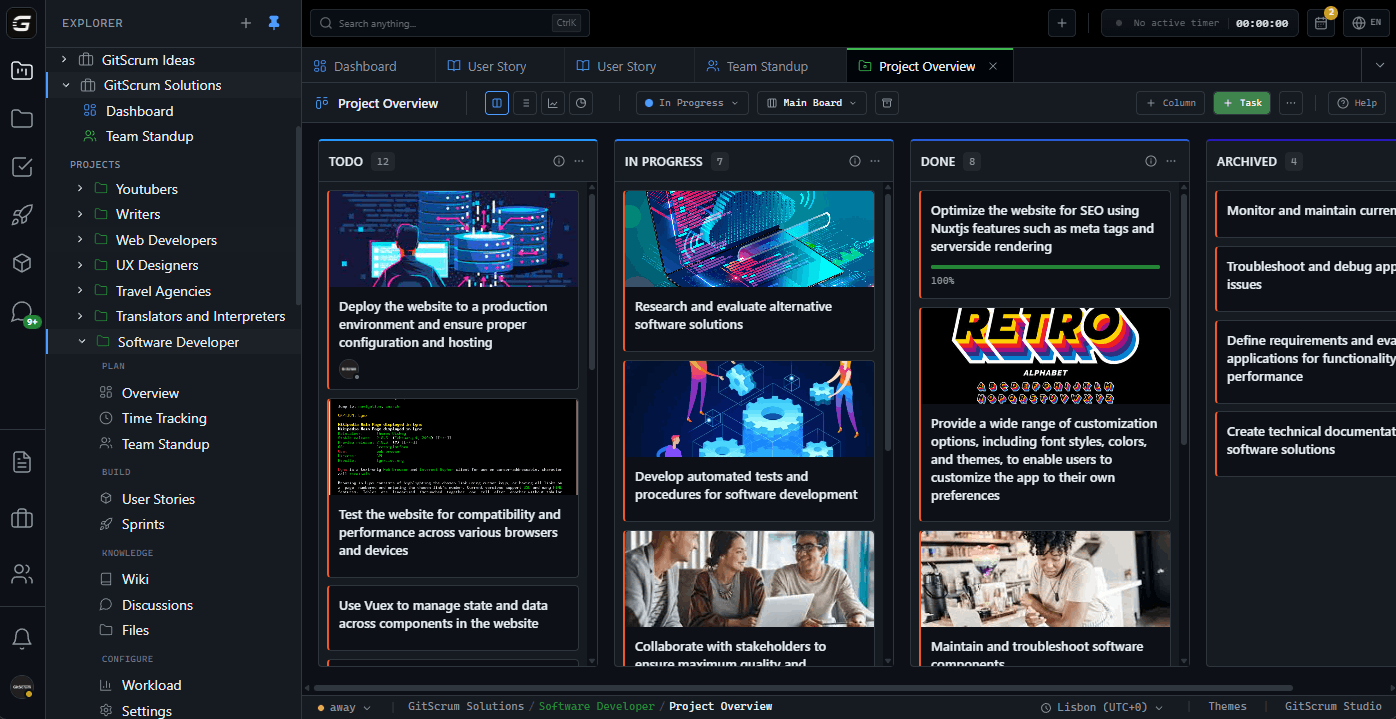
Neither perception is helpful for future credibility. GitScrum addresses this by making trajectory visible, not just current status.
When velocity data shows the team won't complete planned scope at current pace, that's visible weeks before the deadline—not days. Problems surface early enough to adjust scope, extend timelines, or add resources.
The GitScrum Advantage
One unified platform to eliminate context switching and recover productive hours.