VS Code

GitScrum for VS Code, Google Antigravity, Cursor and Windsurf!

GitScrum logo
Solution

Cultural Communication 2026 | Structured Fields End Misreads

Direct vs indirect. 'ASAP' = tomorrow or next week? German direct, American diplomatic, Japanese indirect. Structured fields with explicit priority, deadline. No interpretation. Free trial.

Cultural Communication 2026 | Structured Fields End Misreads

The German developer writes 'This approach won't work' in a code review.

The American developer writes back 'Thanks for the feedback! Just a few thoughts...' and proceeds to disagree diplomatically.

The German thinks the American is being passive-aggressive. The American thinks the German is being rude.

Neither is doing anything wrong—they're following different cultural communication norms. Add in the Japanese team member who says 'It might be difficult' (meaning 'no') and the Brazilian who uses lots of exclamation points (normal in Portuguese, seen as aggressive in some contexts).

Text-based communication strips out tone, facial expressions, and the shared cultural context that helps interpret messages. Remote global teams face this constantly.

Every Slack message is a potential misunderstanding. 'Can you take care of this?' might be a polite request, an urgent demand, or a suggestion—depending on who's interpreting it.

GitScrum addresses this through structured communication. When status updates, requests, and decisions follow explicit formats with clear fields for urgency, deadline, and context, there's less room for cultural interpretation.

The system creates shared norms that transcend individual cultural defaults.

The GitScrum Advantage

One unified platform to eliminate context switching and recover productive hours.

01

problem.identify()

The Problem

Direct vs indirect communication styles clash constantly

Text lacks tone cues that prevent misinterpretation

Urgency words mean different things to different cultures

Professional norms vary wildly (emojis, formality, etc.)

Small misunderstandings compound into relationship damage

02

solution.implement()

The Solution

Structured communication formats with explicit fields

Clear urgency and deadline indicators (not vague words)

Team norms documented and visible

Context-rich requests that reduce interpretation guessing

Shared vocabulary for status and priority

03

How It Works

1

Structured Requests Replace Ambiguous Messages

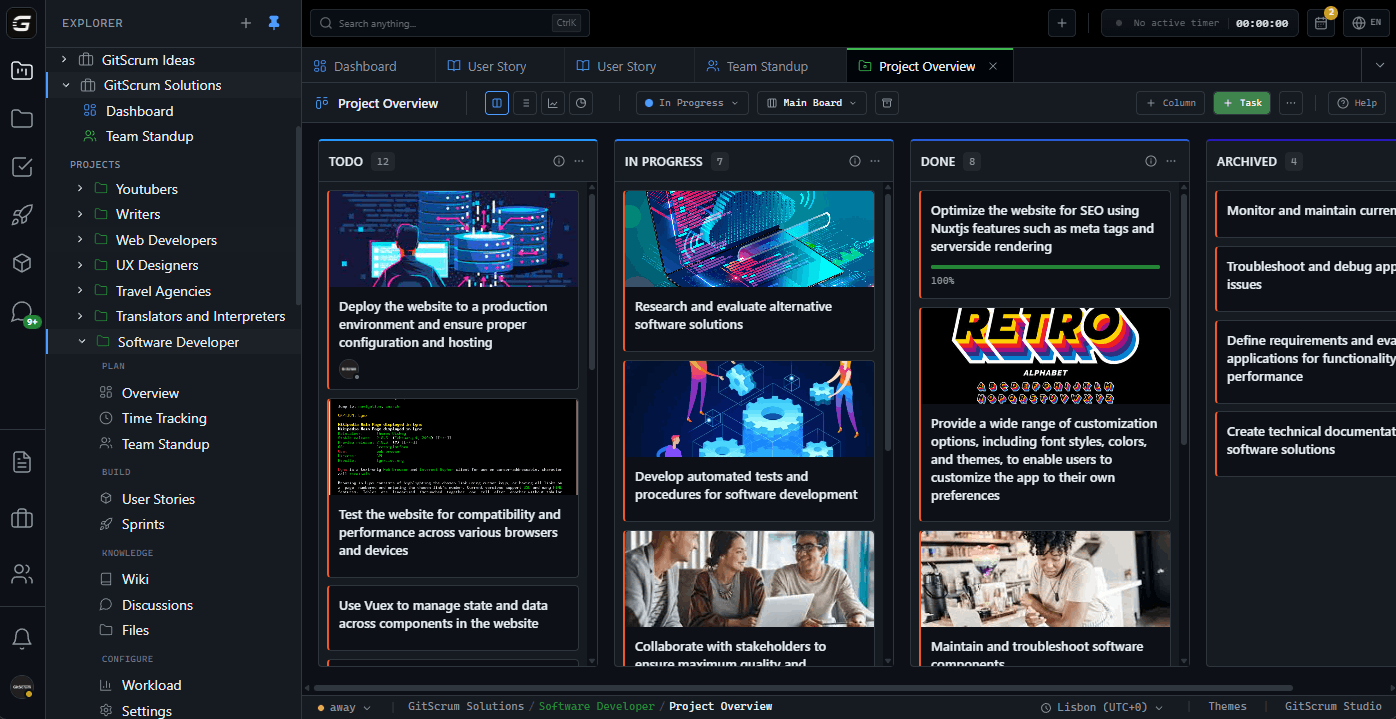
Instead of Slack messages asking someone to 'take care of' something, GitScrum tasks have explicit fields: priority, deadline, acceptance criteria. No interpretation needed.

2

Priority System Replaces Urgency Words

'ASAP,' 'urgent,' 'when you can'—all mean different things to different people. GitScrum's priority levels (Critical, High, Medium, Low) and actual deadline dates create clarity.

3

Team Communication Norms Are Documented

Teams establish and document their communication norms. How to give feedback. When video is expected. What emojis mean. New team members learn the shared language.

4

Context Travels With Information

Tasks include full context: why it matters, what's blocking, who's affected. This rich context reduces the need to interpret intent from tone or word choice.

04

Why GitScrum

GitScrum addresses Cultural Misunderstandings in Written Communication through Kanban boards with WIP limits, sprint planning, and workflow visualization

Problem resolution based on Kanban Method (David Anderson) for flow optimization and Scrum Guide (Schwaber and Sutherland) for iterative improvement

Capabilities

  • Kanban boards with WIP limits to prevent overload
  • Sprint planning with burndown charts for predictable delivery
  • Workload views for capacity management
  • Wiki for process documentation
  • Discussions for async collaboration
  • Reports for bottleneck identification

Industry Practices

Kanban MethodScrum FrameworkFlow OptimizationContinuous Improvement

Frequently Asked Questions

Still have questions? Contact us at customer.service@gitscrum.com

Can software really solve cultural communication problems?

It can reduce the surface area for misunderstanding. Structured fields with explicit meanings leave less room for cultural interpretation. The interpersonal relationship building still requires human effort, but day-to-day task communication becomes clearer.

Should teams try to adopt one communication culture?

Not necessarily. Different cultures have different strengths. Direct feedback can be efficient; indirect communication can preserve relationships. The goal is shared understanding of how your specific team communicates, not universal conformity.

What about the informal communication that builds relationships?

Informal communication remains important—it just benefits from awareness. Team norms can include 'how we chat casually' alongside 'how we give feedback.' The structured work communication frees up the informal space to be genuinely social.

How do we establish team communication norms?

Start by surfacing differences. Have team members share their cultural defaults. Then negotiate shared norms: direct feedback is okay in code reviews, formal requests go through GitScrum with explicit context, etc. Document and iterate.

Ready to solve this?

Start free, no credit card required. Cancel anytime.

Works with your favorite tools

Connect GitScrum with the tools your team already uses. Native integrations with Git providers and communication platforms.

GitHubGitHub
GitLabGitLab
BitbucketBitbucket
SlackSlack
Microsoft TeamsTeams
DiscordDiscord
ZapierZapier
PabblyPabbly

Connect with 3,000+ apps via Zapier & Pabbly