VS Code

GitScrum for VS Code, Google Antigravity, Cursor and Windsurf!

GitScrum logo
Solution

Dev Burnout Prevention 2026 | Workload Visibility First

Invisible workload imbalance causes burnout—managers can't see who's drowning. Visual workload Kanban with WIP limits protects sustainable pace. Free trial.

Dev Burnout Prevention 2026 | Workload Visibility First

Burnout isn't laziness—it's systematic overload.

When managers can't see who's drowning in work, when deadlines are set without consulting capacity, when there's always 'one more thing' added to an already full plate, developers break. The cost is massive: turnover, quality collapse, sick leave, and destroyed team morale.

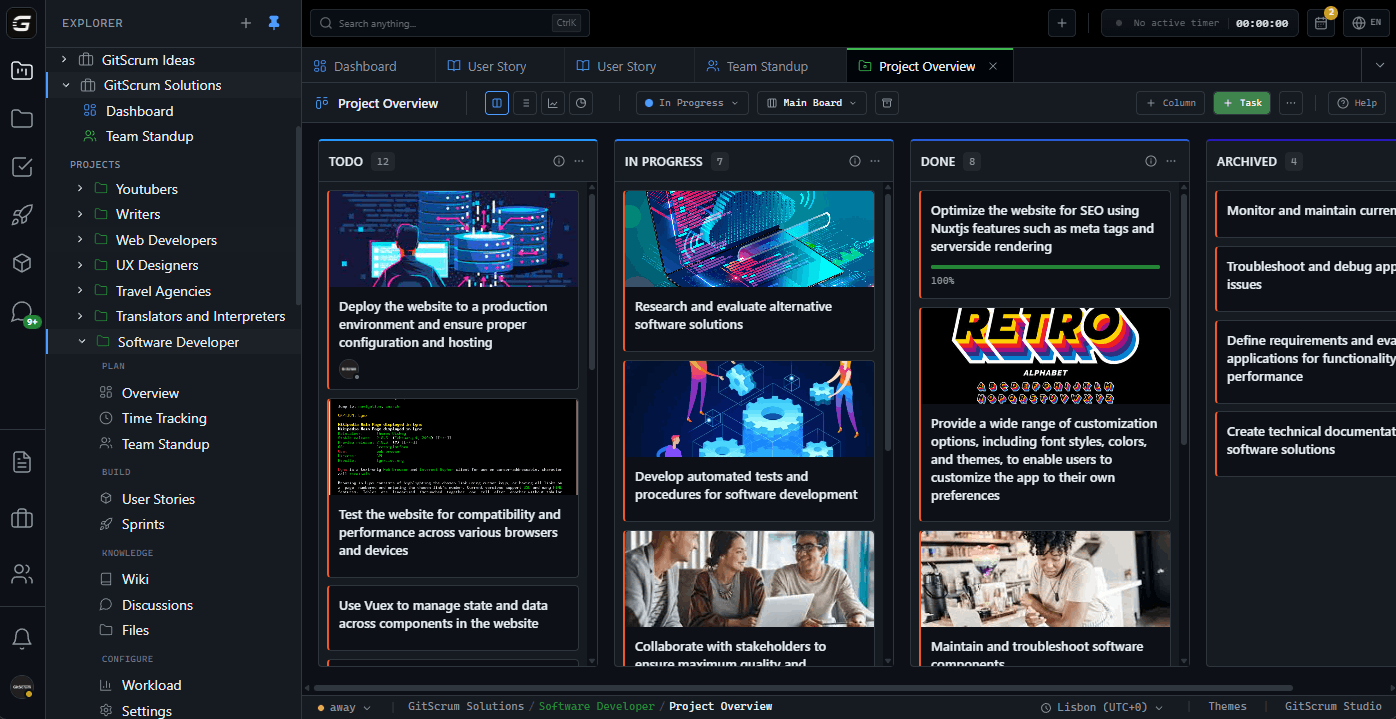
GitScrum attacks burnout at the root: the Workload feature shows capacity per team member as a visual Kanban, making overload obvious before it becomes crisis. WIP limits on board columns prevent work accumulation that leads to context-switching stress.

Sprint velocity based on historical data prevents overcommitment. Vacation planning ensures coverage without dumping work on remaining team.

The goal is sustainable pace—consistent output without burning out your most valuable asset: your developers.

The GitScrum Advantage

One unified platform to eliminate context switching and recover productive hours.

01

problem.identify()

The Problem

Managers can't see workload distribution—some developers are overloaded while others are underutilized

Deadlines are set without considering actual team capacity or current commitments

No WIP limits mean infinite work accumulation leads to context-switching stress

Sprint overcommitment happens repeatedly because there's no velocity tracking

Vacation and time-off creates work dumping on remaining team members

02

solution.implement()

The Solution

Workload Kanban view shows task distribution per team member with visual capacity indicators

WIP limits on board columns prevent work accumulation and context-switching overload

Sprint velocity based on historical data guides realistic commitment without overload

Drag-and-drop task reassignment enables quick workload rebalancing when overload appears

Vacation planning with capacity adjustment ensures coverage without dumping on remaining team

03

How It Works

1

Visualize Workload Distribution

Open the Workload view to see tasks distributed per team member as a visual Kanban. Color-coded capacity indicators (green/yellow/red) show who's at capacity, who's overloaded, and who has bandwidth.

2

Set WIP Limits

Configure Work-In-Progress limits on board columns. When a column reaches its limit, new tasks can't be added until existing work moves forward. This prevents infinite accumulation that leads to burnout.

3

Plan Realistic Sprints

Use historical velocity to guide sprint commitment. If your team completes 40 story points per sprint consistently, don't commit to 60. GitScrum shows capacity clearly during sprint planning.

4

Rebalance Quickly

When workload imbalance appears, drag-and-drop tasks between team members to redistribute. Don't wait for burnout—rebalance as soon as the visual indicators show red.

5

Plan for Absences

Use vacation planning to mark team member time-off. GitScrum adjusts capacity calculations and helps distribute tasks to available team members—no last-minute dumping.

04

Why GitScrum

GitScrum addresses Preventing Developer Burnout from Unrealistic Deadlines through Kanban boards with WIP limits, sprint planning, and workflow visualization

Problem resolution based on Kanban Method (David Anderson) for flow optimization and Scrum Guide (Schwaber and Sutherland) for iterative improvement

Capabilities

  • Kanban boards with WIP limits to prevent overload
  • Sprint planning with burndown charts for predictable delivery
  • Workload views for capacity management
  • Wiki for process documentation
  • Discussions for async collaboration
  • Reports for bottleneck identification

Industry Practices

Kanban MethodScrum FrameworkFlow OptimizationContinuous Improvement

Frequently Asked Questions

Still have questions? Contact us at customer.service@gitscrum.com

How does the Workload view help prevent burnout?

The Workload view displays tasks per team member as a visual Kanban with color-coded capacity indicators. Green means healthy load, yellow means approaching capacity, red means overloaded. Managers can spot imbalance instantly instead of discovering it through missed deadlines or sick leave. Drag-and-drop reassignment enables immediate rebalancing.

What are WIP limits and how do they reduce stress?

WIP (Work-In-Progress) limits cap how many tasks can be in a board column simultaneously. When a column hits its limit, new tasks can't enter until existing work completes. This prevents the infinite accumulation that causes context-switching stress—instead of 20 tasks 'in progress', you complete 3 before starting more.

How does sprint velocity prevent overcommitment?

Velocity is the story points your team actually completes per sprint. If historical data shows 40 points average, committing to 65 points guarantees failure and overtime. GitScrum displays velocity trends during sprint planning, making it obvious when proposed commitments exceed realistic capacity.

How does vacation planning prevent work dumping?

When team members take time off, their tasks need coverage. Without planning, work gets dumped on remaining team members at the last minute, creating overload. GitScrum's vacation planning feature shows upcoming absences and adjusts capacity calculations, enabling proactive task redistribution instead of reactive dumping.

What signs indicate a team is heading toward burnout?

Watch for: consistently red capacity indicators in Workload view, WIP limits being ignored or constantly maxed out, declining velocity over sprints, increasing time between estimate and actual completion, and tasks stuck 'in progress' for extended periods. These patterns signal unsustainable pace before people start quitting.

Ready to solve this?

Start free, no credit card required. Cancel anytime.

Works with your favorite tools

Connect GitScrum with the tools your team already uses. Native integrations with Git providers and communication platforms.

GitHubGitHub
GitLabGitLab
BitbucketBitbucket
SlackSlack
Microsoft TeamsTeams
DiscordDiscord
ZapierZapier
PabblyPabbly

Connect with 3,000+ apps via Zapier & Pabbly