VS Code

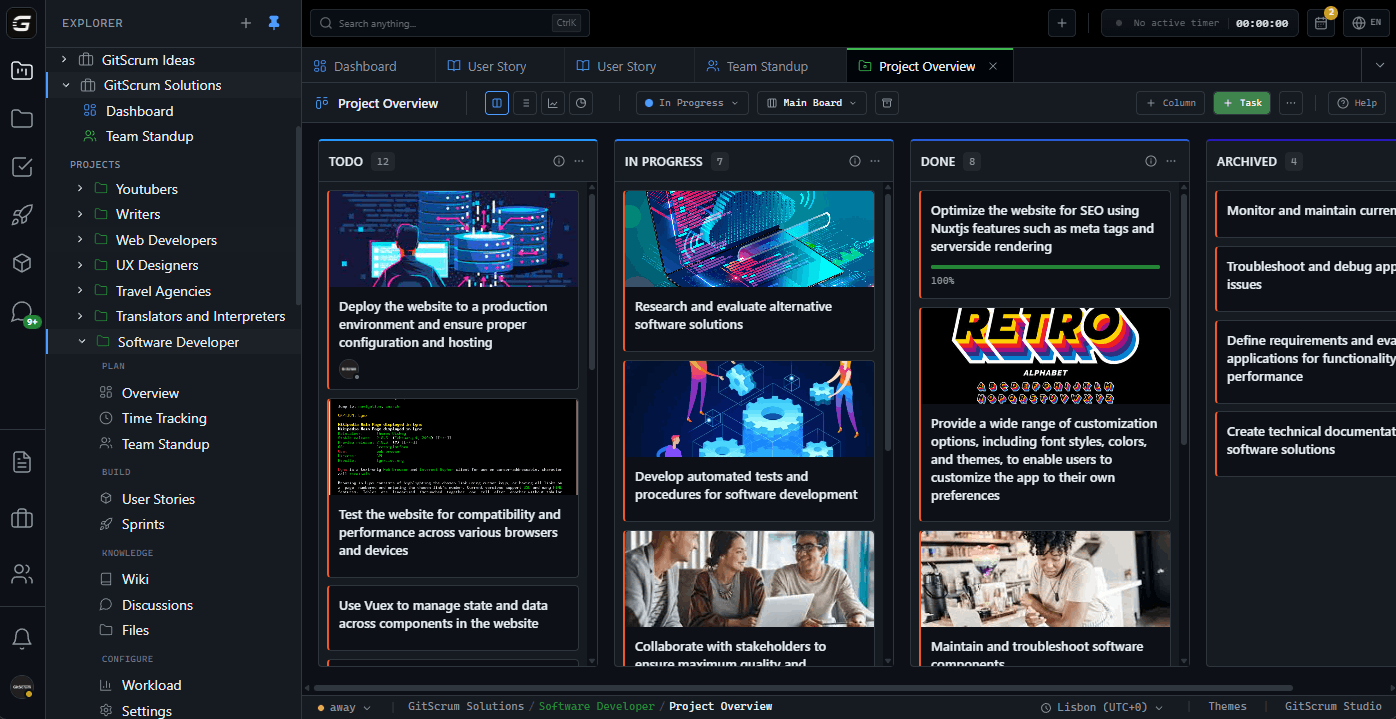
GitScrum for VS Code, Google Antigravity, Cursor and Windsurf!

GitScrum logo
Solution

Dev Context Switching Burnout 2026 | 2.5 Hrs Lost

5 interruptions/day = 2.5 hours lost to switching alone. Devs juggle 5+ projects—every 'urgent' request destroys 15-30 min focus. Clear priorities + protected time prevent burnout. Free trial.

Dev Context Switching Burnout 2026 | 2.5 Hrs Lost

The developer starts the morning on Project A.

Thirty minutes in, an urgent bug report comes in from Project B. They context-switch, spend an hour troubleshooting, then return to Project A—but wait, there's a question about Project C in Slack.

After answering, they try to remember where they were with Project A, but now there's a meeting about Project D. By day's end, every project got some attention, but nothing got finished.

Context switching has a documented cognitive cost: 15-30 minutes to regain focus after each interruption. With five interruptions per day, that's potentially 2.5 hours lost just to the switching itself—not counting the diminished quality of fragmented attention.

The cumulative effect is exhaustion without accomplishment. Developers feel busy but unproductive.

Code quality suffers. Bugs increase.

Eventually, people burn out and leave. GitScrum addresses this by clarifying priorities and protecting focused time.

When everyone knows what's most important, urgent requests get triaged properly instead of immediately interrupting. Developers can finish things.

The GitScrum Advantage

One unified platform to eliminate context switching and recover productive hours.

01

problem.identify()

The Problem

Developers juggling 5+ projects with constant interruptions

15-30 minutes of focus lost with every context switch

Urgent requests from multiple projects fragment productive time

Feeling busy but unproductive leads to exhaustion and burnout

Code quality suffers when attention is constantly divided

02

solution.implement()

The Solution

Clear priority visibility enables proper triage of interruptions

Protected focus time reduces unnecessary context switches

Developers complete work instead of fragmenting across projects

Reduced cognitive load prevents burnout and improves satisfaction

Better code quality from sustained attention on tasks

03

How It Works

1

Clarify Priorities

GitScrum makes priorities explicit across all projects. When everyone can see what's most important, interruptions can be properly triaged instead of all being treated as urgent.

2

Enable Focused Time

With clear priorities, developers can protect focused time for high-priority work. Non-urgent requests wait until appropriate times instead of constantly interrupting.

3

Complete Before Switching

Smaller, well-defined tasks can be completed before switching contexts. Finishing things—even small things—prevents the cognitive overhead of juggling incomplete work.

4

Reduce Cognitive Load

When priorities are visible and work is organized, developers don't carry the mental burden of tracking everything themselves. The system handles visibility; developers focus on code.

04

Why GitScrum

GitScrum addresses Developers Burning Out from Context Switching through Kanban boards with WIP limits, sprint planning, and workflow visualization

Problem resolution based on Kanban Method (David Anderson) for flow optimization and Scrum Guide (Schwaber and Sutherland) for iterative improvement

Capabilities

  • Kanban boards with WIP limits to prevent overload
  • Sprint planning with burndown charts for predictable delivery
  • Workload views for capacity management
  • Wiki for process documentation
  • Discussions for async collaboration
  • Reports for bottleneck identification

Industry Practices

Kanban MethodScrum FrameworkFlow OptimizationContinuous Improvement

Frequently Asked Questions

Still have questions? Contact us at customer.service@gitscrum.com

How does GitScrum reduce context switching?

By making priorities explicit so interruptions can be triaged. Not everything is truly urgent. When priorities are visible, teams can protect focus time for high-priority work and batch lower-priority requests.

What about genuinely urgent production issues?

Genuine emergencies should interrupt. The problem is when everything is treated as urgent. With clear priority levels, true emergencies stand out and get immediate attention while non-urgent items wait.

How do we protect developer focus time?

Set team norms: 'mornings are focus time' or 'no meetings on certain days.' Use GitScrum's priority system so async requests don't require immediate response. Make it okay to not respond instantly.

Won't stakeholders complain about slower response times?

Often they prefer reliable delivery over quick responses that don't result in shipped work. Set expectations: 'non-urgent requests get addressed within 24 hours' is usually acceptable.

Ready to solve this?

Start free, no credit card required. Cancel anytime.

Works with your favorite tools

Connect GitScrum with the tools your team already uses. Native integrations with Git providers and communication platforms.

GitHubGitHub
GitLabGitLab
BitbucketBitbucket
SlackSlack
Microsoft TeamsTeams
DiscordDiscord
ZapierZapier
PabblyPabbly

Connect with 3,000+ apps via Zapier & Pabbly