







VS Code

GitScrum for VS Code, Google Antigravity, Cursor and Windsurf!

GitScrum logo
Solution

Single Source of Truth 2026 | End Architecture Diffusion

Architecture scattered across wiki, Slack, and code? Teams waste 5-10 min/decision cross-checking. One platform unifies all project truth. Free trial.

Single Source of Truth 2026 | End Architecture Diffusion

The fragmented tool environment creates an epistemological crisis: where is truth?

When a stakeholder asks 'what is the status of Feature X', the answer depends on which tool you check. The project board might show 'In Progress' while the sprint tracker shows 'Done' while the code repository shows 'merged to staging' while the deployment dashboard shows 'awaiting release'.

All of these are true from a certain perspective, but none tells the complete story. Team members learn to distrust all sources.

They develop habits of cross-checking multiple systems, messaging colleagues directly, or attending meetings to verify status. The overhead of establishing truth becomes embedded in daily workflows.

Architecture decisions suffer particularly. The technical decision might be documented in a wiki, but the discussion that led to it lives in Slack history.

The implementation details are in code comments. The tradeoffs considered are in pull request discussions.

The business context is in product requirement documents. No single place contains the complete architectural record.

When someone needs to understand why a system works the way it does, they must archaeology across multiple tools, hoping to find the relevant fragments. This architecture diffusion leads to repeated decisions—teams solve the same problem differently because they could not find the previous decision.

It leads to inconsistent implementation—developers make different assumptions because they found different partial truths. It leads to knowledge loss—when team members leave, the contextual knowledge scattered across tools leaves with them.

GitScrum establishes one source of truth where all project information, decisions, and context live together. No cross-checking required, no archeology needed, no diffusion allowed.

The GitScrum Advantage

One unified platform to eliminate context switching and recover productive hours.

01

problem.identify()

The Problem

Each tool becomes a partial, unreliable source of truth

Team members cross-check multiple systems before decisions

Architecture decisions diffused across documentation, chat, and code

Status depends on which tool you check

Knowledge archeology required to understand past decisions

Information leaves when team members leave

02

solution.implement()

The Solution

Single authoritative source for all project information

Status shows consistently across all views

Architecture decisions captured with full context

No cross-checking required for accurate status

Complete decision history in one searchable location

Institutional knowledge preserved in platform

03

How It Works

1

Central Source Established

One platform becomes the authoritative record for all project work

2

Context Preserved

Decisions captured with discussions, alternatives, and rationale

3

Status Synchronized

One truth displayed consistently across all views and reports

4

Knowledge Retained

Institutional memory lives in platform, not departing employees

04

Why GitScrum

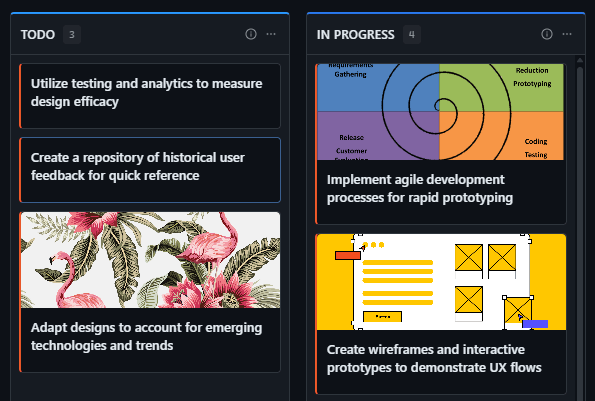
GitScrum addresses Multiple Sources of Truth Causing Architecture Diffusion through Kanban boards with WIP limits, sprint planning, and workflow visualization

Problem resolution based on Kanban Method (David Anderson) for flow optimization and Scrum Guide (Schwaber and Sutherland) for iterative improvement

Capabilities

  • Kanban boards with WIP limits to prevent overload
  • Sprint planning with burndown charts for predictable delivery
  • Workload views for capacity management
  • Wiki for process documentation
  • Discussions for async collaboration
  • Reports for bottleneck identification

Industry Practices

Kanban MethodScrum FrameworkFlow OptimizationContinuous Improvement

Frequently Asked Questions

Still have questions? Contact us at customer.service@gitscrum.com

What is architecture diffusion and why is it problematic?

Architecture diffusion occurs when technical decisions and their context are scattered across multiple tools—the decision in a wiki, the discussion in Slack, the implementation in code comments, the tradeoffs in PR discussions. This fragmentation means no one can get the complete picture without archeology across multiple systems. New team members make decisions that contradict previous ones because they cannot find them. Teams solve the same problems differently because the original solution is buried. Knowledge leaves when people leave.

How do multiple sources of truth affect daily work?

Team members develop distrust of all sources. Before answering 'what is the status of X', they check the project board, the sprint tracker, the repository, and sometimes message someone directly. This cross-checking becomes habitual—adding 5-10 minutes to countless daily decisions. Meetings become about establishing truth rather than making decisions. Reports require manual reconciliation because different tools show different realities.

How does a unified platform establish reliable truth?

When all work lives in one platform, there is only one version of reality. Status is status—the same everywhere. Decisions are captured with their full context—discussions, alternatives considered, rationale. Activity feeds show the complete chronological record. Search finds all relevant information without needing to know which tool might contain it. When someone leaves, their work and context remain in the platform for others to build upon.

Ready to solve this?

Start free, no credit card required. Cancel anytime.

Works with your favorite tools

Connect GitScrum with the tools your team already uses. Native integrations with Git providers and communication platforms.

GitHubGitHub
GitLabGitLab
BitbucketBitbucket
SlackSlack
Microsoft TeamsTeams
DiscordDiscord
ZapierZapier
PabblyPabbly

Connect with 3,000+ apps via Zapier & Pabbly