GitScrum PRO Annual — 2,500+ SaaS apps via MCP

GitScrum logo
Solution

Multi-Project Multi-Team PM 2026 | Portfolio Resource View

One project, one team, one board—that's easy. But reality is messier: 5 client projects, 2 internal products, 3 teams with overlapping members, shared developers across projects. Most PM tools collapse under this complexity. Boards become unmanageable. Assignments conflict. Resource planning is guesswork. GitScrum handles multi-project, multi-team reality. Portfolio views across projects. Resource allocation visibility. Cross-project dependencies. The complexity exists in your business—your tool should handle it.

Multi-Project Multi-Team PM 2026 | Portfolio Resource View

The multi-project reality: Agency scenario: - Client A: E-commerce platform (2 devs, 1 designer, ongoing) - Client B: Mobile app (3 devs, MVP phase) - Client C: API integration (1 dev, maintenance) - Client D: Website redesign (1 dev, 2 designers, active) - Internal: Agency website (whenever someone has time) - Internal: Tooling improvements (20% time) The challenges: - Sarah works on Client A and Client B - Mark works on Client C, Client D, and internal projects - How much capacity does each project have this week?

- If Client B needs more time, what slips? - Which projects are at risk of missing deadlines?

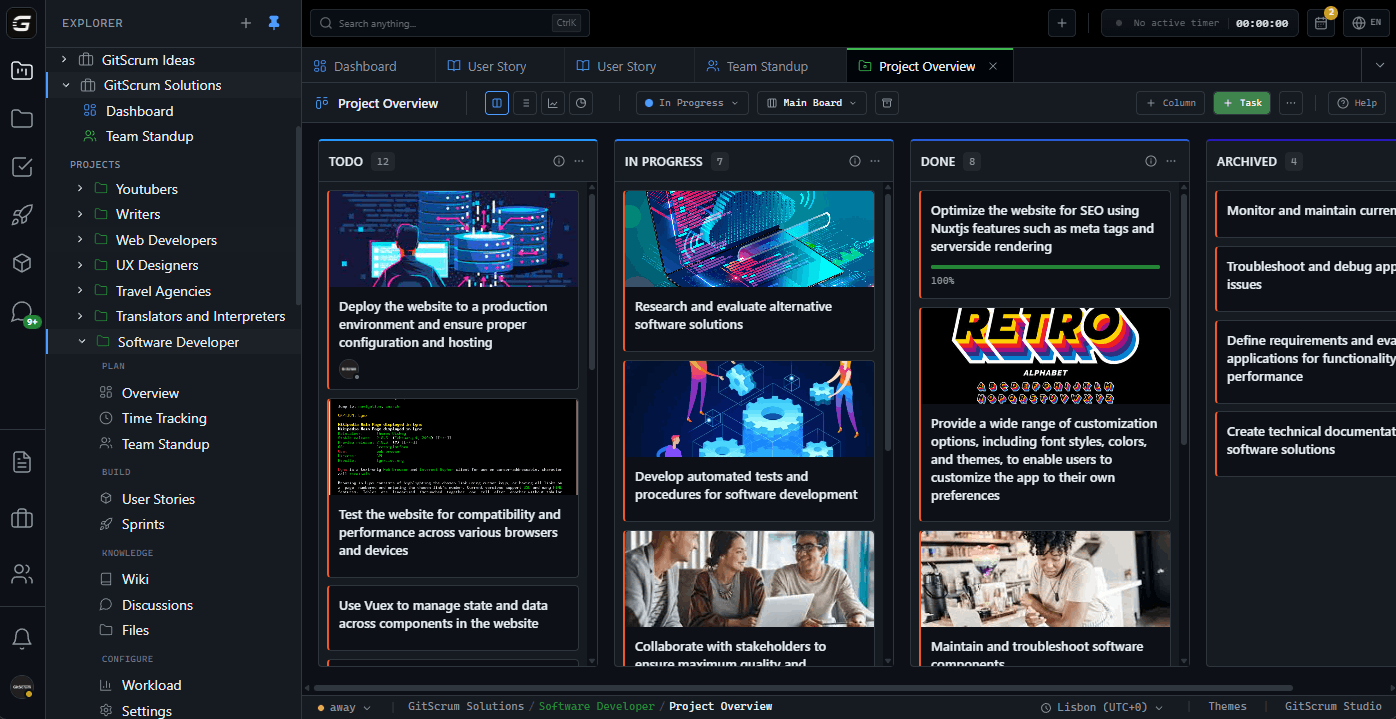
Traditional PM tool limitations: - One board per project = switching constantly - No cross-project view for individuals - Resource allocation is manual spreadsheet - Dependencies between projects invisible - Reporting requires exporting and combining data GitScrum multi-project capabilities: Portfolio Dashboard: - See all projects' health at a glance - Traffic light status: Green/Yellow/Red - Sprint progress across all projects - Upcoming deadlines aggregated Resource Matrix: - Who is allocated where this week? - Capacity vs.

commitment per person - Over-allocation warnings - Easy rebalancing with drag-and-drop Cross-Project Task View: - 'My Tasks' shows all projects in one list - Filter by project, priority, due date - No context switching to see your full workload Inter-Project Dependencies: - Task in Project A blocked by task in Project B - Dependency visible in both projects - Due date conflicts flagged automatically

The GitScrum Advantage

One unified platform to eliminate context switching and recover productive hours.

01

problem.identify()

The Problem

Constant board switching between projects

No unified view of individual workload

Resource allocation done in spreadsheets

Over-allocated team members burn out

Cross-project dependencies invisible

Portfolio health requires manual aggregation

Capacity planning is guesswork

Deadline conflicts discovered too late

02

solution.implement()

The Solution

Portfolio dashboard shows all projects at once

My Tasks view aggregates work across projects

Resource matrix shows allocation in real-time

Workload balancing prevents burnout

Cross-project dependencies clearly visible

Portfolio health auto-calculated from project data

Capacity planning with actual data

Deadline conflicts flagged automatically

03

How It Works

1

Create Project Portfolio

Group related projects into portfolios (by client, by team, by product line). Portfolio view shows aggregate status, total tasks, team capacity across all grouped projects.

2

Assign Resources

Allocate team members to projects with percentage capacity: Sarah 60% Client A, 40% Client B. GitScrum tracks actual work against allocation and warns when misaligned.

3

View Cross-Project Work

Each team member sees their 'My Tasks' view—all assigned tasks from all projects. Filter, sort, prioritize. Complete visibility without board switching.

4

Manage Dependencies

Link tasks across projects: 'Client A API must be done before Client B integration'. Both project views show the dependency. Due date changes propagate automatically.

04

Why GitScrum

GitScrum addresses Project Management Tool for Multiple Projects Multiple Teams through Kanban boards with WIP limits, sprint planning, and workflow visualization

Problem resolution based on Kanban Method (David Anderson) for flow optimization and Scrum Guide (Schwaber and Sutherland) for iterative improvement

Capabilities

  • Kanban boards with WIP limits to prevent overload
  • Sprint planning with burndown charts for predictable delivery
  • Workload views for capacity management
  • Wiki for process documentation
  • Discussions for async collaboration
  • Reports for bottleneck identification

Industry Practices

Kanban MethodScrum FrameworkFlow OptimizationContinuous Improvement

Frequently Asked Questions

Still have questions? Contact us at customer.service@gitscrum.com

How many projects can one team manage?

No technical limit. Practical limit depends on team size and project complexity. GitScrum's portfolio view helps you see when you're over-committed before it becomes a problem.

Can team members see only their projects?

Yes. Permission controls let you limit visibility. Team members see only their assigned projects, while managers see portfolio-wide views.

How do cross-project dependencies work?

Create a dependency linking Task A in Project X to Task B in Project Y. Both tasks show the dependency. If Task A's due date changes, Task B gets flagged for review.

Can we have different workflows per project?

Yes. Each project can have its own workflow (different columns, different statuses). Portfolio rollup translates to common states (Not Started, In Progress, Done) for unified reporting.

Ready to solve this?

Start free, no credit card required. Cancel anytime.

Works with your favorite tools

Connect GitScrum with the tools your team already uses. Native integrations with Git providers and communication platforms.

GitHubGitHub
GitLabGitLab
BitbucketBitbucket
SlackSlack
Microsoft TeamsTeams
DiscordDiscord
ZapierZapier
PabblyPabbly

Connect with 3,000+ apps via Zapier & Pabbly