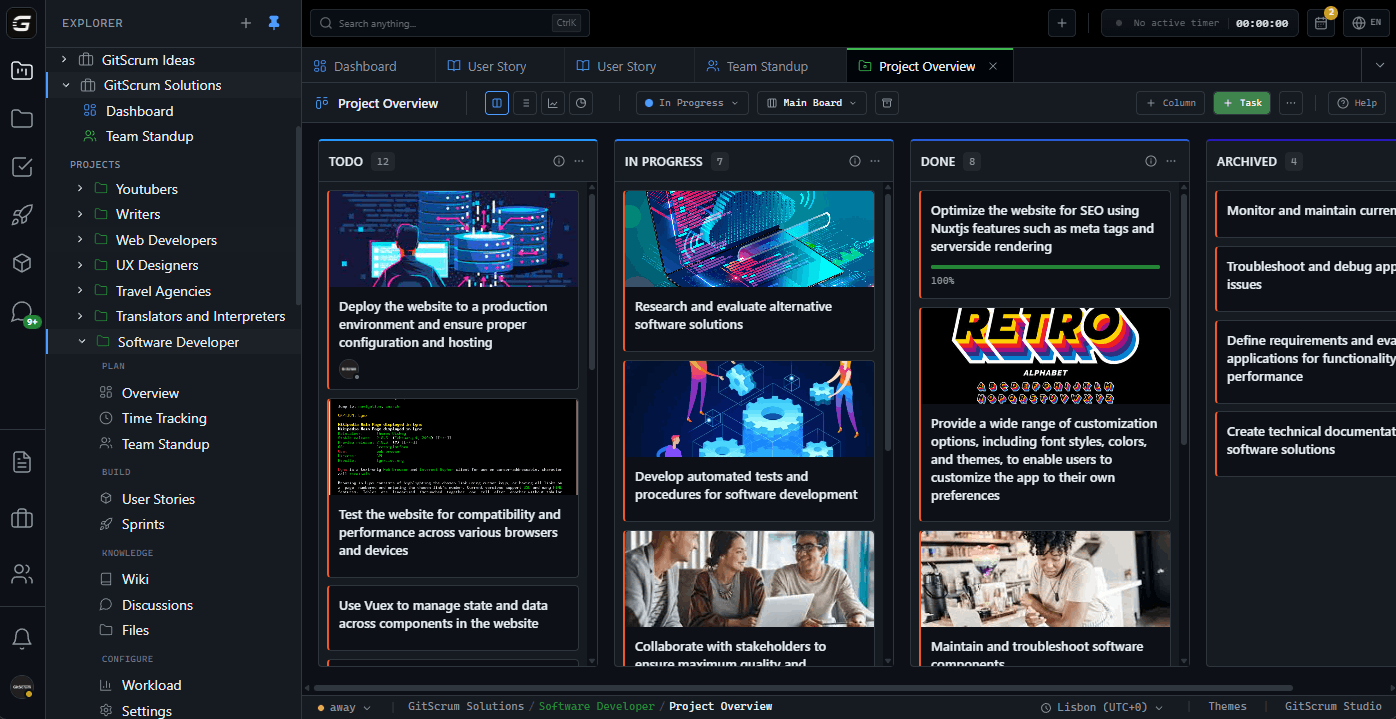
The Release Management Problem It's release day.
Questions start flying: 'Is the login bug fix in this release?' Dev: 'I think so? Let me check GitHub...' 'What features are we announcing?' PM: 'Hold on, let me check the sprint board...' 'Is this ready for production?' QA: 'I tested the staging branch, not sure if that's what's deploying...' Every release, the same chaos.
Why Release Management Breaks Down The tools are disconnected: - Jira has the stories - GitHub has the code - Confluence has the release notes - Slack has the discussions - Calendar has the release date No single place shows: - What's included in this release - What's the status of each item - Is everything merged and tested - What should the changelog say The Real Cost of Release Chaos 1. Incomplete features ship - 'I thought that was in the release' - Customer gets broken feature - Hot-fix required 2.
Complete features don't ship - Merged but not deployed - Customer waiting - Opportunity cost 3. Wrong communication - Marketing announces unshipped feature - Support doesn't know what changed - Changelog incomplete 4.
Release delays - Last-minute discoveries - 'Wait, this isn't ready' - Pushed back repeatedly GitScrum: Releases Connected to Code GitScrum connects the dots: Release 2.4.0 Stories: - [DONE] Login bug fix (PR 234 merged) - [DONE] New dashboard (PR 245, 247 merged) - [IN REVIEW] Export feature (PR 251 pending) Status: 2 of 3 items ready Blockers: Export feature needs review [Generate Changelog] [View All PRs] Everything in one place. How Release Tracking Works 1.
Create Release - Name: 'v2.4.0' - Target date: March 15 - Release notes template 2. Assign Stories to Release - Drag stories from sprint - Or tag in story details - Stories link to release 3.
Track Progress - Story status (not started, in progress, done) - PR status (open, merged) - Code actually in release branch 4. Generate Changelog - Pull from story titles and descriptions - Categorize: Features, Fixes, Improvements - Export to markdown/HTML Release Status Dashboard At a glance: Release v2.4.0 - March 15 [==========80%==========] 8 Stories | 6 Complete | 2 In Progress By Category: Features: 3/3 complete Bug Fixes: 2/3 complete Improvements: 1/2 complete Blockers: - Export feature: Waiting on code review - Performance fix: Needs QA signoff Know exactly where you stand.
GitHub Integration for Releases GitScrum syncs with GitHub: For each story: - Branch created: shows in GitScrum - PR opened: links to story - PR merged: story marked done - Release branch: shows merged PRs No manual status updates. Code is truth.
Release Branch Comparison See exactly what's in the release: 'What commits are in release-2.4.0 vs main?' Commits in release branch: abc123 - Fix login validation def456 - Add export button ghi789 - Update dashboard layout Stories mapped to commits: LOGIN-123 -> abc123 EXPORT-456 -> def456 DASH-789 -> ghi789 Unmapped commits (not in any story): jkl012 - Update dependencies No surprises on release day. Automated Changelog Generation Stop writing changelogs manually.
GitScrum generates: Version 2.4.0 - March 15, 2024 New Features: - Export data to CSV and Excel (EXPORT-456) - New dashboard with analytics (DASH-789) Bug Fixes: - Fixed login validation error (LOGIN-123) Improvements: - Updated dependencies for security Customize template: - Include/exclude categories - Public vs internal notes - Link to full stories Release Approval Workflow Add gates before release: 1. Development Complete - All PRs merged - Automated via GitHub 2.
QA Approved - Manual signoff - Checklist completed 3. Stakeholder Review - Release notes approved - Go/no-go decision 4.
Production Deploy - Final approval - Deploy triggered No 'oops, that wasn't ready' moments. Release Calendar See releases over time: March 2024 Mon Tue Wed Thu Fri 1 [v2.4.0] 4 5 6 7 8 11 12 13 14 [v2.4.1 hotfix] 18 19 20 21 22 25 26 27 28 [v2.5.0] - Regular release cadence - Hotfix tracking - Major vs minor releases - Team coordination Multiple Release Tracks For complex products: - Production (v2.4.x) - Beta (v2.5-beta) - Staging (v2.5-rc) - LTS (v1.9.x) Each track: - Separate release schedule - Different story assignment - Independent changelogs Release Retrospective Data After each release: - Planned vs actual release date - Stories planned vs shipped - Last-minute additions - Blockers encountered - Cycle time from story to release Improve release process over time.
Stakeholder Communication Keep stakeholders informed: Release Update Email: 'v2.4.0 scheduled for March 15' 'Currently 80% complete' 'Potential risk: Export feature in review' 'Expected content: [link to release notes]' No more 'when is X shipping?' questions. Integration Options Connect release management to: - CI/CD: Trigger deployment on release approval - Slack: Announce releases automatically - Marketing: Share release notes for campaigns - Support: Update knowledge base Releases aren't isolated - they connect to the business.
Real Scenarios Scenario 1: Monthly Release Problem: 'We ship monthly but never know what's included until the last day.' Solution: - Create release at start of month - Assign completed stories to release - Track progress throughout month - Generate changelog day before - Release on schedule Result: Predictable releases, no surprises. Scenario 2: Hotfix Management Problem: 'Production bug.
Need to ship fix today. What else is in the release branch?' Solution: - Create hotfix release (v2.4.1) - Assign only the bug fix story - See release branch contains only hotfix - Ship confidently Result: Clean hotfix without unintended changes.
Scenario 3: Feature Flag Releases Problem: 'Feature is in code but not ready to announce.' Solution: - Mark feature as 'shipped dark' - Exclude from public changelog - Include in internal release notes - Track separately from visible release Result: Ship code without public commitment. Release Metrics Track release health: - Release frequency (weekly, monthly) - Release success rate (no hotfixes needed) - Cycle time (story to production) - Planned vs shipped stories - Release delay frequency Identify process improvements.
Compared to Other Tools Jira Release Hub: - Exists but disconnected from code - Manual status updates - No changelog generation - Complex configuration GitHub Releases: - Code only, no story context - Manual release notes - No approval workflow - No stakeholder view GitScrum: - Stories + code connected - Automatic status from PRs - Changelog generation - Approval workflows - Stakeholder dashboards Pricing - 2 users: FREE forever - 3+ users: $8.90/user/month - Release management included - Unlimited releases - GitHub integration - Changelog generation 5-person team: $26.70/month - All release features - Multiple release tracks - Approval workflows 10-person team: $71.20/month - Enterprise release management - Advanced reporting - Multiple product lines Compared to: - Jira: Release Hub requires Premium ($$$) - Monday: No native release management - Asana: Milestones only, no changelog GitScrum: Full release management included. The Bottom Line Release day shouldn't be panic day.
GitScrum release management: - Know what's in each release - Track progress automatically - Generate changelogs easily - Release with confidence Stop asking 'what's in this release?' Start knowing. GitScrum: Release management that works.
2 users free. $8.90/user/month.
Know what you're shipping. Ship what you planned.
The GitScrum Advantage
One unified platform to eliminate context switching and recover productive hours.