
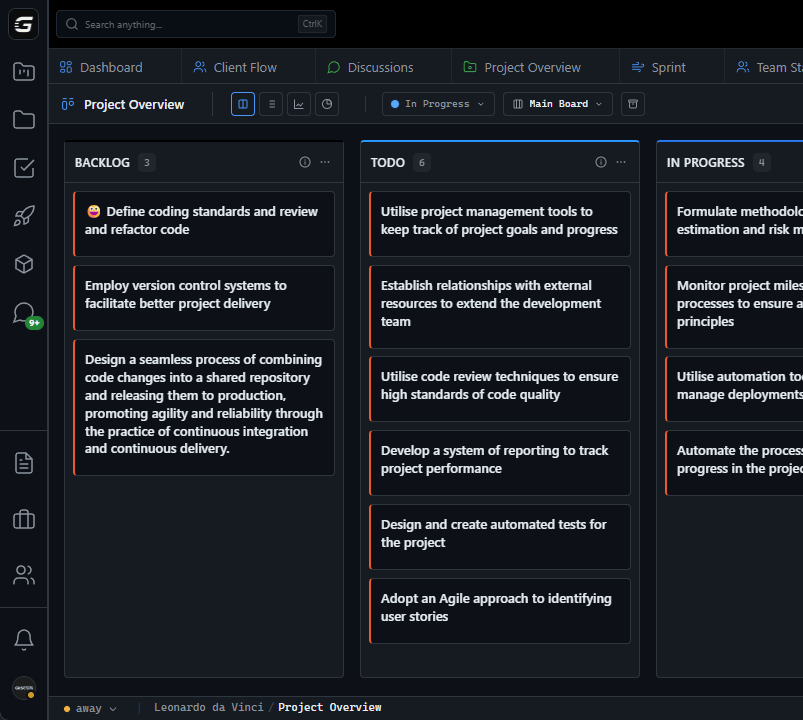







VS Code

GitScrum for VS Code, Google Antigravity, Cursor and Windsurf!

GitScrum logo
Solution

QA Bottleneck End of Sprint 2026 | Shift-Left Testing

Dev finishes mid-sprint, 6 devs dump work on 1 tester. Bugs found late, fixes need retesting, last 2 days chaos. Shift-left testing: continuous QA throughout sprint, not phase at end. Free trial.

QA Bottleneck End of Sprint 2026 | Shift-Left Testing

The sprint follows a predictable pattern.

Days 1-7: developers code. Day 8: features are 'done' and thrown over the wall to QA.

Days 8-10: the single QA engineer attempts to test a week's worth of development from the entire team. Bugs are found.

Developers context-switch back to features they haven't thought about for days. Fixes go back to QA.

More bugs are found. The cycle compresses into the final hours.

Features either ship with known issues ('we'll fix them next sprint'), ship without adequate testing, or slip to the next sprint entirely. The QA engineer is stressed and blamed.

The developers are frustrated by context switching. Leadership wonders why sprints are so chaotic.

The root cause isn't insufficient QA—it's the waterfall-within-a-sprint approach. Testing happens in a phase at the end instead of continuously throughout.

Quality is treated as something that happens to finished code rather than something built in from the start.

The GitScrum Advantage

One unified platform to eliminate context switching and recover productive hours.

01

problem.identify()

The Problem

All testing compressed into final sprint days

QA capacity doesn't match development output

Bugs found late require expensive context switching

Features ship undertested or slip to next sprint

Testing treated as phase instead of continuous practice

02

solution.implement()

The Solution

Shift-left testing throughout sprint, not at end

Developer-owned unit and integration tests

Continuous testing as features complete, not batched

QA focused on exploratory testing, not gatekeeping

Quality built in from start, not verified at end

03

How It Works

1

Developer-Owned Automated Testing

Developers write unit and integration tests as part of feature development. Code isn't 'done' until automated tests pass. This catches most issues before QA involvement.

2

Continuous Testing Flow

Features move to QA review as soon as developer testing is complete—not all at once at sprint end. QA workload is distributed throughout the sprint.

3

QA as Exploratory Partner

QA focuses on exploratory testing, edge cases, and user experience—not basic functionality verification. Their expertise is used for what automation can't catch.

4

Fast Feedback Loops

When QA finds issues, developers are still in context. The fix happens in hours, not days. Bugs don't accumulate for a frantic end-of-sprint scramble.

04

Why GitScrum

GitScrum addresses QA Bottleneck at End of Sprint through Kanban boards with WIP limits, sprint planning, and workflow visualization

Problem resolution based on Kanban Method (David Anderson) for flow optimization and Scrum Guide (Schwaber and Sutherland) for iterative improvement

Capabilities

  • Kanban boards with WIP limits to prevent overload
  • Sprint planning with burndown charts for predictable delivery
  • Workload views for capacity management
  • Wiki for process documentation
  • Discussions for async collaboration
  • Reports for bottleneck identification

Industry Practices

Kanban MethodScrum FrameworkFlow OptimizationContinuous Improvement

Frequently Asked Questions

Still have questions? Contact us at customer.service@gitscrum.com

We only have one QA person. How can continuous flow help?

Continuous flow helps even more with limited QA. Instead of one person drowning in the last two days, they have steady work throughout the sprint. And if developers own automated testing, QA isn't bottlenecked on basic functionality.

Doesn't this mean developers do QA's job?

Developers own automated testing—that's different from QA's expertise. QA brings exploratory testing, user perspective, edge case thinking. When basic functionality is verified by automation, QA can focus on what humans do best.

What if a feature isn't ready for QA until late in the sprint?

Some features are large. Break them into smaller testable pieces. The first piece can go to QA while subsequent pieces are still in development. Smaller batches flow better.

How do we handle bugs found late in the sprint?

With continuous flow, bugs are found earlier when developers are still in context. For truly late-discovered issues, prioritize: fix critical ones now, accept minor ones as known issues for next sprint.

Ready to solve this?

Start free, no credit card required. Cancel anytime.

Works with your favorite tools

Connect GitScrum with the tools your team already uses. Native integrations with Git providers and communication platforms.

GitHubGitHub
GitLabGitLab
BitbucketBitbucket
SlackSlack
Microsoft TeamsTeams
DiscordDiscord
ZapierZapier
PabblyPabbly

Connect with 3,000+ apps via Zapier & Pabbly