GitScrum PRO Annual — 2,500+ SaaS apps via MCP

GitScrum logo
Solution

Status Meetings to Synthesize Tools 2026 | End It

Hours weekly synthesizing Jira+Slack+GitHub? GitScrum: unified dashboard, real-time status, no meetings needed. $8.90/user. 2 free forever. Free trial.

Status Meetings to Synthesize Tools 2026 | End It

Status meetings have become a necessary evil in fragmented tool environments.

Not because teams need to collaborate—that would be valuable—but because information is so scattered that verbal synthesis is the only reliable way to understand project state. Think about what happens in a typical status meeting.

Someone asks: where are we on the API integration? The developer answers with context from their memory, Jira ticket details, recent Slack conversations, code review comments, and deployment status.

All this information exists in various systems but is not unified anywhere. The meeting becomes a human aggregation layer.

Managers spend significant time in these meetings not managing but gathering information. They ask questions, take notes, mentally synthesize updates, and create the unified picture that their tools should provide automatically.

This is expensive cognitive work that adds no value. The information existed; it just was not accessible.

For team members, these meetings are interruptions. They must stop deep work to verbally report status that should be visible in a dashboard.

The time spent in meetings is time not spent doing actual work. The context switching cost is significant.

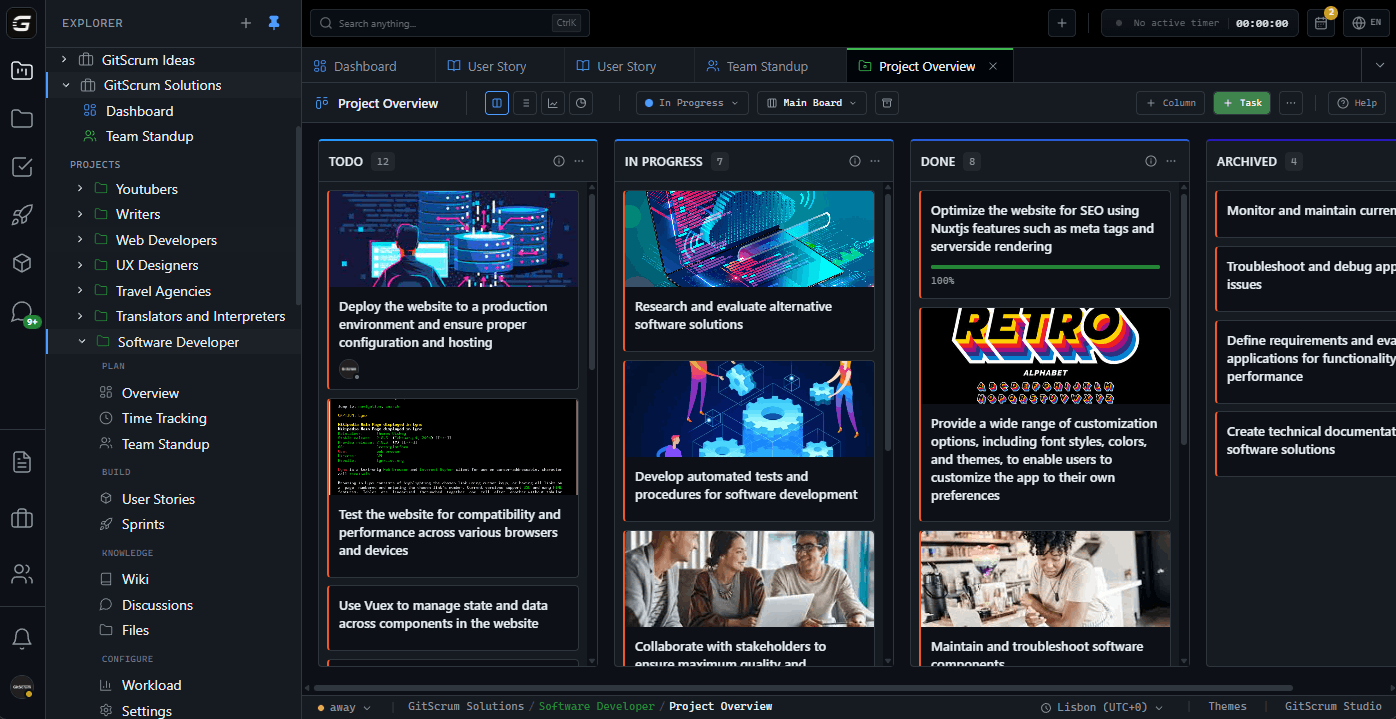
A unified platform eliminates the need for most status meetings. When project health, task progress, blockers, and activity are visible in one place, managers can see status without asking.

Team members can demonstrate progress without interrupting their flow. Meetings become optional collaboration sessions rather than mandatory information gathering.

The GitScrum Advantage

One unified platform to eliminate context switching and recover productive hours.

01

problem.identify()

The Problem

Status meetings required for information gathering not collaboration

Information scattered across too many systems to track

Managers spend meeting time compiling status not managing

Team members interrupted for verbal status reports

Hours weekly lost to meetings that should be dashboards

Human aggregation layer replaces proper tooling

02

solution.implement()

The Solution

Status visible in unified dashboard without meetings

Managers see project health without asking

Team members demonstrate progress through work not reports

Meeting time reclaimed for actual collaboration

Real-time visibility replaces status gathering

Tools provide aggregation not humans

03

How It Works

1

Unified Visibility

All project status visible in single dashboard

2

Self-Service Status

Managers check dashboard instead of scheduling meetings

3

Work as Documentation

Activity in platform automatically shows progress

4

Collaborative Meetings

Meetings reserved for actual collaboration and problem solving

04

Why GitScrum

GitScrum addresses Status Meetings Required to Synthesize Information from Multiple Systems through Kanban boards with WIP limits, sprint planning, and workflow visualization

Problem resolution based on Kanban Method (David Anderson) for flow optimization and Scrum Guide (Schwaber and Sutherland) for iterative improvement

Capabilities

  • Kanban boards with WIP limits to prevent overload
  • Sprint planning with burndown charts for predictable delivery
  • Workload views for capacity management
  • Wiki for process documentation
  • Discussions for async collaboration
  • Reports for bottleneck identification

Industry Practices

Kanban MethodScrum FrameworkFlow OptimizationContinuous Improvement

Frequently Asked Questions

Still have questions? Contact us at customer.service@gitscrum.com

Why do teams need so many status meetings?

Information is scattered across too many systems. Project data is in Jira, context is in Slack, code status is in GitHub, and full understanding requires conversations. The only reliable way to synthesize all this is to gather everyone and ask directly. Meetings become a human aggregation layer that compensates for fragmented tooling.

What is the cost of status meetings?

Hours every week disappear into meetings that exist only for information gathering. Managers spend time compiling status rather than managing. Team members interrupt deep work to verbally report progress. The cognitive cost of context switching is significant. All this time could be spent on actual work if status were visible in dashboards.

How does a unified platform reduce status meetings?

When project health, task progress, and activity are visible in one place, managers can check status without scheduling meetings. Team members demonstrate progress through their work in the platform rather than verbal reports. Meetings become optional collaboration sessions focused on problem-solving rather than mandatory information gathering.

Ready to solve this?

Start free, no credit card required. Cancel anytime.

Works with your favorite tools

Connect GitScrum with the tools your team already uses. Native integrations with Git providers and communication platforms.

GitHubGitHub
GitLabGitLab
BitbucketBitbucket
SlackSlack
Microsoft TeamsTeams
DiscordDiscord
ZapierZapier
PabblyPabbly

Connect with 3,000+ apps via Zapier & Pabbly