GitScrum PRO Annual — 2,500+ SaaS apps via MCP

GitScrum logo
Solution

Wrike Alternative Complex Dev 2026 | Git-Native

Wrike: $24.80/user, no native GitHub, sprints feel retrofitted. GitScrum: Git-native, real agile, technical debt tracking. $8.90/user. 2 free. Free trial.

Wrike Alternative Complex Dev 2026 | Git-Native

Wrike is an enterprise powerhouse.

Fortune 500 companies use it to manage creative production, marketing campaigns, and cross-functional initiatives. The feature set is impressive: advanced Gantt charts, resource utilization reports, custom request forms, time approval workflows.

But Wrike was designed for a different kind of 'complex project'—not software development. Wrike for Complex Software Projects: Where It Struggles GitHub Integration: Available via third-party apps at Enterprise tier.

Basic sync only. No PR-to-task automation.

No commit-based status updates. Developers maintain tasks and code in separate systems.

Sprint Support: Wrike added 'sprints' but they're date-ranged folders. No burndown charts in standard tiers.

No velocity tracking without expensive add-ons. Agile features feel bolted-on to waterfall DNA.

Developer Workflows: Wrike optimizes for project managers reviewing timelines, not developers shipping code. Heavy approval chains.

Form-based task creation. Enterprise bureaucracy embedded in the UX.

Pricing Reality: Business at $24.80/user/month. Many dev features require Enterprise (custom pricing).

A 10-developer team easily exceeds $3,000/year—before GitHub integration add-ons. Why GitScrum Handles Development Complexity Better: Native Git Workflows: Two-click GitHub connection.

PRs link to cards automatically. Commits update task status.

Branch names sync with task IDs. Code and project management unified.

Real Sprint Management: Burndown charts from actual progress. Velocity tracking across iterations.

Sprint retrospectives with actionable metrics. Agile-native, not retrofitted.

Technical Debt Tracking: Flag technical debt on any card. Track debt across sprints.

Schedule paydown in capacity planning. Developers control technical decisions.

Developer UX: Keyboard shortcuts throughout. Dark mode native.

Sub-100ms response times. No approval chains unless you want them.

Interface respects developer time. Clear Pricing: $8.90/user/month.

All features included. No tiers to navigate.

10 developers = $712/year vs Wrike's $2,976+. 2 users free forever.

The GitScrum Advantage

One unified platform to eliminate context switching and recover productive hours.

01

problem.identify()

The Problem

Wrike GitHub integration requires Enterprise tier via third-party apps

Sprints are date-ranged folders retrofitted to waterfall DNA

Interface optimizes for project managers, not developers

Business tier at $24.80/user/month, dev features need Enterprise

Approval chains and form-based workflows slow development

No technical debt tracking or developer-specific features

02

solution.implement()

The Solution

Native GitHub integration included at all tiers

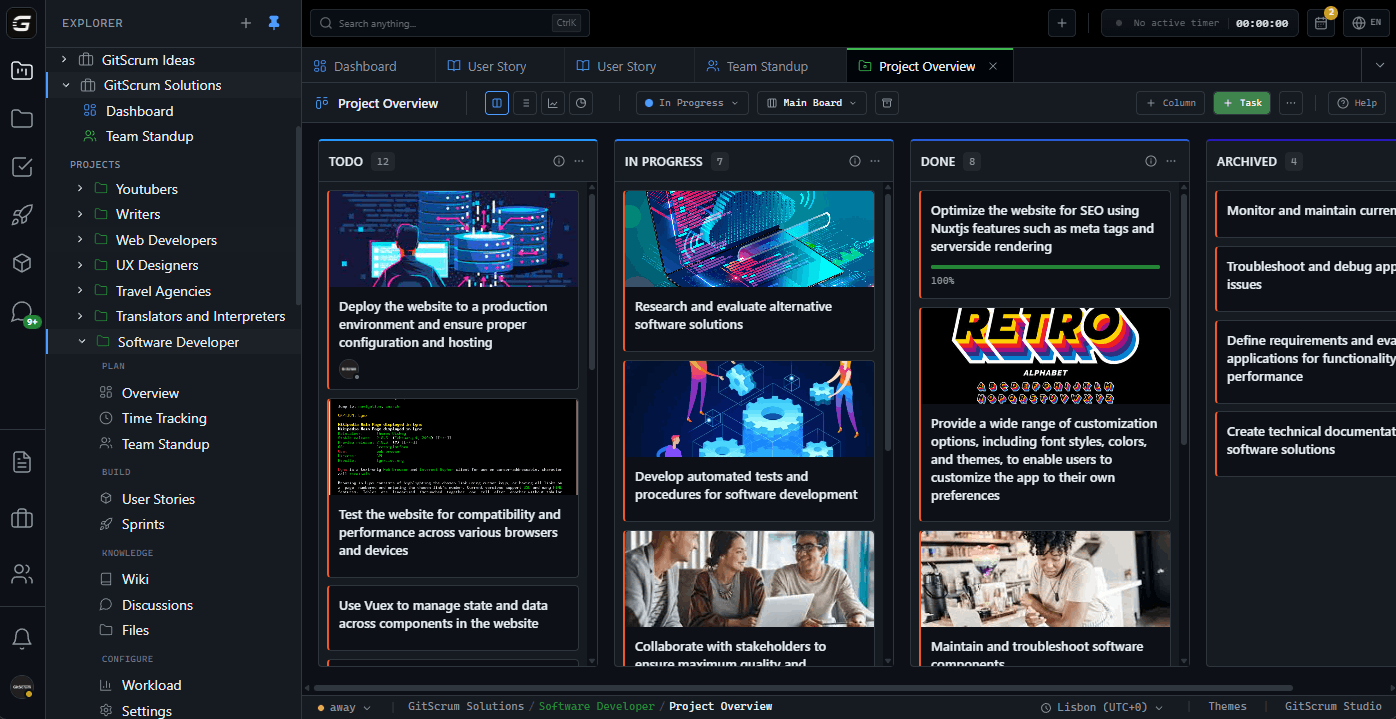
Agile-native sprints with real burndown and velocity

Developer-first interface with keyboard shortcuts and dark mode

All features at $8.90/user/month—no tier confusion

Streamlined workflows without enterprise bureaucracy

Technical debt tracking built into card system

03

How It Works

1

Development-First Architecture

GitScrum was built for software teams, not adapted from enterprise PM tools. Every feature designed for how developers actually work.

2

Native Git Integration

Connect GitHub repos in two clicks. PRs link to cards automatically. Commits update status. No third-party apps or Enterprise tier required.

3

Agile-Native Sprints

Real burndown charts from actual progress. Velocity tracking across iterations. Sprint retrospectives with actionable insights. Not folders with date ranges.

4

Simple Pricing That Scales

$8.90/user/month. All features included. A 10-developer team saves over $2,000/year compared to Wrike Business tier.

04

Why GitScrum

GitScrum addresses Wrike for Complex Software Development Projects through Kanban boards with WIP limits, sprint planning, and workflow visualization

Problem resolution based on Kanban Method (David Anderson) for flow optimization and Scrum Guide (Schwaber and Sutherland) for iterative improvement

Capabilities

  • Kanban boards with WIP limits to prevent overload
  • Sprint planning with burndown charts for predictable delivery
  • Workload views for capacity management
  • Wiki for process documentation
  • Discussions for async collaboration
  • Reports for bottleneck identification

Industry Practices

Kanban MethodScrum FrameworkFlow OptimizationContinuous Improvement

Frequently Asked Questions

Still have questions? Contact us at customer.service@gitscrum.com

How does GitScrum handle complex projects compared to Wrike?

GitScrum manages complexity through developer-native features: Git workflows, sprint analytics, and task dependencies. Without enterprise bureaucracy that slows teams down.

Does GitScrum have Wrike's resource planning features?

GitScrum includes team capacity planning, workload views, and sprint planning. Focused on development teams rather than cross-functional enterprise resource management.

What about Wrike's Gantt charts?

GitScrum provides timeline views for dependencies and deadlines. Agile teams typically prefer sprint-based planning over traditional Gantt waterfall approaches.

Can I migrate from Wrike?

Yes. Export Wrike data and import into GitScrum. Tasks, assignees, and status map cleanly. Most teams complete migration in a few hours.

Ready to solve this?

Start free, no credit card required. Cancel anytime.

Works with your favorite tools

Connect GitScrum with the tools your team already uses. Native integrations with Git providers and communication platforms.

GitHubGitHub
GitLabGitLab
BitbucketBitbucket
SlackSlack
Microsoft TeamsTeams
DiscordDiscord
ZapierZapier
PabblyPabbly

Connect with 3,000+ apps via Zapier & Pabbly