
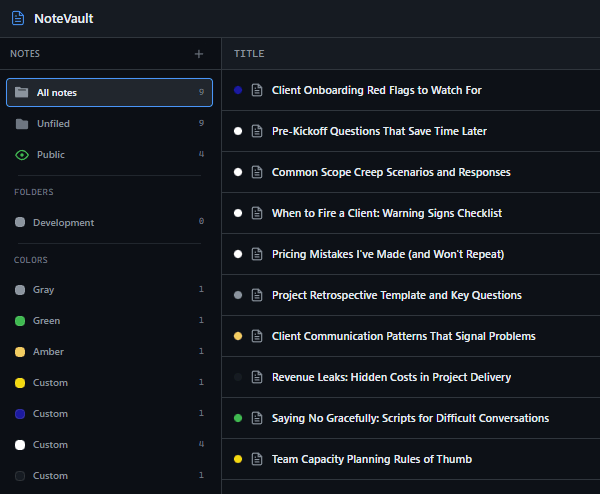








The answer exists, but it is three tools away and one senior’s memory deeper Context travels by screenshot, so the work arrives with one-tenth of what it needs New context is written down nowhere, and the next person pays the full tax again GitScrum answers: NoteVault stores the answer as structured notes that agents read before they act and update when they finish The Wiki keeps the shared reference current, so context is found instead of re-derived Communication integrations drop the thread where the discussion happened, linked to the task GitScrum’s free plan already includes boards, NoteVault, Wiki, Client Flow, monitoring and agent access through one MCP link.
Pro — Git integrations and API & webhooks — starts at $106.80/year at launch, 87% off the $854.40 list price.
The GitScrum Advantage
One unified platform to eliminate context switching and recover productive hours.