
The Agile Industrial Complex What Agile became: ├─ Certifications ($$$) │ └─ CSM, SAFe, PSM, PMI-ACP.
├─ Consultants ($$$$$) │ └─ 'Agile transformation' ├─ Frameworks upon frameworks │ └─ SAFe, LeSS, DAD, Spotify Model... ├─ Tools that enforce process │ └─ Must use our workflow ├─ Rituals without understanding │ └─ 'We do standups because Scrum' Original Agile Manifesto: ├─ Individuals and interactions ├─ Working software ├─ Customer collaboration ├─ Responding to change None of those require certification.
Scrum Theater Common dysfunctions: ├─ Standups: 45-minute status reports │ └─ Should be: 10 minutes, blockers only ├─ Sprint planning: Day-long estimation games │ └─ Should be: 30 minutes, what can we do? ├─ Retrospectives: Same complaints, no action │ └─ Should be: Pick 1 thing, improve it ├─ Velocity: Gaming the numbers │ └─ Should be: Trend, not target ├─ Story points: Religious debates │ └─ Should be: Hours work fine Teams perform Scrum.
They don't practice Agile. Pragmatic Agile Keep what works: ├─ Short iterations (sprints) │ └─ Time-boxed focus ├─ Regular delivery │ └─ Working software frequently ├─ Transparency (boards) │ └─ Everyone sees status ├─ Adaptation (retros) │ └─ Continuous improvement ├─ Collaboration │ └─ Team over individuals Drop what doesn't: ├─ Story points (use hours) ├─ Planning poker (just estimate) ├─ Burndown charts (if nobody uses them) ├─ Prescribed roles (if team is small) ├─ Religious adherence (it's a tool, not law) Adapt to your context.
Sprints That Work Simple sprints: ├─ Duration: 2 weeks (1-4 acceptable) ├─ Planning: 30 minutes │ └─ What can we realistically do? ├─ Daily sync: 10 minutes max │ └─ Blocked?
Help needed? That's it.
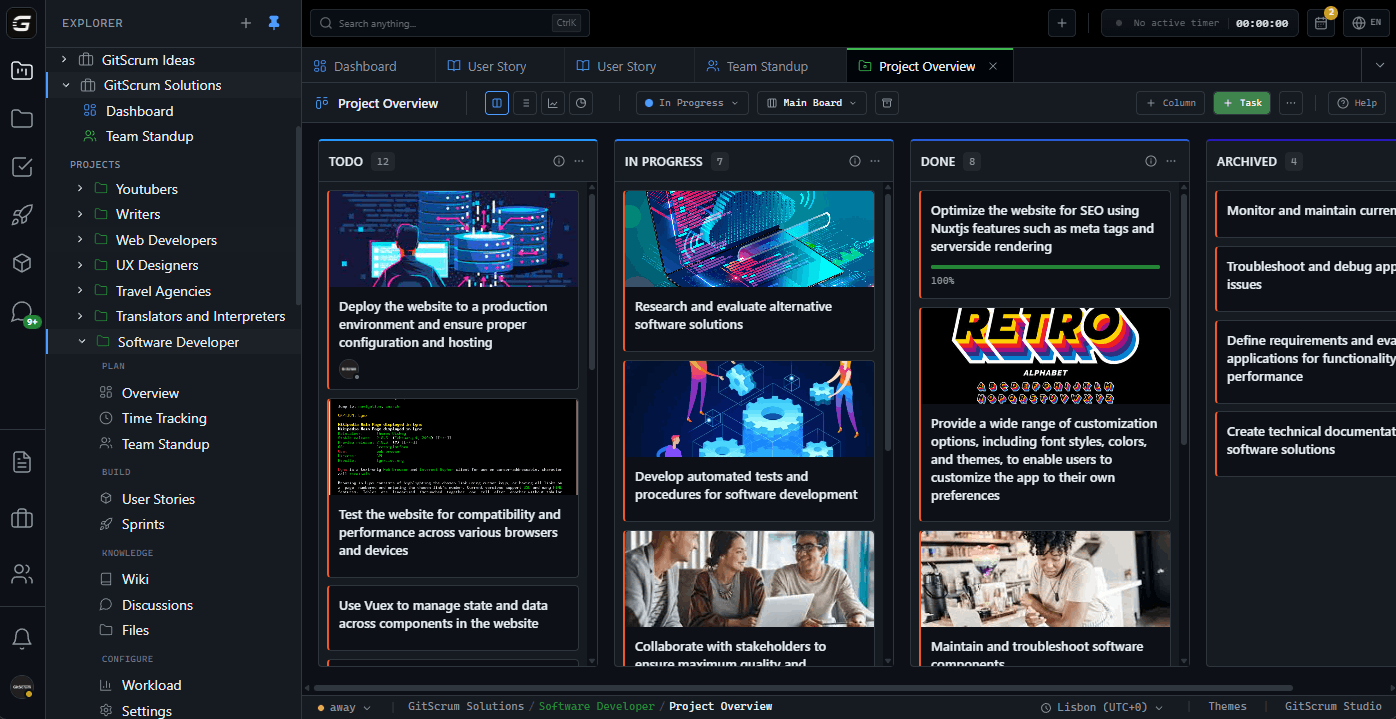
├─ Review: Show working software │ └─ Demo to stakeholders ├─ Retrospective: 30 minutes │ └─ One improvement for next sprint Total ceremony time: ├─ 30 min planning ├─ 50 min dailies (5 days x 10 min) ├─ 30 min review ├─ 30 min retro ├─ Total: ~2.5 hours per 2 weeks ├─ Not: 10+ hours of meetings Boards That Reflect Reality Simple workflow: ├─ To Do (This Sprint) ├─ In Progress ├─ Review ├─ Done That's it. Not needed: ├─ 12 columns for edge cases ├─ Mandatory fields nobody fills ├─ Swimlanes for every category ├─ Sub-tasks of sub-tasks Board shows reality.
Reality is simple. Estimation Without Drama Ditch story points: ├─ Hours work fine ├─ Everyone understands hours ├─ No Fibonacci debates ├─ No 'is this a 3 or a 5?' Simple estimation: ├─ How many hours will this take?
8 hours? ├─ Bigger than 8 hours?
Break it down. ├─ Uncertain?
Add 50% buffer. ├─ Track actuals to improve estimates.
Estimate, don't debate. Retros That Lead to Change Ineffective retro: ├─ 'Communication could be better' ├─ 'Let's improve code reviews' ├─ Action items: None specific ├─ Next sprint: Same problems Effective retro: ├─ What slowed us down?
│ └─ 'PRs sat for 2+ days' ├─ One action: │ └─ 'Reviewer assigned when PR opens' ├─ Owner: │ └─ 'Sarah will implement' ├─ Next retro: │ └─ 'Did it help?' One change per sprint. Compounds over time.
Kanban for Maintenance Teams Not everything needs sprints: ├─ Support team: Continuous flow ├─ Maintenance: As issues arrive ├─ DevOps: Tickets, not sprints Kanban approach: ├─ Work arrives → To Do ├─ Developer pulls → In Progress ├─ Work completes → Done ├─ WIP limits prevent overload ├─ No artificial time boxes Use what fits. Sprints aren't mandatory.
Mixing Methodologies Real teams do this: ├─ Feature team: Sprints (predictability) ├─ Support team: Kanban (responsiveness) ├─ Same tool, different workflows ├─ No 'one process to rule them all' Pragmatism over purity. Scaling Without SAFe Multiple teams?
Don't buy SAFe. Simple coordination: ├─ Each team: Own sprints, own board ├─ Shared dependencies: Visible on boards ├─ Cross-team sync: Weekly 15-min standup ├─ Integration: Same release cadence ├─ Communication: Direct, not through frameworks SAFe adds: ├─ Program Increment planning (days) ├─ Release Train Engineer (role) ├─ Solution Train (more meetings) ├─ $50K+ in certifications You probably don't need it.
Agile Without Agile Roles Small teams don't need: ├─ Scrum Master (developers facilitate) ├─ Product Owner title (PM does it) ├─ Agile Coach (figure it out together) Roles emerge from need: ├─ Someone maintains backlog → PO role ├─ Someone facilitates retros → SM role ├─ No dedicated person needed ├─ Rotate responsibilities Roles serve teams. Teams don't serve roles.
Metrics That Matter Useful metrics: ├─ Cycle time: How long from start to done? ├─ Throughput: How many items completed?
├─ Bug rate: Quality indicator ├─ Customer feedback: Actual value Vanity metrics: ├─ Velocity: Gameable, meaningless over time ├─ Story points completed: What does it mean? ├─ Burndown perfection: Nobody cares ├─ Sprint commitment accuracy: Creates sandbagging Measure outcomes, not ceremonies.
When Agile Fails Agile doesn't fit everything: ├─ Fixed scope contracts: Waterfall might be better ├─ Regulated industries: Documentation required ├─ Hardware components: Can't iterate quickly ├─ Research projects: Unknown timelines Be pragmatic: ├─ Use Agile where it helps ├─ Adapt where it doesn't ├─ No methodology is universal Getting Started 1. Sign up GitScrum ($8.90/user, 2 free) 2.
Create first sprint (2 weeks) 3. Add tasks, estimate in hours 4.
10-min daily syncs 5. End sprint, do retro 6.
Improve one thing 7. Repeat Agile is simple.
The GitScrum Advantage
One unified platform to eliminate context switching and recover productive hours.