






VS Code

GitScrum for VS Code, Google Antigravity, Cursor and Windsurf!

GitScrum logo
Solution

Agile Workflow for Devs 2026 | Keyboard-First Git-Native

What's the best agile tool for developers? GitScrum: keyboard-first navigation, dark mode native, Git-driven task status. Zero context switching. Free trial.

Agile Workflow for Devs 2026 | Keyboard-First Git-Native

Tools Built for Managers, Used by Developers Agile tool history: 1.

Consultants sell Agile to executives 2. Executives buy project management tools 3.

Tools designed for executive reporting 4. Developers forced to use tools built for someone else Result: Friction between how developers work and how tools expect them to work.

The Programmer Workflow How developers actually work: - Live in terminal and IDE - Keyboard over mouse - Dark interfaces (saves eyes) - Git commands for everything - Code-centric thinking - Hate context switching How Agile tools expect them to work: - Open browser, log into Jira - Click through menus - Bright, corporate interfaces - Manual status updates - Task-centric thinking - Constant app switching The mismatch is the problem. GitScrum: Agile for Programmers 1.

Keyboard-First Interface Navigate board with keyboard. Create tasks without mouse.

Shortcuts for common actions. Vim-style keybindings optional.

Because your hands belong on keyboard. 2.

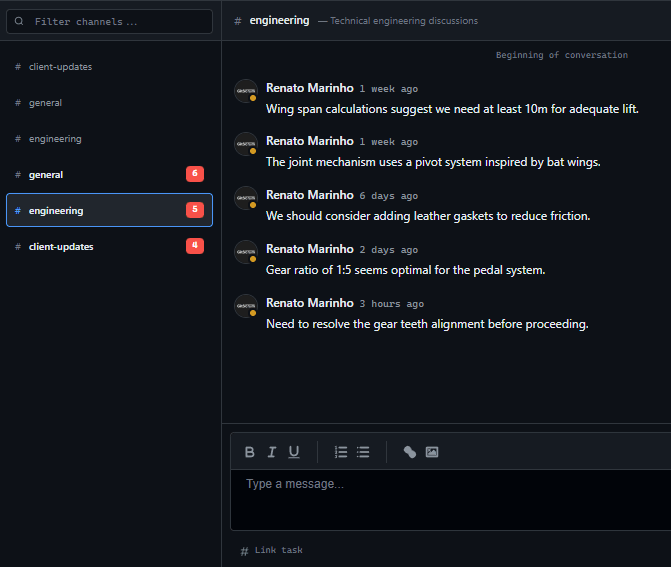
Dark Mode Native Built dark from start. Not CSS toggle on light design.

Colors calibrated for dark. Eyes comfortable for long sessions.

Because terminal is dark. IDE is dark.

Board should be dark. 3.

Git-Native Integration Branch naming connected to tasks. Commits reference task IDs.

PR status visible on board. Merge closes task.

Code workflow and task workflow unified. 4.

Minimal Interface Information dense. No decorative elements.

Data visible at glance. Like good terminal output.

Because developers hate bloated UIs. 5.

Command Palette Cmd+K to access everything. Search tasks, switch projects.

Run actions quickly. Like VSCode, like terminal.

Because good tools have command interfaces. Workflow Patterns GitScrum fits programmer workflow: Starting work: 1.

Open board (or stay in IDE with integration) 2. Find next task (keyboard navigation) 3.

Create branch (linked to task) 4. Start coding During work: 1.

Commits reference task 2. Progress auto-tracked 3.

No context switch to update Completing work: 1. Open PR (linked to task) 2.

Review happens 3. Merge closes task 4.

Next task ready Minimal friction. Maximum flow.

Comparing Approaches Jira workflow: 1. Open browser 2.

Navigate to board 3. Click task 4.

Update status dropdown 5. Save 6.

Switch back to code 7. Repeat often GitScrum workflow: 1.

Commit with task reference 2. Git handles the rest For Developers Who Care About Tools Who GitScrum is for: - Developers tired of clunky tools - Teams that value keyboard efficiency - Dark mode devotees - Git-centric workflows - Programmers who appreciate good UX Who it's not for: - Teams needing extensive reporting - Organizations requiring Jira ecosystem - Non-technical project management Pricing GitScrum for programmers: - 2 users FREE forever - Keyboard-first design - Dark mode native - Git integration - Command palette - $8.90/user/month beyond 2 Agile that respects how you work.

The GitScrum Advantage

One unified platform to eliminate context switching and recover productive hours.

01

problem.identify()

The Problem

Manager-first tools - Agile software designed for project managers, forced on programmers. Wrong user, wrong UX.

Mouse-dependent - Click, click, click. Dropdown menus. Modal windows. Hands leave keyboard constantly.

Light mode default - Bright corporate interfaces. Eye strain. Doesn't match terminal or IDE aesthetic.

Git disconnect - Task updates manual. Code and tasks in separate universes. Double work for status.

Bloated interfaces - Features nobody uses. Visual clutter. Finding what you need takes clicks.

Context switch tax - Every Jira update breaks flow. Mental cost of switching apps. Productivity drain.

02

solution.implement()

The Solution

Developer-first design - Built by programmers for programmers. UX that matches how you actually work.

Keyboard-first interface - Navigate, create, update all by keyboard. Hands stay where they belong.

Dark mode native - Built dark. Designed dark. Matches your terminal and IDE. Eyes comfortable.

Git-integrated workflow - Commits update tasks. PRs show progress. Merge closes tasks. Code is source of truth.

Minimal interface - Information dense. Zero decorative bloat. Find what you need instantly.

Stay in flow - Minimal context switching. Git integration means fewer app switches. Protect your focus.

03

How It Works

1

Navigate with Keyboard

Open GitScrum. Use arrow keys to navigate board. Press Enter to open tasks. Press N to create new. Mouse optional.

2

Connect Your Code

Link GitHub/GitLab. Create branches with task ID. Commits reference tasks. Code activity automatically updates board.

3

Work in Flow

Code in your IDE. Commits update tasks. PRs visible on board. No app switching needed for status updates.

4

Ship and Repeat

Merge PR. Task auto-completes. Sprint metrics update. Next task ready. Minimal overhead, maximum shipping.

04

Why GitScrum

GitScrum addresses Agile Workflow Management for Programmers - Agile That Feels Like Code through Kanban boards with WIP limits, sprint planning, and workflow visualization

Problem resolution based on Kanban Method (David Anderson) for flow optimization and Scrum Guide (Schwaber and Sutherland) for iterative improvement

Capabilities

  • Kanban boards with WIP limits to prevent overload
  • Sprint planning with burndown charts for predictable delivery
  • Workload views for capacity management
  • Wiki for process documentation
  • Discussions for async collaboration
  • Reports for bottleneck identification

Industry Practices

Kanban MethodScrum FrameworkFlow OptimizationContinuous Improvement

Frequently Asked Questions

Still have questions? Contact us at customer.service@gitscrum.com

How keyboard-first is GitScrum really?

Navigate boards, open tasks, create items, update status, switch projects - all keyboard accessible. Tab navigation follows logical flow. Shortcuts for common actions. Mouse works too, but it's not required.

What keyboard shortcuts are available?

N for new task. Arrow keys for navigation. Enter to open. Escape to close. Cmd+K for command palette. Full shortcut reference available. Designed for keyboard efficiency.

Can I stay in my IDE and still update tasks?

With Git integration, yes. Include task ID in commits. Git activity updates task status. PRs link automatically. For most updates, your code handles it. GitScrum stays out of your way.

What's the pricing for these developer features?

2 users FREE forever with keyboard-first design, dark mode native, Git integration, command palette. All features included. $8.90/user/month only for teams larger than 2.

Ready to solve this?

Start free, no credit card required. Cancel anytime.

Works with your favorite tools

Connect GitScrum with the tools your team already uses. Native integrations with Git providers and communication platforms.

GitHubGitHub
GitLabGitLab
BitbucketBitbucket
SlackSlack
Microsoft TeamsTeams
DiscordDiscord
ZapierZapier
PabblyPabbly

Connect with 3,000+ apps via Zapier & Pabbly