Attention residue was formally identified by Dr.
Sophie Leroy at the University of Washington. Her research revealed that when people switch tasks before completing one, they cannot fully focus on the new task because residual thoughts about the previous task continue consuming cognitive resources.
The incomplete task creates an open loop in the brain that demands resolution. For developers, attention residue is particularly destructive.
When a developer is debugging a complex issue, then switches to Slack to respond to a message, their brain does not cleanly release the debugging context. Part of their working memory remains occupied with variable states, potential causes, and next steps—even while reading the Slack message.
This cognitive split means they are neither fully present in the conversation nor fully released from the debugging session. When they return to debugging, they must spend approximately 23 minutes rebuilding full context.
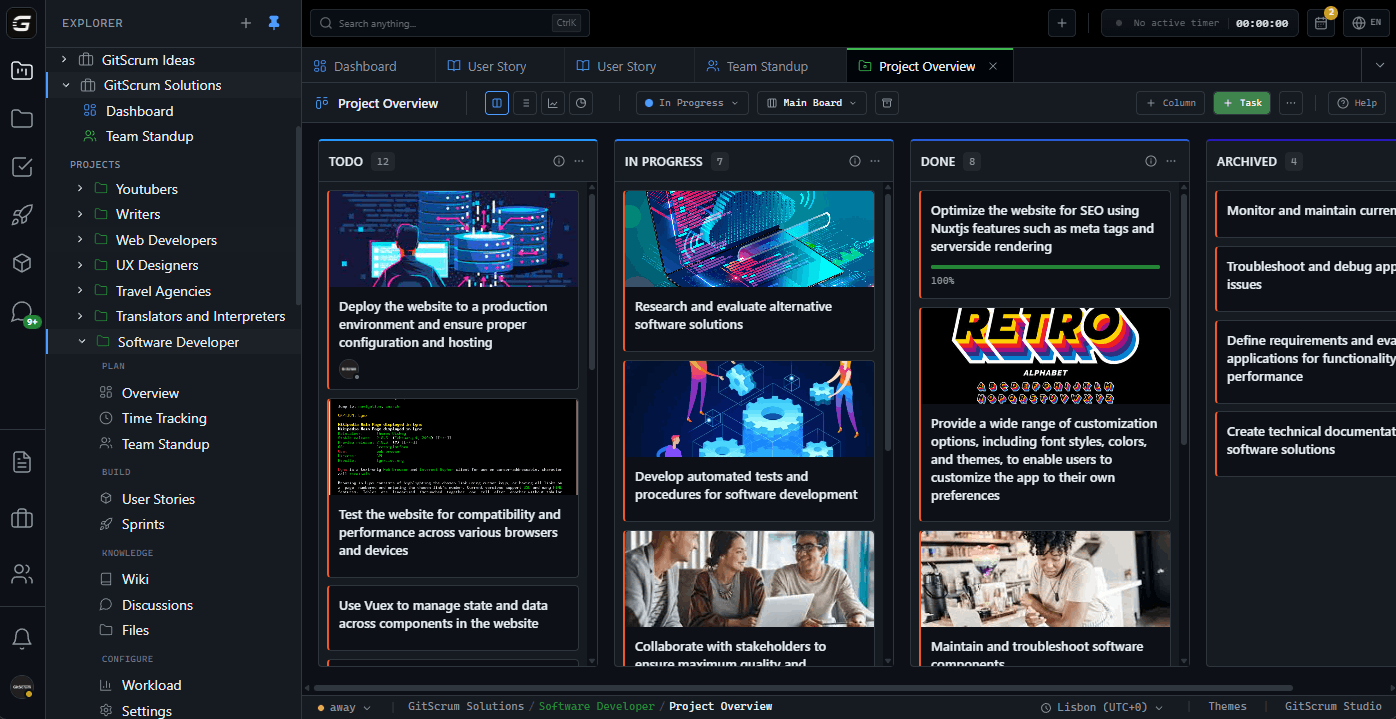
GitScrum reduces attention residue by minimizing forced context switches. When discussions happen in-context on tasks, developers do not need to switch to chat tools.
When time logging is built-in, there is no need to interrupt flow to update an external tracker. Fewer tool boundaries mean fewer attention residue triggers.
The GitScrum Advantage
One unified platform to eliminate context switching and recover productive hours.