







Count the logins a typical developer manages: GitHub for code, Jira for tasks, Slack for communication, Confluence for documentation, Jenkins or CircleCI for pipelines, AWS or GCP or Azure for cloud, Datadog or New Relic for monitoring, Figma for design, Notion for notes, Linear for issues, Vercel or Netlify for deployment, npm for packages, Docker Hub for images, 1Password or LastPass for secrets, and likely several more.
That's 15+ separate services, each requiring its own account, its own password, often its own 2FA setup. The multiplication creates several problems.
First, login friction: each time a developer needs to access a different tool, they face potential authentication barriers. Session timeouts, browser cookie issues, and SSO failures mean developers spend significant time simply getting into tools before they can use them.
Second, security sprawl: 15+ accounts means 15+ potential breach points. Password reuse across services (despite knowing better) is common because managing 15+ unique, complex passwords exceeds practical human capability.
Each account is a vulnerability surface. Third, cognitive overhead: remembering which email/username format each service uses, which password, which 2FA method—this mental load accumulates invisibly but drains mental resources that should go to actual work.
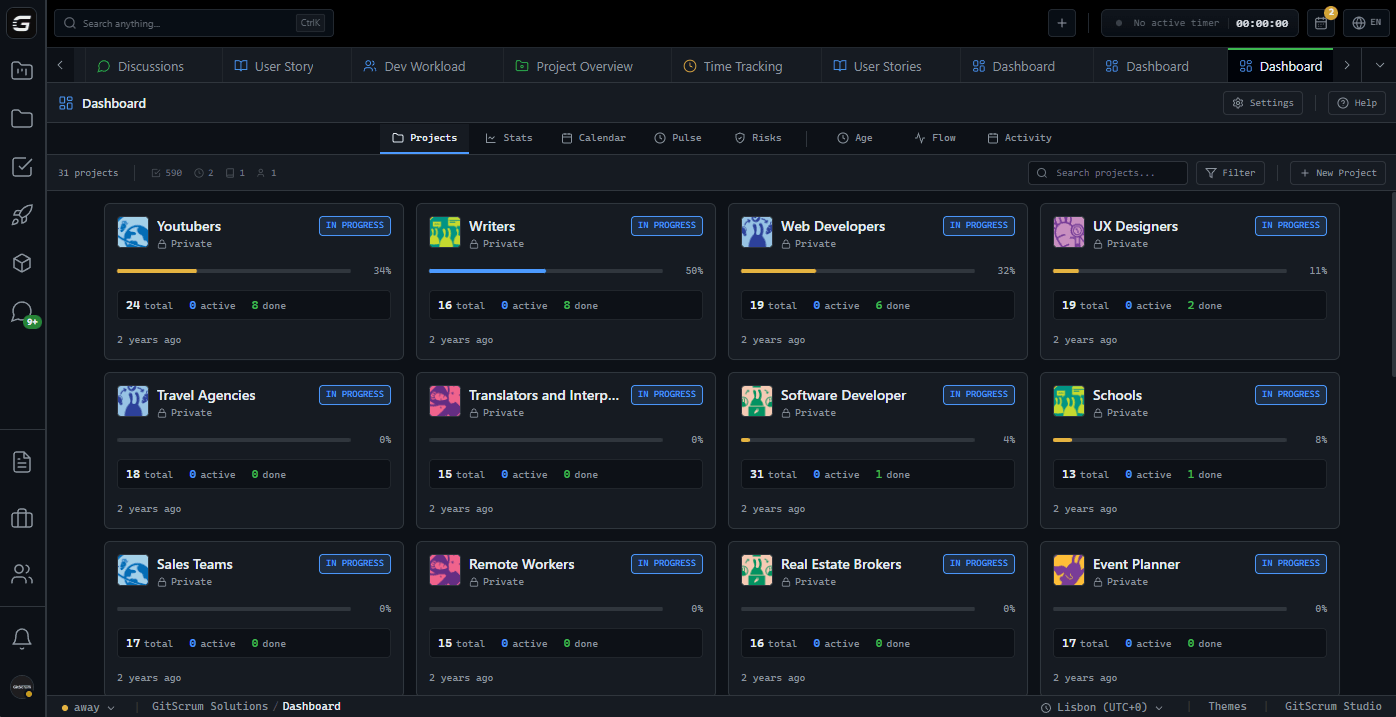
GitScrum consolidates the core development workflow into a single platform. One login provides access to tasks, code integration, communication, documentation, and more.
The 15+ login problem doesn't get solved by better password management—it gets solved by eliminating unnecessary tools entirely.
The GitScrum Advantage
One unified platform to eliminate context switching and recover productive hours.


