Small Team Agile: What Actually Works Small development teams (3-9 people) have unique agile needs.
They can't afford dedicated Scrum Masters. They can't justify expensive enterprise tools.
They need to ship code, not manage tool complexity. The Enterprise Tool Problem: Tools like Jira, Azure DevOps, and Rally were designed for: - Large organizations with multiple teams - Dedicated project managers and Scrum Masters - Complex approval workflows - Enterprise compliance requirements - IT departments to manage configuration What happens when small teams use enterprise tools: 1.
Configuration Paralysis - Hundreds of settings to configure - Custom field overload - Permission matrices that need expertise - Workflow customization requiring training - Result: weeks of setup before first sprint 2. Feature Overwhelm - Roadmaps, portfolios, objectives - Advanced reporting dashboards - Resource capacity planning - Cross-project dependency mapping - Result: paying for features you'll never use 3.
Administrative Burden - Someone becomes the unofficial Jira admin - That person loses development time - Tool maintenance competes with coding - Updates and migrations require attention - Result: hidden cost of developer time 4. Pricing Misalignment - Enterprise pricing models - Per-user costs add up quickly - Features locked behind expensive tiers - Small team discounts non-existent - Result: tool cost rivals contractor costs What Small Agile Teams Actually Need: 1.
Sprint Management - Create sprints quickly - Add tasks easily - Track progress simply - Close and review without ceremony 2. Task Organization - Backlog that's easy to prioritize - Kanban view for daily work - Basic categorization (feature, bug, chore) - Assignees and due dates 3.
GitHub Integration - Tasks link to branches and PRs - Status updates from code activity - Commit visibility on tasks - No manual syncing 4. Time Tracking - Simple start/stop timers - Manual time entry option - Per-task and per-sprint reports - No separate tool needed 5.
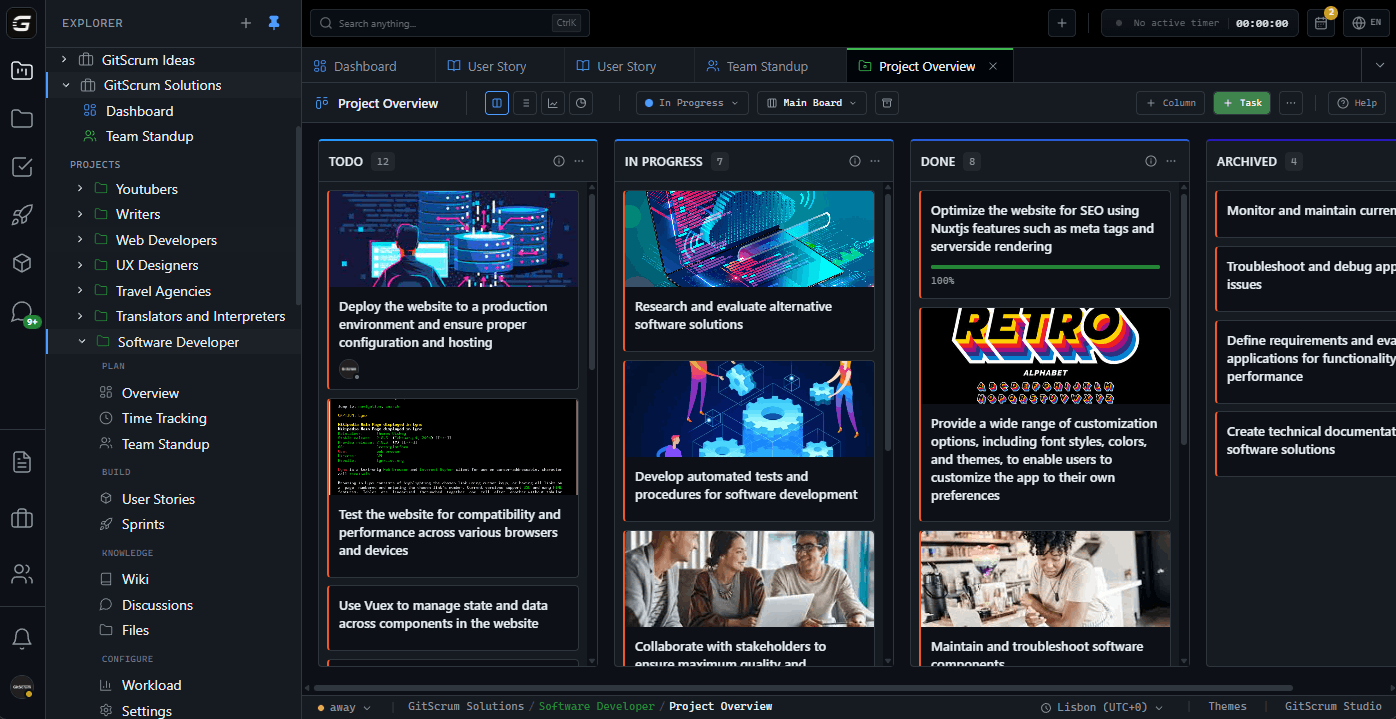
Team Communication - Comments on tasks - mentions for notifications - Activity history - Async communication native to work items 6. Client Visibility (Optional) - Show progress to stakeholders - Without full tool access - Professional presentation - Update automatically The Small Team Workflow: Week 1, Day 1: - Sign up - Connect GitHub - Import existing issues or create tasks - Create first sprint - Start working Total setup time: 15-30 minutes Daily Use: - Pull tasks from backlog - Work in normal git workflow - Task status updates automatically from GitHub - Log time as you work - Comment and collaborate on tasks Sprint Ceremonies: - Planning: drag tasks into sprint, estimate roughly - Daily: review board for blockers - Review: demo completed work (the tool doesn't matter here) - Retro: discuss what worked (also tool-independent) Pricing for Small Teams: The math for a 7-person development team: | Tool | Monthly Cost | Annual Cost | Notes | |------|-------------|-------------|--------| | Jira Standard | $54.25 | $651 | Missing advanced features | | Jira Premium | $106.75 | $1,281 | What most teams actually need | | Monday.com Pro | $133 | $1,596 | Minimum viable feature set | | Asana Business | $174.93 | $2,099 | For portfolios and goals | | GitScrum | $44.50 | $534 | All features, 2 users free | GitScrum calculation: 5 paid users x $8.90 = $44.50/month (2 users free, all 7 get full features) Annual savings vs competitors: $100 - $1,500+ Agile Practices That Work for Small Teams: Scrum (Modified): - 1-week sprints (faster feedback) - Combined daily and planning (save time) - Informal reviews with stakeholders - Quick retros (15 minutes max) Kanban (Pure): - No sprints at all - Continuous flow - WIP limits per person - Deploy when ready Hybrid (Common): - Sprint timeboxes for planning - Kanban flow within sprints - Flexible based on work type GitScrum supports all three approaches.
No tool reconfiguration needed. What You Don't Need: Small teams often get sold features they'll never use: - Advanced roadmapping: You know what's next - Portfolio management: You have one project - Resource capacity planning: You see each other daily - Cross-team dependencies: There's only one team - Audit logs and compliance: You're not regulated - Custom workflows: Default works fine - Automation rules: Manual updates take seconds Focus on shipping code, not managing tools.
$8.90/user/month. 2 users free forever.
Built for small teams who value simplicity over enterprise complexity.
The GitScrum Advantage
One unified platform to eliminate context switching and recover productive hours.