
Bottlenecks in fragmented environments are invisible until they cause visible failure.
Consider a feature that should have shipped two weeks ago. In Jira, it has been 'In Review' for ten days.
That is the symptom, but not the cause. The cause might be in GitHub—the assigned reviewer has been on vacation.
Or in the resource planner—the reviewer is allocated 100% to another project. Or in email—the business sponsor has not responded to clarification questions.
Or in the dependency tracker—another team's API is not ready. Finding the actual cause requires systematic investigation across systems.
Someone must export data from each tool, normalize timestamps into comparable formats, look for correlations, and trace the chain of causation. This analysis takes hours and requires deep familiarity with every system.
By the time the bottleneck is identified—let's say it was the reviewer on vacation—the damage is done. A simple calendar check could have caught this on day one, but that data lived in a different system from the task tracker.
The team worked around a bottleneck that could have been resolved in hours because they could not see the full picture. A unified platform makes bottlenecks visible immediately.
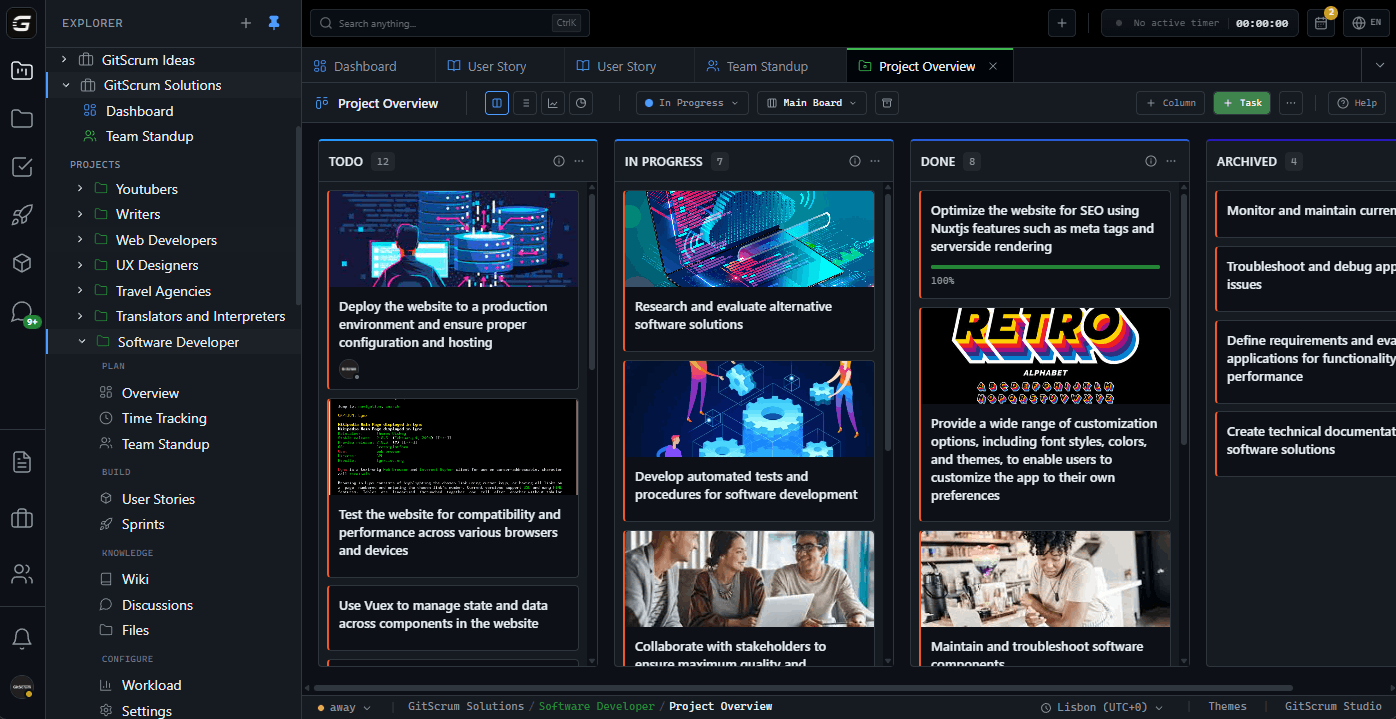
When tasks, resources, reviews, dependencies, and schedules all live in one system, blocked work shows why it is blocked. The reviewer's availability is visible on the task.
The dependent API's status shows on the blocked feature. Root causes emerge instantly rather than requiring forensic investigation.
The GitScrum Advantage
One unified platform to eliminate context switching and recover productive hours.