VS Code

GitScrum for VS Code, Google Antigravity, Cursor and Windsurf!

GitScrum logo
Solution

Context-Switch Burnout Fix 2026 | 50-70% Less Toggles

50+ platform switches daily. Each costs 25 min cognitive recovery. By 2pm brain exhausted from navigating, not working. 'Busy all day, accomplished nothing.' Consolidated platform cuts switches 50-70%. Energy preserved for coding. Free trial.

Context-Switch Burnout Fix 2026 | 50-70% Less Toggles

Developer burnout increasingly caused not by workload but by tool fragmentation.

Each platform switch triggers cognitive restart—memory context must be dumped and reloaded. This happens 50+ times daily across platforms.

Mental energy depleted by navigation overhead, not problem-solving. Studies show decision fatigue from constant micro-choices about where to find/store information.

Developers leave jobs citing 'tooling overhead' as major frustration. Sustainable pace impossible when energy drains to tool juggling.

The GitScrum Advantage

One unified platform to eliminate context switching and recover productive hours.

01

problem.identify()

The Problem

50+ platform switches daily

Cognitive restart on each switch

Energy spent on navigation not work

Deep work becomes impossible

Burnout from tooling, not complexity

02

solution.implement()

The Solution

Minimize platform switching

Unified notification center

Consolidated work context

Sustainable focus periods

Energy preserved for development

03

How It Works

1

Consolidated Morning Routine

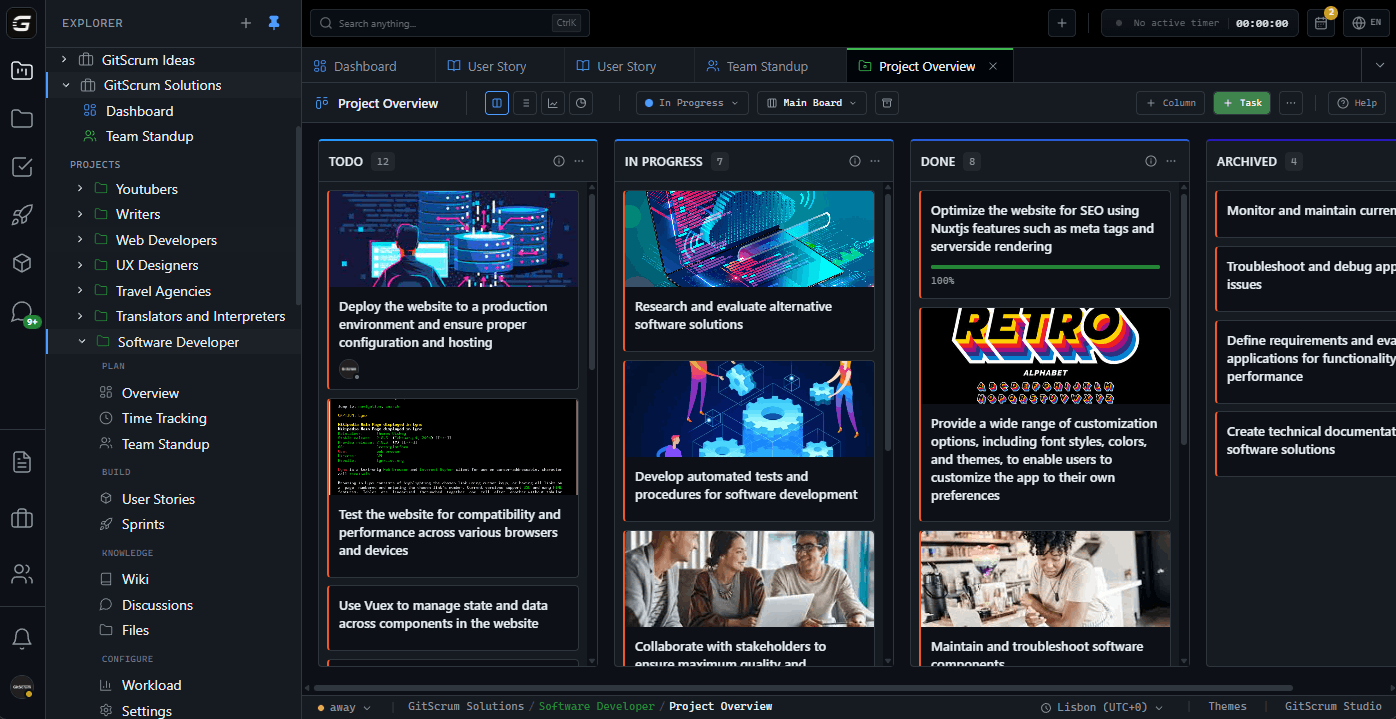
One place for daily orientation: 'Open GitScrum. Dashboard shows: your tasks for today, mentions that need response, upcoming deadlines, team activity. One place to scan, one decision about where to start. Not 4 platforms to check before knowing what your day looks like.'

2

Reduced Switch Frequency

Work stays in one place: 'Task has description, discussion, files, time log, commits. Context stays together. Instead of switching Jira→Confluence→Slack→GitHub, everything lives in the task. Switches reduced from 50+ to maybe 10 (IDE and GitScrum mostly).'

3

Batched Notifications

Control the interruptions: 'Notification center consolidates all mentions, updates, requests. Check when ready—batch process and respond. Not constant pings from 5 different apps demanding immediate attention. You control when to context-switch, not tools.'

4

Sustainable Energy Management

Reserve energy for hard problems: 'Cognitive load reduced by tool consolidation means energy available for actual development challenges. End of day: tired from solving problems, not from navigating systems. Sustainable pace becomes achievable.'

04

Why GitScrum

GitScrum addresses Burnout from Constant Context-Switching Between Platforms through Kanban boards with WIP limits, sprint planning, and workflow visualization

Problem resolution based on Kanban Method (David Anderson) for flow optimization and Scrum Guide (Schwaber and Sutherland) for iterative improvement

Capabilities

  • Kanban boards with WIP limits to prevent overload
  • Sprint planning with burndown charts for predictable delivery
  • Workload views for capacity management
  • Wiki for process documentation
  • Discussions for async collaboration
  • Reports for bottleneck identification

Industry Practices

Kanban MethodScrum FrameworkFlow OptimizationContinuous Improvement

Frequently Asked Questions

Still have questions? Contact us at customer.service@gitscrum.com

How do you measure burnout from tool-switching specifically?

Track: number of platform switches daily, length of uninterrupted work blocks, self-reported energy levels, end-of-day fatigue assessments. Compare before/after tool consolidation. Teams typically report 50-70% reduction in switches, significantly longer focus periods, and improved end-of-day energy.

Won't we still need multiple tools for different purposes?

Some specialized tools remain necessary: IDE for coding, design tools for design work. The consolidation targets the 'coordination overhead' tools—project management, documentation, time tracking, team communication about work. These can combine without losing capability.

How quickly do teams feel the difference?

First week: unfamiliar, some learning curve. Second week: starting to appreciate single source of truth. Third week onwards: noticeable reduction in mental fatigue. One month: teams rarely want to go back to fragmented tooling. The relief from reduced switching becomes addictive.

What about team members who prefer different tools?

Individual preference yields to team efficiency. The cost of tool fragmentation falls on everyone through sync overhead, context loss, and burnout. Unified tooling benefits even those who initially prefer different tools—they gain from reduced coordination friction.

Ready to solve this?

Start free, no credit card required. Cancel anytime.

Works with your favorite tools

Connect GitScrum with the tools your team already uses. Native integrations with Git providers and communication platforms.

GitHubGitHub
GitLabGitLab
BitbucketBitbucket
SlackSlack
Microsoft TeamsTeams
DiscordDiscord
ZapierZapier
PabblyPabbly

Connect with 3,000+ apps via Zapier & Pabbly