VS Code

GitScrum for VS Code, Google Antigravity, Cursor and Windsurf!

GitScrum logo
Solution

ClickUp Alternative Developers 2026 | Less Bloat More Focus

ClickUp: 100+ features, devs use 10%. Learning curve steeper than usefulness. Git-first, sprint-native tool devs actually need. 2 users free forever. Free trial.

ClickUp Alternative Developers 2026 | Less Bloat More Focus

The ClickUp Trap ClickUp sells one thing: Everything.

Project management? Yes.

'One app to replace them all.' Sounds perfect. Until you use it.

The Overwhelm Problem 1. Feature Bloat 100+ features competing for attention.

Most teams use 10% of capabilities. The other 90% creates cognitive load every time you open the app.

2. Learning Curve From Hell Custom statuses, custom fields, custom everything.

Time to proficiency? Months.

Your team spends more time configuring ClickUp than using it. 3.

Performance Issues All those features have a cost. Slow loading.

Laggy interfaces. Battery drain.

Developer patience runs out fast. 4.

Generic vs Specific ClickUp serves everyone: marketing, HR, sales, dev. Result: Optimized for no one.

Dev-specific needs get generic solutions. 5.

Git Integration Afterthought Yes, it has Git integration. As one of 100+ features.

Not core to the experience. Not optimized for it.

6. Pricing Complexity Free tier exists but limited.

Unlock features gradually through pricing tiers. Full experience requires higher plans.

The Developer Experience Gap ClickUp wasn't built by developers for developers. It was built by productivity enthusiasts for everyone.

Developers need: - Git commits appearing on tasks naturally - Sprints that feel like sprints (not shoe-horned) - Time tracking that exports for billing cleanly - Client portals without exposing internals - Fast, responsive interfaces ClickUp provides: - Generic task management with dev features bolted on - Sprint-like functionality buried in settings - Time tracking among dozens of other features - Sharing with permission complexity - Feature-rich but often sluggish The 'Use What You Need' Fallacy 'Just ignore features you don't need.' Except: - They're in the UI - They're in the navigation - They're in the search results - They're in onboarding tips - New team members discover and try them - Configurations bloat over time Simplicity isn't about ignoring complexity. It's about not having it in the first place.

GitScrum: Dev-Focused by Design We built for one audience: Development teams. Core features: 1.

Git integration (GitHub, GitLab, Bitbucket) - First-class, not afterthought 2. Sprint management - Real agile, not generic 'time periods' 3.

Time tracking - Native, exportable, billing-ready 4. Client Flow - Clients see progress, nothing else 5.

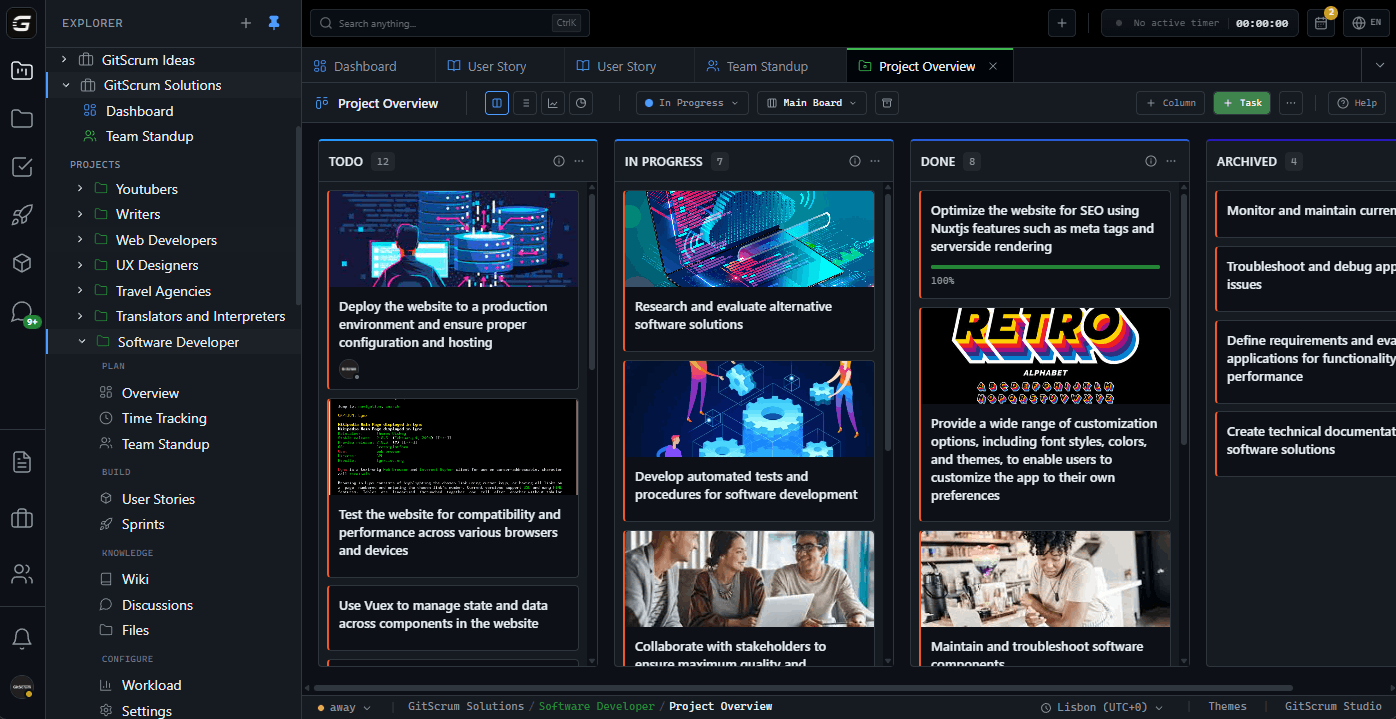
Boards - Fast, keyboard-friendly, developer-designed That's it. No CRM.

No whiteboards. No mindmaps.

Because you have tools for those. And we do our job extremely well.

The Focused Tool Advantage Fewer features means: - Faster load times - Simpler onboarding - Less decision fatigue - Cleaner interface - Better performance at core functions A tool that does 5 things excellently beats a tool that does 50 things adequately. Migration Reality From ClickUp: - Export tasks - Import to GitScrum - Set up sprints properly - Connect Git - Breathe You lose: Feature bloat you weren't using.

You gain: A tool that respects your attention. Pricing Clarity ClickUp: - Free: Limited - Unlimited: $7/member/month - Business: $12/member/month - Enterprise: Custom (expensive) GitScrum: - 2 users FREE forever (full features) - $8.90/user/month for larger teams No feature gatekeeping.

No tier confusion. All features available from day one.

The GitScrum Advantage

One unified platform to eliminate context switching and recover productive hours.

01

problem.identify()

The Problem

Feature bloat - 100+ features. Use 10%. The rest is cognitive overhead. Every. Single. Session.

Steep learning curve - Custom everything requires months to master. Team spends more time configuring than producing.

Sluggish performance - All those features cost speed. Slow loads. Laggy interactions. Developer patience evaporates.

Generic, not dev-specific - Built for everyone means optimized for no one. Dev needs get generic solutions.

Git as afterthought - Git integration exists. As one of 100 features. Not central. Not optimized.

Pricing complexity - Multiple tiers. Features gatekept. Full experience requires premium plans.

02

solution.implement()

The Solution

Focused feature set - What devs need: Git, sprints, time tracking, client access. Nothing else cluttering the UI.

Instant productivity - Simple interface. Fast onboarding. Working in minutes, not months.

Built for speed - Focused codebase means fast loads. Responsive interactions. Respects your time.

Dev-specific design - Built by developers for developers. Every feature optimized for dev workflows.

Git-first architecture - Git integration is core, not add-on. GitHub, GitLab, Bitbucket as first-class citizens.

Simple pricing - 2 users FREE forever. All features. $8.90/user/month for more. No tiers. No gatekeeping.

03

How It Works

1

Export and Import

Export from ClickUp. Import to GitScrum. Tasks come over. Leave the bloat behind.

2

Connect Git

Link GitHub, GitLab, or Bitbucket. Takes minutes. Commits flow to tasks automatically from then on.

3

Set Up Sprints

Create real sprints. Assign tasks. Set estimates. Proper agile, not ClickUp's generic time periods.

4

Experience Focus

Work in a clean interface. Load times you forgot existed. Features you actually use. Breathe.

04

Why GitScrum

GitScrum addresses ClickUp Alternative for Developers - Less Feature Bloat, More Focus through Kanban boards with WIP limits, sprint planning, and workflow visualization

Problem resolution based on Kanban Method (David Anderson) for flow optimization and Scrum Guide (Schwaber and Sutherland) for iterative improvement

Capabilities

  • Kanban boards with WIP limits to prevent overload
  • Sprint planning with burndown charts for predictable delivery
  • Workload views for capacity management
  • Wiki for process documentation
  • Discussions for async collaboration
  • Reports for bottleneck identification

Industry Practices

Kanban MethodScrum FrameworkFlow OptimizationContinuous Improvement

Frequently Asked Questions

Still have questions? Contact us at customer.service@gitscrum.com

What ClickUp features will I lose moving to GitScrum?

Docs, whiteboards, mind maps, goals, forms, portfolios, and 80+ other features. If you use them, you'll need separate tools. If you don't (most dev teams don't), you'll lose nothing you miss.

Is GitScrum powerful enough compared to ClickUp?

For dev work: More powerful where it matters. Git integration is deeper. Sprints are real agile. Time tracking exports cleanly. Client portals are built-in. It's specialized power vs generalized features.

How does performance compare?

GitScrum loads faster. Responds faster. Focused codebase without feature bloat means actual speed. ClickUp's everything-app approach has inherent performance costs.

Is migration difficult?

Export from ClickUp, import to GitScrum. Tasks come over. Then set up sprints properly, connect Git, and you're running. Most teams are fully migrated in a day.

Ready to solve this?

Start free, no credit card required. Cancel anytime.

Works with your favorite tools

Connect GitScrum with the tools your team already uses. Native integrations with Git providers and communication platforms.

GitHubGitHub
GitLabGitLab
BitbucketBitbucket
SlackSlack
Microsoft TeamsTeams
DiscordDiscord
ZapierZapier
PabblyPabbly

Connect with 3,000+ apps via Zapier & Pabbly