







VS Code

GitScrum for VS Code, Google Antigravity, Cursor and Windsurf!

GitScrum logo
Solution

Configuration Drift 2026 | Unified Settings All Teams

5 teams = 5 incompatible Jira setups. Cross-team visibility requires manual translation. Unified platform prevents configuration drift. Free trial.

Configuration Drift 2026 | Unified Settings All Teams

Tool customization starts innocently.

Each team has unique needs. The mobile team needs specific release stages.

The backend team tracks different metrics. The design team follows a different workflow cadence.

Tools like Jira accommodate these differences through extensive customization options. Teams configure their boards, workflows, and fields to match their specific processes.

The problem emerges gradually. As teams customize independently, configurations drift apart.

Status names diverge. Fields mean different things.

Workflow stages multiply and vary. A task marked Done in one team might map to In Review in another's conceptual framework.

Cross-team collaboration suffers first. When teams need to coordinate, they discover their tools speak different languages.

A simple query—how many open tasks across all teams—requires understanding each team's unique configuration. Reports at the organization level become exercises in translation and aggregation.

Moving people between teams creates friction. Someone who learned the mobile team's Jira setup must relearn everything when they move to backend.

The tool is the same; the configuration is foreign. Institutional knowledge becomes team-specific rather than organization-wide.

Standardization attempts often fail. Teams resist giving up customizations they consider essential.

The drift represents accumulated adaptation to real needs. But the fragmentation cost grows with each additional team-specific configuration.

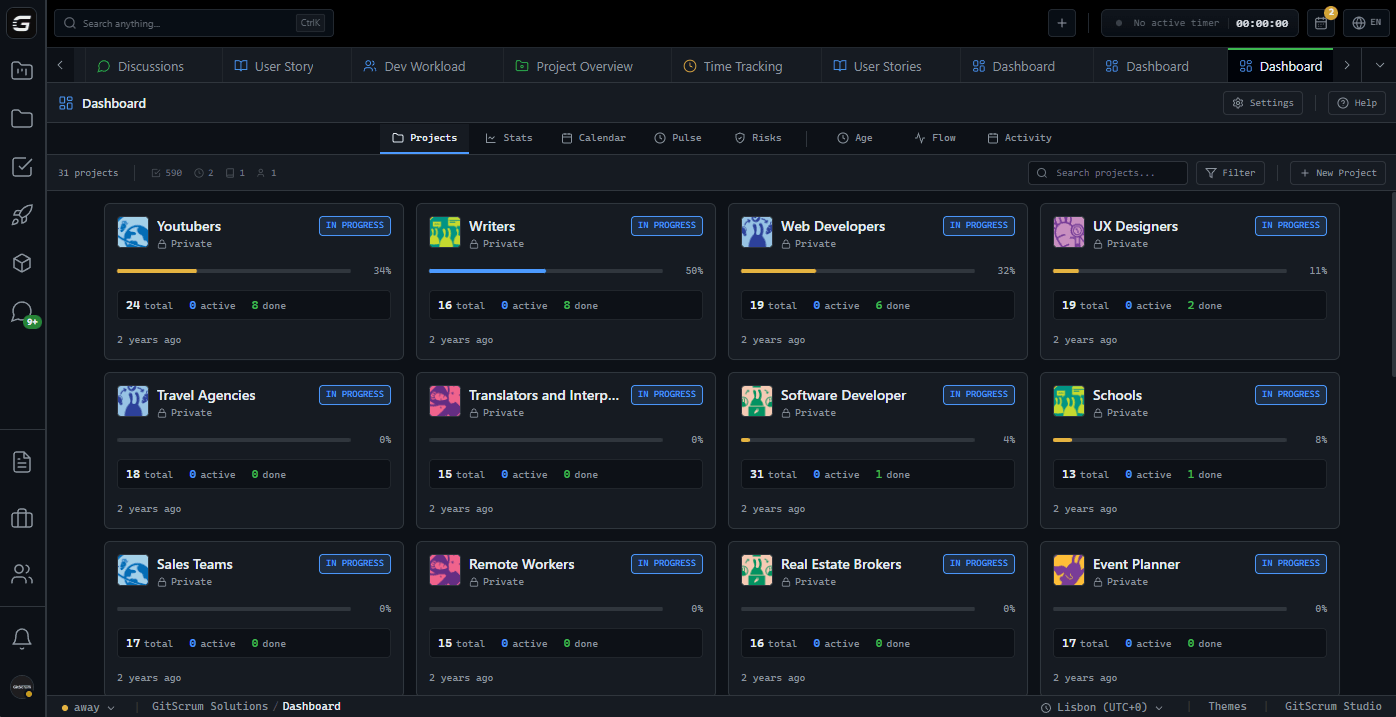
A unified platform with thoughtful defaults prevents this drift. When all teams use the same configuration foundation, cross-team visibility is automatic.

People moving between teams find familiar interfaces. Organization-wide reporting works without translation.

The GitScrum Advantage

One unified platform to eliminate context switching and recover productive hours.

01

problem.identify()

The Problem

Each team customizes tools independently

Configurations drift apart over time

Cross-team visibility requires manual translation

Organization-wide reporting becomes impossible

Team transfers require relearning configurations

Standardization attempts meet resistance

02

solution.implement()

The Solution

Shared configuration foundation across all teams

Automatic cross-team visibility and reporting

Consistent interface regardless of team

Organization-wide metrics without translation

Seamless team transfers

Flexibility within consistent framework

03

How It Works

1

Unified Foundation

All teams share same configuration baseline

2

Consistent Vocabulary

Status and fields mean same thing across teams

3

Cross-Team Visibility

Organization-wide views work automatically

4

Controlled Flexibility

Team-specific needs within consistent framework

04

Why GitScrum

GitScrum addresses Configuration Drift as Each Team Customizes Tools Differently through Kanban boards with WIP limits, sprint planning, and workflow visualization

Problem resolution based on Kanban Method (David Anderson) for flow optimization and Scrum Guide (Schwaber and Sutherland) for iterative improvement

Capabilities

  • Kanban boards with WIP limits to prevent overload
  • Sprint planning with burndown charts for predictable delivery
  • Workload views for capacity management
  • Wiki for process documentation
  • Discussions for async collaboration
  • Reports for bottleneck identification

Industry Practices

Kanban MethodScrum FrameworkFlow OptimizationContinuous Improvement

Frequently Asked Questions

Still have questions? Contact us at customer.service@gitscrum.com

How does configuration drift happen?

It starts innocently. Each team has legitimate unique needs. They customize tools to match their specific workflows. Over months and years, these customizations accumulate and diverge. Status names become different. Fields mean different things. Workflow stages multiply. Eventually, the same tool looks and behaves completely differently across teams.

What problems does configuration drift cause?

Cross-team visibility becomes impossible without manual translation. Organization-wide reporting requires aggregating incompatible data. Moving people between teams means relearning familiar tools. Standardization attempts fail because teams resist losing adaptations they consider essential. The tool that was supposed to unify the organization actually fragments it.

How does a unified platform prevent configuration drift?

A unified platform establishes a consistent configuration foundation that all teams share. Teams can have specific workflows within this framework, but the core vocabulary—what statuses mean, how tasks work, how time is tracked—remains consistent. Cross-team visibility works automatically. Organization-wide reporting needs no translation. People moving between teams find familiar interfaces.

Ready to solve this?

Start free, no credit card required. Cancel anytime.

Works with your favorite tools

Connect GitScrum with the tools your team already uses. Native integrations with Git providers and communication platforms.

GitHubGitHub
GitLabGitLab
BitbucketBitbucket
SlackSlack
Microsoft TeamsTeams
DiscordDiscord
ZapierZapier
PabblyPabbly

Connect with 3,000+ apps via Zapier & Pabbly