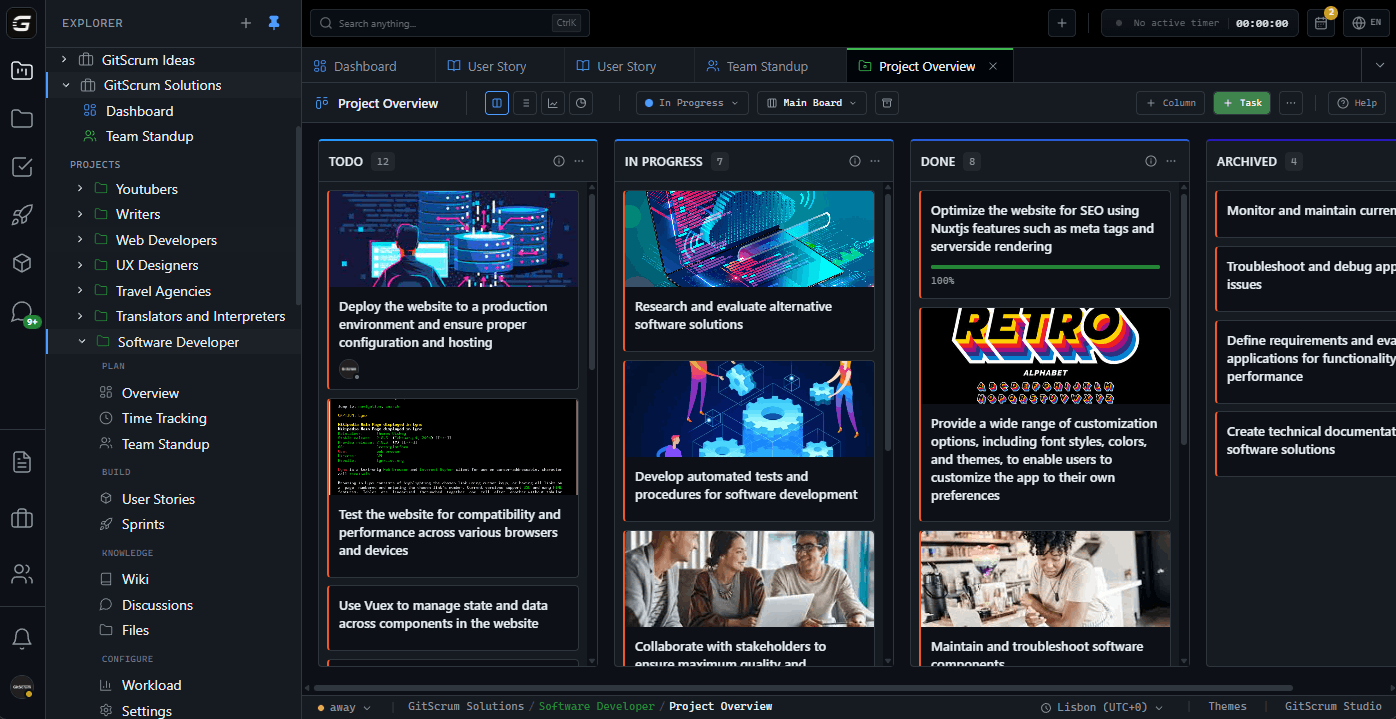
VS Code

GitScrum for VS Code, Google Antigravity, Cursor and Windsurf!

GitScrum logo
Solution

Email Thread Information Loss 2026 | Centralized Knowledge

Decision buried in reply #34 of 47. New devs can't find history. Centralized searchable knowledge—decisions documented, accessible forever. Free trial.

Email Thread Information Loss 2026 | Centralized Knowledge

A new developer joins the team and asks, 'Why does the authentication system work this way?

I think in email?' Someone searches for 20 minutes. They find a thread with 47 replies across three months.

The actual decision is buried in reply 34, referencing context from reply 12, which was responding to a different thread entirely. Email was designed for communication, not knowledge management.

But teams treat it as both. Critical decisions are made in email threads.

Technical specifications are attached to messages. Context that should live forever is trapped in inboxes that will eventually be deleted.

The problem compounds as teams grow. New members don't have access to historical email threads.

Decisions feel arbitrary because the rationale isn't accessible. Teams re-debate settled questions because nobody remembers they were already resolved.

Email creates information silos by design. Each inbox is a private database.

Knowledge shared via email is fragmented across everyone's private storage, unsearchable by the team, inaccessible to new members.

The GitScrum Advantage

One unified platform to eliminate context switching and recover productive hours.

01

problem.identify()

The Problem

Critical decisions buried in email threads

Information technically findable but practically lost

New team members can't access historical discussions

Context fragmented across private inboxes

Teams re-debate settled questions without realizing

02

solution.implement()

The Solution

Centralized searchable knowledge repository

Decisions documented with context in project workspace

New members access complete historical context

Information structured by project, not by inbox

Discussions linked to relevant tasks and features

03

How It Works

1

Project-Based Knowledge Organization

All project information lives in GitScrum workspaces organized by project and feature. Context travels with the work, not buried in personal inboxes.

2

Decision Documentation

Significant decisions are documented with context: what was decided, why, what alternatives were considered. This documentation lives where future developers will look.

3

Powerful Search Across All Context

GitScrum's search finds information across all projects, tasks, and discussions. You don't need to remember who said what—you search and find.

4

New Member Onboarding

New team members have immediate access to all historical context. They can understand why things work the way they do without archaeology through email threads.

04

Why GitScrum

GitScrum addresses Critical Information Buried in Email Threads through Kanban boards with WIP limits, sprint planning, and workflow visualization

Problem resolution based on Kanban Method (David Anderson) for flow optimization and Scrum Guide (Schwaber and Sutherland) for iterative improvement

Capabilities

  • Kanban boards with WIP limits to prevent overload
  • Sprint planning with burndown charts for predictable delivery
  • Workload views for capacity management
  • Wiki for process documentation
  • Discussions for async collaboration
  • Reports for bottleneck identification

Industry Practices

Kanban MethodScrum FrameworkFlow OptimizationContinuous Improvement

Frequently Asked Questions

Still have questions? Contact us at customer.service@gitscrum.com

How do we migrate knowledge from email to GitScrum?

Don't try to migrate everything—that's a project that never finishes. Instead, migrate forward: new decisions go in GitScrum. When you reference old email discussions, capture the key points in GitScrum so it exists for next time.

What about email that needs to exist for legal/compliance?

Keep email for what email is good for: external communication, formal records. But the knowledge from those emails—decisions, context, specifications—should be copied to the team knowledge base where it's accessible.

How do we get the team to stop using email for decisions?

Make GitScrum the only place you look for answers. When someone asks a question and the answer is in email, say 'I don't know—check the project in GitScrum.' Behavioral change follows when the new system is actually used.

Doesn't this create more documentation overhead?

Initially, yes—but it replaces the constant overhead of information hunting. The ten minutes documenting a decision saves the 30 minutes someone will spend searching for it later. And that search happens many times.

Ready to solve this?

Start free, no credit card required. Cancel anytime.

Works with your favorite tools

Connect GitScrum with the tools your team already uses. Native integrations with Git providers and communication platforms.

GitHubGitHub
GitLabGitLab
BitbucketBitbucket
SlackSlack
Microsoft TeamsTeams
DiscordDiscord
ZapierZapier
PabblyPabbly

Connect with 3,000+ apps via Zapier & Pabbly