Cross-departmental dependencies are among the most common causes of project delays, and they are almost always invisible until too late.
Each department operates in isolation with their own tool and their own timeline. They know what they need to deliver but not what they need from others or what others need from them.
Dependencies exist but are not tracked in any system. Consider a typical product launch: Marketing needs finalized features to create demos and content.
Engineering needs design specifications to build features. Design needs marketing requirements to create appropriate visuals.
Legal needs engineering implementation to review compliance. Each department has a piece, but the connections between pieces exist only in people's heads or scattered email threads.
When Marketing asks Engineering 'will the feature be ready for our March 15th launch?', Engineering looks at their Jira board—which has no concept of the Marketing launch date—and says 'probably.' Marketing proceeds with their campaign planning. But Engineering's 'probably' was based on assumptions that Design would deliver specs on time, which assumed Marketing would provide requirements on time, which assumed Product had finalized the scope.
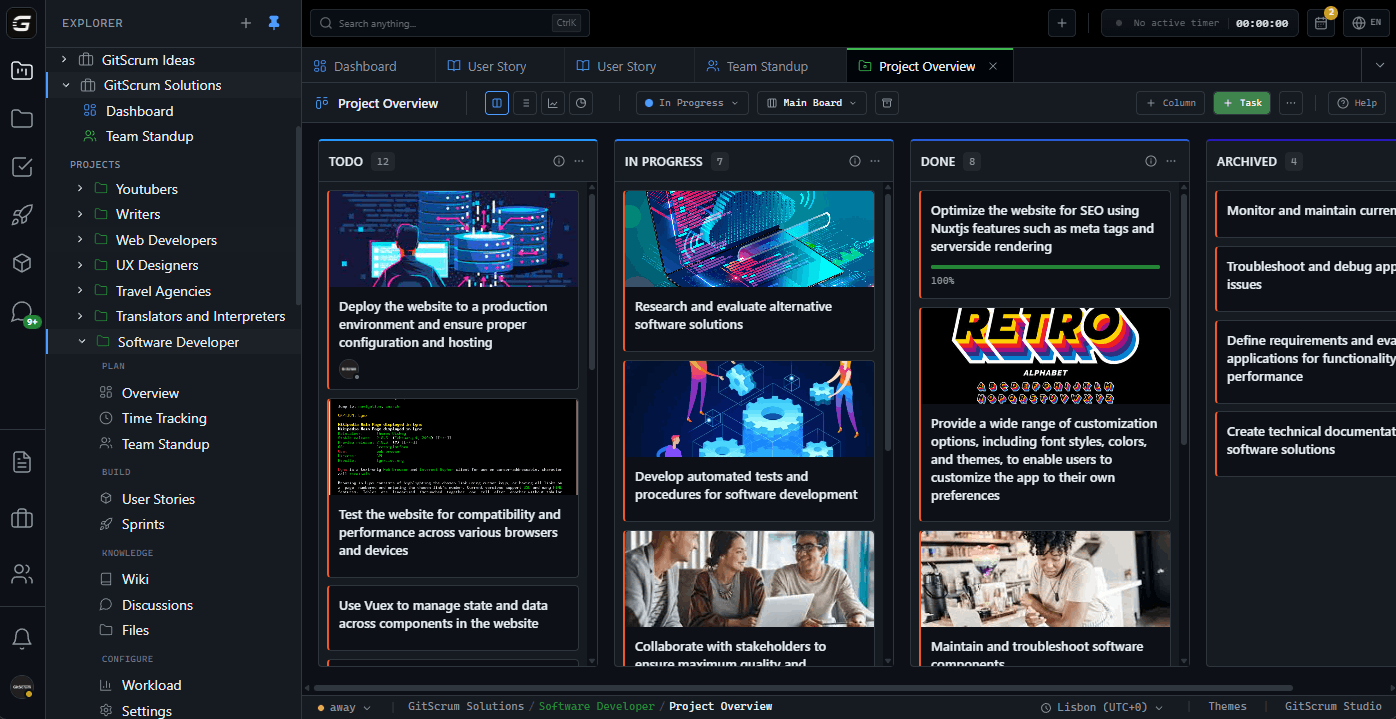
These assumptions were never validated because the dependencies were never visible. A unified platform makes cross-departmental dependencies explicit.
When Marketing creates a launch date, that date links to Engineering deliverables which link to Design deliverables which link to Marketing requirements. Everyone sees the chain.
When any link is at risk, all dependent work is flagged. Dependencies are managed proactively rather than discovered reactively.
The GitScrum Advantage
One unified platform to eliminate context switching and recover productive hours.