VS Code

GitScrum for VS Code, Google Antigravity, Cursor and Windsurf!

GitScrum logo
Solution

Cross-Functional Alignment 2026 | All Functions One Board

Design in Figma, Backend in Jira, QA in TestRail—no unified view. Dependencies missed. One shared board for all functions. Feature-level visibility. Free trial.

Cross-Functional Alignment 2026 | All Functions One Board

A feature isn't done when backend finishes—it's done when design, frontend, backend, QA, and DevOps have all completed their parts.

But cross-functional teams often work in silos: designers in Figma, backend in Jira, QA in TestRail, DevOps in their own tracking. No one has visibility into the whole.

Dependencies get missed: frontend waits for an API that backend hasn't prioritized, QA gets surprised by features they weren't told about, deployment blocks because DevOps wasn't looped in. GitScrum provides the unified view.

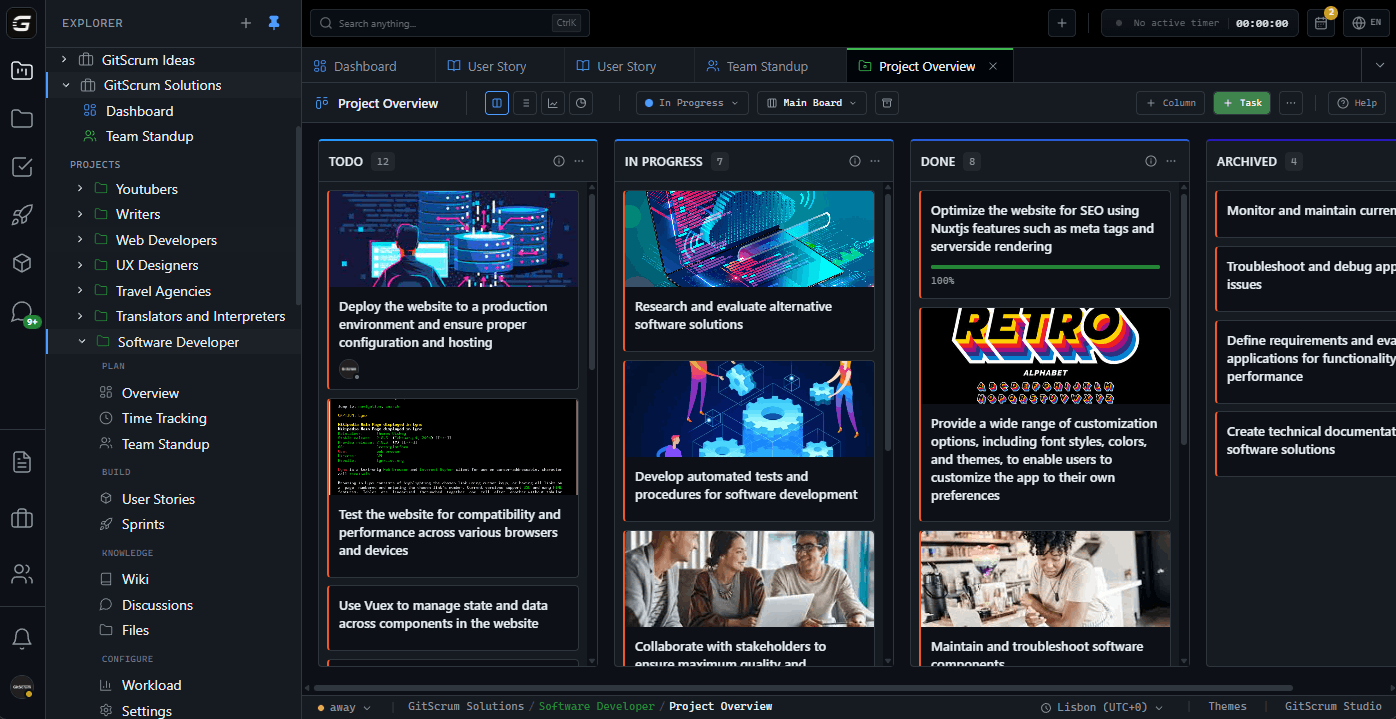
Shared boards show all work—design, development, testing, deployment—in one place. Task dependencies link related work across functions.

Labels and task types distinguish work categories while keeping them visible together. Sprint planning includes all functions, preventing the 'backend finished but nothing else is ready' problem.

Team Standup shows cross-functional status. Everyone sees the whole pipeline, not just their piece.

The GitScrum Advantage

One unified platform to eliminate context switching and recover productive hours.

01

problem.identify()

The Problem

Different functions use different tools—no unified view of cross-functional work

Dependencies between functions get missed until they become blockers

Sprint planning focuses on one function, ignoring that features require all functions

QA and DevOps get surprised by work they weren't included in planning for

No visibility into whether all pieces of a feature are progressing together

02

solution.implement()

The Solution

Shared boards show all cross-functional work in one unified view

Task dependencies link related work across design, dev, QA, and DevOps

Labels and task types categorize work while keeping it visible together

Sprint planning includes all functions for realistic cross-functional commitment

User Story Epics group related tasks across functions for feature-level visibility

03

How It Works

1

Create a Unified Board

Set up one board that includes all functions: Design, Frontend, Backend, QA, DevOps. Use labels or task types to categorize work by function. Everyone sees the whole workflow, not just their piece.

2

Link Dependencies

When tasks depend on each other across functions, create task dependencies. 'Frontend UI implementation' depends on 'Design mockups complete'. 'QA testing' depends on 'Backend API ready'. Dependencies surface blockers before they become emergencies.

3

Group in Epics

Use User Story Epics to group related tasks across functions. The 'User Login' epic contains: Design mockup, Frontend implementation, Backend auth API, QA test cases, DevOps deployment config. Epic progress shows feature-level completion.

4

Plan Sprints Cross-Functionally

During sprint planning, include representatives from all functions. Don't commit to backend work without ensuring design is done and QA has capacity. Plan the whole feature flow, not isolated function silos.

5

Review Cross-Functional Status

Use Team Standup and board filters to review cross-functional progress. Is design ahead while backend is blocked? Is QA waiting on work they don't have? The unified view surfaces misalignment early.

04

Why GitScrum

GitScrum addresses Managing Cross-Functional Team Alignment in Software Development through Kanban boards with WIP limits, sprint planning, and workflow visualization

Problem resolution based on Kanban Method (David Anderson) for flow optimization and Scrum Guide (Schwaber and Sutherland) for iterative improvement

Capabilities

  • Kanban boards with WIP limits to prevent overload
  • Sprint planning with burndown charts for predictable delivery
  • Workload views for capacity management
  • Wiki for process documentation
  • Discussions for async collaboration
  • Reports for bottleneck identification

Industry Practices

Kanban MethodScrum FrameworkFlow OptimizationContinuous Improvement

Frequently Asked Questions

Still have questions? Contact us at customer.service@gitscrum.com

How do we get design, QA, and DevOps to use the same tool as development?

Start with shared visibility: invite everyone to the board but don't require them to abandon their specialized tools immediately. Let designers continue using Figma but track design tasks on the shared board. QA can use TestRail but link test cases to GitScrum tasks. The value of cross-functional visibility often convinces teams to consolidate over time.

How do task dependencies help cross-functional alignment?

Dependencies make implicit blocking explicit. When 'Frontend implementation' is marked as dependent on 'API design complete', everyone can see the blocker. If backend is delayed, frontend knows immediately—they don't discover it when they're ready to start. Dependencies surface coordination problems during planning, not execution.

Should we have one board for all functions or separate boards?

One shared board with labels/task types to categorize by function. Separate boards recreate silos. The value is seeing the whole flow: design → development → testing → deployment. Use board filters for function-specific views when needed, but default to the unified view so everyone sees cross-functional dependencies.

How do User Story Epics improve feature-level visibility?

Epics group related tasks across functions. The 'Payment Integration' epic contains: design mockups, frontend UI, backend API, QA test plan, DevOps deployment config. Epic progress shows feature completion across all functions, not just one. You can see if design is 100% but QA is 0%—misalignment becomes visible.

How do we handle different cadences across functions?

Not all functions need the same sprint length. Design might work 2 sprints ahead to give development time. QA might need features stable before testing. The key is visibility: everyone should see the cross-functional timeline even if they operate on different rhythms. Use sprint planning to coordinate handoffs explicitly.

Ready to solve this?

Start free, no credit card required. Cancel anytime.

Works with your favorite tools

Connect GitScrum with the tools your team already uses. Native integrations with Git providers and communication platforms.

GitHubGitHub
GitLabGitLab
BitbucketBitbucket
SlackSlack
Microsoft TeamsTeams
DiscordDiscord
ZapierZapier
PabblyPabbly

Connect with 3,000+ apps via Zapier & Pabbly