
VS Code

GitScrum for VS Code, Google Antigravity, Cursor and Windsurf!

GitScrum logo
Solution

Deadline Shortcuts Cost 2026 | Tech Debt Made Visible

Skip tests Friday, debug at 2AM in 3 months. Document shortcuts with future cost estimates. Show leadership tech debt trade-offs before deciding. Free trial.

Deadline Shortcuts Cost 2026 | Tech Debt Made Visible

The conversation happens in every sprint: 'We need this feature by Friday.

Proper error handling. Code review.

Documentation.' 'Can't those be added later?' 'In theory, yes. In practice, we both know they won't be.' And so the feature ships without tests.

The error handling is a generic catch-all. The code review happens after the merge.

The documentation never happens. Friday's deadline is met.

Everyone celebrates. Three weeks later, the feature breaks in production.

The error handling provides no useful information. Nobody remembers how the code works.

Fixing it takes twice as long as building it properly would have taken. The technical debt interest payment comes due.

This isn't a problem of lazy engineers or bad management. It's a systemic visibility problem.

The cost of cutting corners is invisible at decision time and obvious in hindsight. GitScrum makes these trade-offs explicit.

When a deadline requires shortcuts, the debt is documented with estimated future cost. Leadership sees what they're trading for speed.

The GitScrum Advantage

One unified platform to eliminate context switching and recover productive hours.

01

problem.identify()

The Problem

Non-negotiable deadlines force unsafe shortcuts

Tests, error handling, and docs get skipped

Shortcuts become permanent technical debt

Future debugging costs exceed initial time savings

The real cost of rushing is invisible at decision time

02

solution.implement()

The Solution

Make shortcut costs visible at decision time

Track technical debt created by deadline pressure

Show historical cost of past shortcuts

Enable informed trade-off conversations

Build shortcuts into future planning (debt servicing)

03

How It Works

1

Document Shortcuts at Creation Time

When deadline pressure requires cutting corners, the shortcut is documented in GitScrum immediately: what was skipped, why, and estimated cost to fix later.

2

Show Historical Shortcut Costs

Track what past shortcuts actually cost when they caused problems. The feature rushed in Q1 that caused 40 hours of incident response in Q3—that data informs future decisions.

3

Informed Trade-Off Conversations

When leadership asks for deadline acceleration, the conversation includes: 'We can hit Friday by skipping X, which will cost approximately Y hours in future debt, based on similar past decisions.'

4

Debt Servicing in Planning

Planned shortcuts become planned debt service. If we skip tests for the Friday deadline, we allocate time in the following sprint to add them. The debt doesn't just accumulate invisibly.

04

Why GitScrum

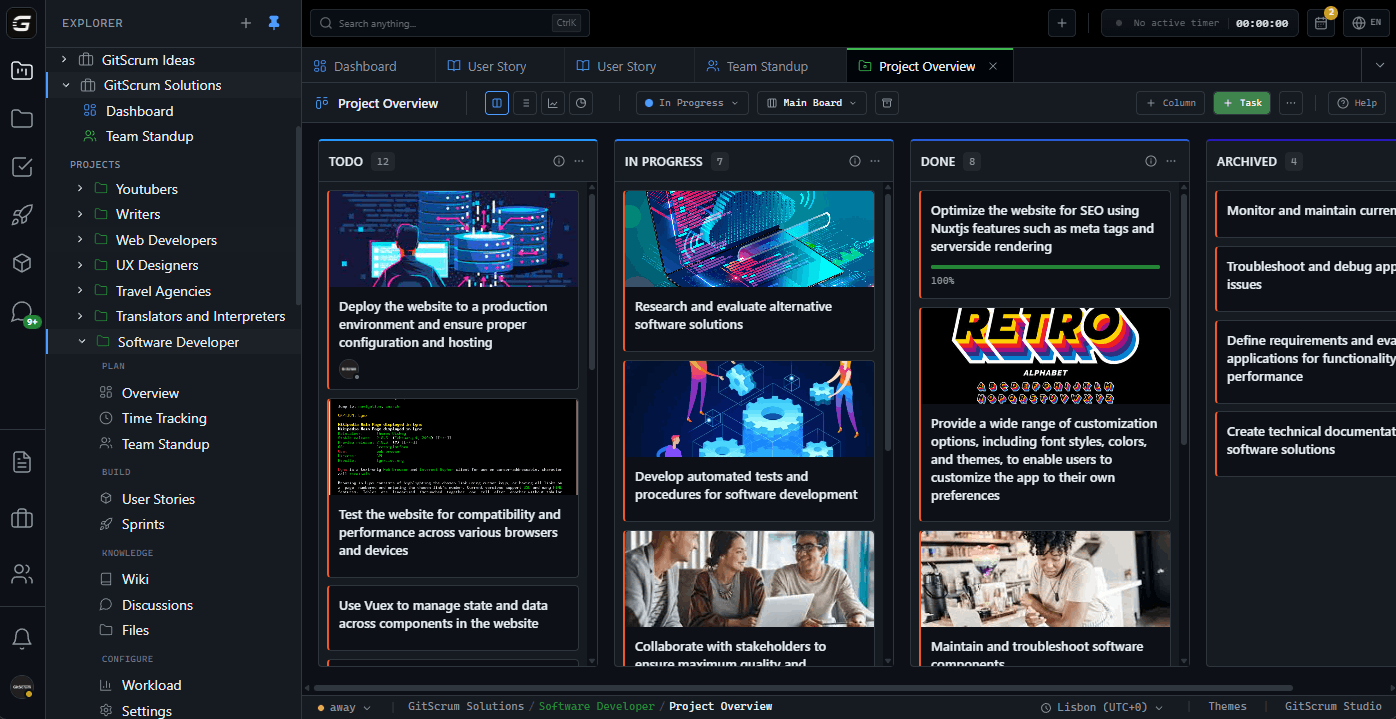
GitScrum addresses Cutting Corners to Meet Deadlines Creates Future Problems through Kanban boards with WIP limits, sprint planning, and workflow visualization

Problem resolution based on Kanban Method (David Anderson) for flow optimization and Scrum Guide (Schwaber and Sutherland) for iterative improvement

Capabilities

  • Kanban boards with WIP limits to prevent overload
  • Sprint planning with burndown charts for predictable delivery
  • Workload views for capacity management
  • Wiki for process documentation
  • Discussions for async collaboration
  • Reports for bottleneck identification

Industry Practices

Kanban MethodScrum FrameworkFlow OptimizationContinuous Improvement

Frequently Asked Questions

Still have questions? Contact us at customer.service@gitscrum.com

Sometimes shortcuts are genuinely the right call. How do we know?

Sometimes they are—for a true MVP, a throwaway prototype, a competitive response. The key is making it a conscious, informed choice with documented trade-offs, not a panicked reaction to deadline pressure.

Won't documenting shortcuts just slow us down more?

Documentation takes minutes. The production incident caused by undocumented shortcuts takes hours or days. The meta-work of tracking shortcuts enables the actual work to be done more sustainably.

How do we estimate future cost of shortcuts?

Use historical data. What did similar shortcuts cost before? If you don't have data yet, make rough estimates and refine over time. Even rough estimates are better than treating the cost as zero.

What if leadership doesn't care about future costs?

Show them specific examples: 'Remember the March incident that cost us X? That was caused by a shortcut taken in January under similar pressure.' Real examples are more compelling than theoretical future costs.

Ready to solve this?

Start free, no credit card required. Cancel anytime.

Works with your favorite tools

Connect GitScrum with the tools your team already uses. Native integrations with Git providers and communication platforms.

GitHubGitHub
GitLabGitLab
BitbucketBitbucket
SlackSlack
Microsoft TeamsTeams
DiscordDiscord
ZapierZapier
PabblyPabbly

Connect with 3,000+ apps via Zapier & Pabbly