







VS Code

GitScrum for VS Code, Google Antigravity, Cursor and Windsurf!

GitScrum logo
Solution

Standups Waste Eng Time 2026 | Dashboards Replace Reports

10 devs × 45 min = 7.5 hrs daily to verbal status. PR merged after standup invisible until tomorrow. Real-time dashboards, GitHub auto-sync replace verbal reports. Free trial.

Standups Waste Eng Time 2026 | Dashboards Replace Reports

The daily standup was designed for team synchronization, not status reporting.

But when managers can't see project status in their tools, standups become verbal status reports. 'What did you do yesterday?' turns into detailed recitations that stretch 15-minute standups to 45 minutes.

With a 10-person team, that's 7.5 hours of engineering time daily—just reporting status. Worse, the information is already stale by the time it's reported.

The PR that merged after standup? Not visible until tomorrow.

The blocker that emerged mid-afternoon? Unknown until the next morning's meeting.

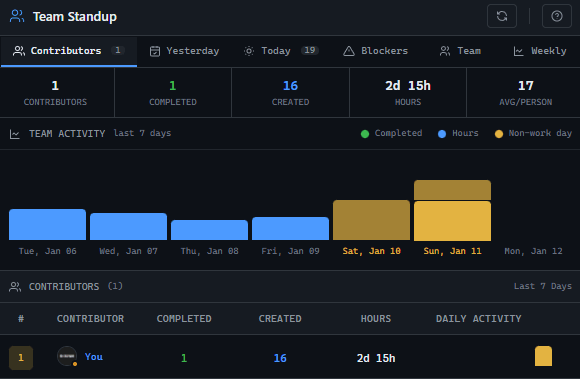
Real-time dashboards solve this. When managers can see what's Done, In Progress, and Blocked at any moment, they don't need verbal status reports.

Standups can focus on actual synchronization: blockers that need discussion, dependencies that need coordination, decisions that need the team. GitScrum provides the visibility layer that makes status-reporting standups obsolete.

GitHub integration means task status reflects code reality. Dashboards show real-time progress.

Managers can check the board instead of scheduling meetings.

The GitScrum Advantage

One unified platform to eliminate context switching and recover productive hours.

01

problem.identify()

The Problem

15-minute standups stretch to 45 minutes as developers recite detailed status

10-person team loses 7.5 engineering hours daily to verbal status reporting

Information is already stale—PR merged after standup isn't visible until tomorrow

Managers schedule standups because tools don't provide real-time project visibility

Developers resent standups as interruptions that provide no value to them

02

solution.implement()

The Solution

Real-time dashboards show project status—managers can check anytime without meetings

GitHub integration auto-updates task status—no manual reporting needed

Board view provides instant visibility into what's Done, In Progress, and Blocked

Standups can focus on blockers and decisions, not status recitation

Asynchronous status updates replace synchronous verbal reporting

03

How It Works

1

Enable Real-Time Dashboards

Configure project dashboards that managers can access anytime. Sprint progress, task completion, and team velocity are visible without asking developers for updates.

2

Connect GitHub for Auto-Updates

GitHub integration ensures task status reflects code reality. When PRs merge, tasks update automatically. The dashboard shows what's actually done, not what someone reported.

3

Refocus Standup Purpose

With status visible in dashboards, standups can focus on blockers that need team discussion and dependencies that require coordination. Skip the 'what did you do yesterday' round-robin.

4

Encourage Async Updates

Developers can post async updates in task comments or team channels for context that dashboards don't capture. Managers read when convenient instead of scheduling meetings.

04

Why GitScrum

GitScrum addresses Daily Standups That Waste Engineering Time Reporting Status through Kanban boards with WIP limits, sprint planning, and workflow visualization

Problem resolution based on Kanban Method (David Anderson) for flow optimization and Scrum Guide (Schwaber and Sutherland) for iterative improvement

Capabilities

  • Kanban boards with WIP limits to prevent overload
  • Sprint planning with burndown charts for predictable delivery
  • Workload views for capacity management
  • Wiki for process documentation
  • Discussions for async collaboration
  • Reports for bottleneck identification

Industry Practices

Kanban MethodScrum FrameworkFlow OptimizationContinuous Improvement

Frequently Asked Questions

Still have questions? Contact us at customer.service@gitscrum.com

Are you suggesting eliminating daily standups entirely?

Not necessarily. Standups serve a purpose for team synchronization—discussing blockers, coordinating dependencies, making decisions that need the whole team. What we're eliminating is the status-reporting portion. When status is visible in dashboards, standups can focus on actual synchronization and finish in 10 minutes instead of 45.

What about context that dashboards can't capture?

Encourage async updates in task comments for context that pure status doesn't convey. If someone discovered an architectural concern or identified a risk, they can document it in the task. Team members read when convenient. Complex topics can be flagged for standup discussion rather than using standup time for routine status.

How do we ensure managers actually check the dashboard?

Initially, managers may need to develop the habit. Some teams configure automated reports that email dashboard summaries daily. Over time, as managers experience the value of real-time information (vs. stale verbal reports), dashboard checking becomes natural. The key is ensuring the dashboard is accurate—which GitHub integration helps ensure.

What if some team members prefer verbal updates?

The goal is efficiency, not forcing async communication on everyone. Quick verbal check-ins can supplement dashboards. The difference is that verbal updates become optional and brief rather than mandatory and exhaustive. A developer can mention 'I'm blocked on API access' in standup while the dashboard already shows their task status.

Ready to solve this?

Start free, no credit card required. Cancel anytime.

Works with your favorite tools

Connect GitScrum with the tools your team already uses. Native integrations with Git providers and communication platforms.

GitHubGitHub
GitLabGitLab
BitbucketBitbucket
SlackSlack
Microsoft TeamsTeams
DiscordDiscord
ZapierZapier
PabblyPabbly

Connect with 3,000+ apps via Zapier & Pabbly