VS Code

GitScrum for VS Code, Google Antigravity, Cursor and Windsurf!

GitScrum logo
Solution

Decisions Delayed Missing Info 2026 | 5 Min→1 Week

VP needs velocity, timeline risk, utilization—data in Jira + spreadsheet + PM's head. 5-min decision takes 1 week. Real-time dashboards = self-service data. Free trial.

Decisions Delayed Missing Info 2026 | 5 Min→1 Week

Should we add another developer to the project?

The VP needs to understand current velocity, timeline risk, and resource utilization. But that data is scattered: velocity is in Jira (if anyone's updating it), timeline is in a spreadsheet someone made, resource allocation is in the project manager's head.

Getting an answer requires scheduling a meeting, asking three people to prepare data, and then waiting for everyone's availability. A decision that should take 5 minutes with good data takes a week because the data isn't accessible.

This information gap cascades through organizations. Tactical decisions wait because operational data isn't visible.

Strategic decisions wait because nobody trusts the numbers from disconnected systems. Leaders either make uninformed decisions or delay until someone manually assembles the information they need.

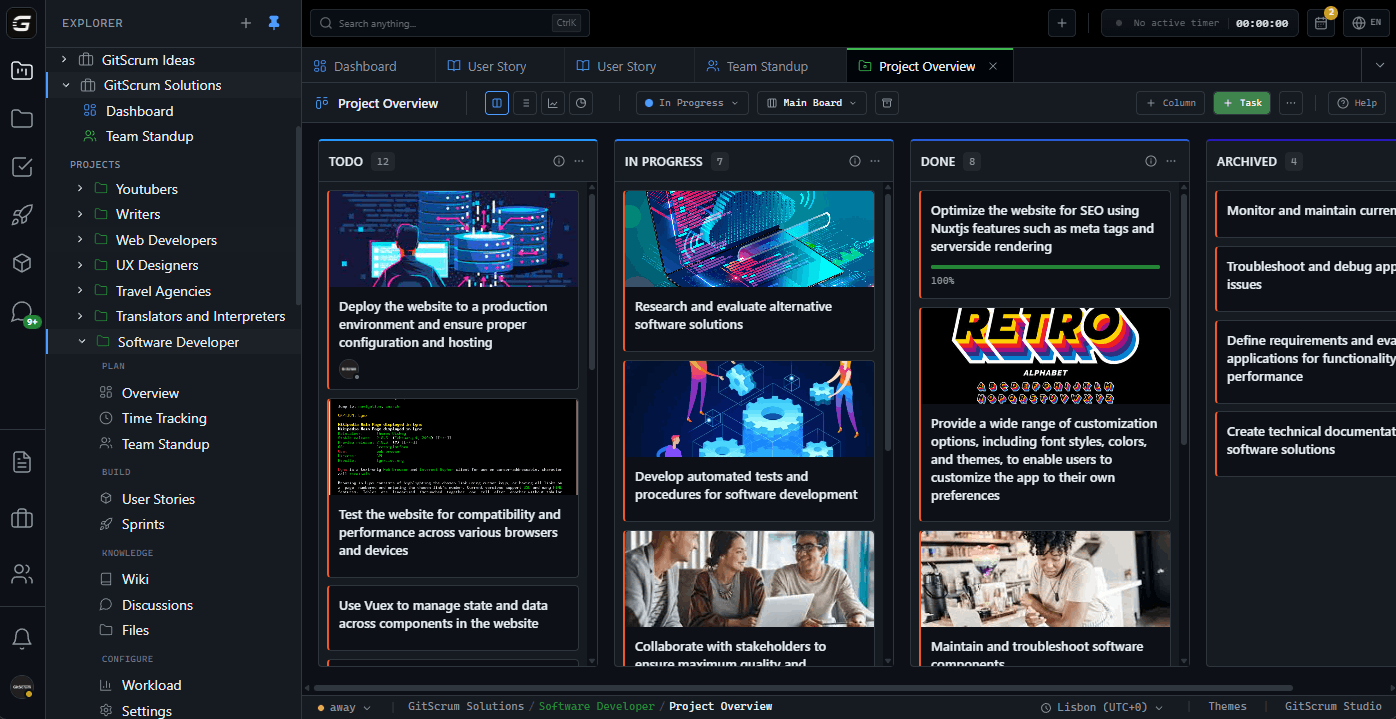
GitScrum solves this with dashboards that surface real-time project data. Velocity, capacity, progress, blockers—all visible without manual report generation.

When stakeholders have immediate access to accurate information, decisions happen at the speed of thought, not the speed of bureaucracy.

The GitScrum Advantage

One unified platform to eliminate context switching and recover productive hours.

01

problem.identify()

The Problem

Decisions require data that's scattered across multiple systems and people's heads

Getting answers requires scheduling meetings and manual report generation

5-minute decisions stretch to days or weeks waiting for information

Leaders make uninformed decisions rather than wait for unavailable data

Project managers become bottlenecks because only they know the full picture

02

solution.implement()

The Solution

Real-time dashboards surface project metrics without manual report generation

Stakeholders access accurate data immediately—no waiting for someone to pull numbers

Sprint velocity, capacity, and progress visible to anyone who needs it

Decisions happen in minutes because data is available in real-time

Project managers stop being information gatekeepers—data is self-service

03

How It Works

1

Configure Stakeholder Dashboards

Create dashboards tailored to stakeholder needs: executive dashboards for high-level metrics, team dashboards for operational details. Different views serve different decision types.

2

Ensure Real-Time Data Quality

Dashboard accuracy depends on task data quality. When developers update task status as they work, dashboards reflect reality. GitScrum's GitHub integration auto-updates many fields, reducing manual overhead.

3

Provide Direct Access

Give stakeholders direct dashboard access rather than routing requests through project managers. Self-service information access removes the bottleneck.

4

Use Data for Decisions

When decisions arise, point stakeholders to dashboards first. 'Check the sprint velocity dashboard' becomes faster than 'let me get back to you with a report.' Information-driven decisions become the default.

04

Why GitScrum

GitScrum addresses Decisions Delayed Because Stakeholders Can't Find Information through Kanban boards with WIP limits, sprint planning, and workflow visualization

Problem resolution based on Kanban Method (David Anderson) for flow optimization and Scrum Guide (Schwaber and Sutherland) for iterative improvement

Capabilities

  • Kanban boards with WIP limits to prevent overload
  • Sprint planning with burndown charts for predictable delivery
  • Workload views for capacity management
  • Wiki for process documentation
  • Discussions for async collaboration
  • Reports for bottleneck identification

Industry Practices

Kanban MethodScrum FrameworkFlow OptimizationContinuous Improvement

Frequently Asked Questions

Still have questions? Contact us at customer.service@gitscrum.com

What metrics should stakeholder dashboards show?

It depends on decision types. Executive dashboards: project health, timeline risk, resource utilization, cross-project comparison. Team lead dashboards: sprint progress, velocity trends, blockers, individual capacity. Start with what people ask for repeatedly—those are the decisions being delayed.

How do we ensure dashboard data stays accurate?

Dashboard accuracy reflects task data quality. The key is reducing friction for updates: GitHub integration auto-updates many fields, workflow automation moves cards automatically. When updates happen naturally through work, data stays accurate without extra effort.

Won't stakeholders misinterpret the data without context?

Possibly, initially. Include dashboard training when you roll out access. Add explanatory notes to metric definitions. For complex decisions, dashboards don't replace discussion—they provide the foundation for informed discussion instead of waiting for manual data assembly.

How do we balance transparency with overwhelming stakeholders?

Different dashboards for different needs. Executives get aggregated metrics. Team leads get operational details. The key is role-appropriate views—everyone sees what they need for their decisions, not everything.

Ready to solve this?

Start free, no credit card required. Cancel anytime.

Works with your favorite tools

Connect GitScrum with the tools your team already uses. Native integrations with Git providers and communication platforms.

GitHubGitHub
GitLabGitLab
BitbucketBitbucket
SlackSlack
Microsoft TeamsTeams
DiscordDiscord
ZapierZapier
PabblyPabbly

Connect with 3,000+ apps via Zapier & Pabbly