VS Code

GitScrum for VS Code, Google Antigravity, Cursor and Windsurf!

GitScrum logo
Solution

Cross-Channel Decisions Lost 2026 | Team Silos in Chat

Backend changes API in #backend-team. Mobile builds old API in #mobile-dev. 3 weeks later nothing works. 'We discussed weeks ago'—they weren't in that channel. Free trial.

Cross-Channel Decisions Lost 2026 | Team Silos in Chat

Slack, Teams, and other chat tools have become the default communication medium for most organizations.

Decisions get made in real-time conversations—quick, efficient, natural. But chat is fundamentally ephemeral.

Messages scroll by, channels proliferate, and information scatters across thousands of conversations. Critical decisions become buried treasure that only those present at the moment can access.

The problem compounds when teams use different channels or even different chat platforms. The API change decision exists in Engineering's backend-team channel.

The mobile team, working in their own channel, has no visibility into that discussion. Even if they knew to search for it, they would need to know exactly what to search for and have access to that channel.

In practice, they never find it until something breaks. This pattern repeats constantly: Design decisions in design channels, product decisions in PM channels, technical decisions in engineering channels.

Each team operates in their communication silo. Cross-functional knowledge sharing relies entirely on people remembering to post in multiple channels or tag the right people—which they rarely do in the flow of rapid conversation.

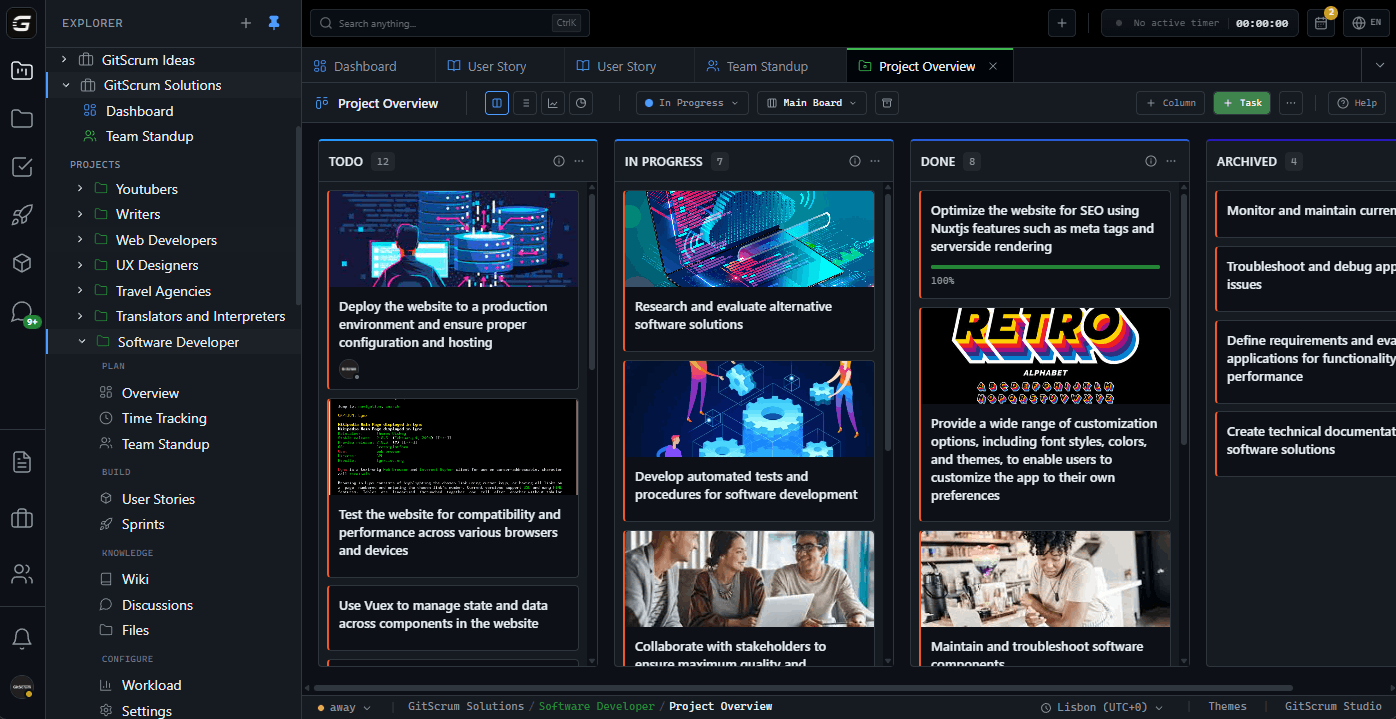
A unified project management platform captures decisions where they belong: attached to the work they affect. The API change becomes a documented decision linked to affected tasks, visible to anyone working on related features.

The decision lives with the project, not buried in a chat channel that half the team cannot access.

The GitScrum Advantage

One unified platform to eliminate context switching and recover productive hours.

01

problem.identify()

The Problem

Critical decisions buried in chat channels

Team-specific channels invisible to other teams

No searchable record of why decisions were made

Cross-functional context never reaches all stakeholders

Chat history too vast to effectively search

Decisions disappear as messages scroll by

02

solution.implement()

The Solution

Decisions captured and linked to affected work

Decision context visible to all team members

Searchable decision history with full rationale

Cross-team visibility without channel management

Decisions live with projects not in chat

Complete audit trail of project decisions

03

How It Works

1

Decision Capture

Document decisions directly in project context where they are made

2

Link to Work

Connect decisions to affected tasks, features, and deliverables

3

Automatic Visibility

Anyone working on related items sees relevant decisions

4

Persistent Context

Decision rationale remains accessible long after conversations end

04

Why GitScrum

GitScrum addresses Decisions Made in Slack Lost to Teams Using Different Channels through Kanban boards with WIP limits, sprint planning, and workflow visualization

Problem resolution based on Kanban Method (David Anderson) for flow optimization and Scrum Guide (Schwaber and Sutherland) for iterative improvement

Capabilities

  • Kanban boards with WIP limits to prevent overload
  • Sprint planning with burndown charts for predictable delivery
  • Workload views for capacity management
  • Wiki for process documentation
  • Discussions for async collaboration
  • Reports for bottleneck identification

Industry Practices

Kanban MethodScrum FrameworkFlow OptimizationContinuous Improvement

Frequently Asked Questions

Still have questions? Contact us at customer.service@gitscrum.com

How much organizational knowledge is lost in chat channels?

Studies suggest that 70-80% of decisions made in chat tools are never formally documented elsewhere. This creates significant institutional knowledge loss. When team members leave or move to different projects, the context for past decisions leaves with them. New team members must either rediscover the same ground or make conflicting decisions without knowing the rationale for previous choices. This knowledge loss compounds over time, leading to repeated mistakes and inconsistent approaches.

Why do teams continue making decisions in chat if it causes problems?

Chat is simply the fastest way to communicate. Real decisions emerge from real-time discussion, and those discussions happen where people are—in Slack or Teams. The problem is not that decisions are made in chat; it is that they stay there. The solution is not to force all discussion into project management tools but to make it easy to capture decisions from chat into a persistent, searchable system linked to the work it affects.

How quickly can teams see improvement from centralizing decisions?

Teams typically see immediate reduction in 'I did not know about that decision' incidents within the first month. The larger impact—reduced rework, better cross-team alignment, faster onboarding—emerges over 2-3 months as the decision history builds. Organizations report 40-60% reduction in time spent searching for past decisions and significant improvement in new team member productivity when decision context is centralized.

Ready to solve this?

Start free, no credit card required. Cancel anytime.

Works with your favorite tools

Connect GitScrum with the tools your team already uses. Native integrations with Git providers and communication platforms.

GitHubGitHub
GitLabGitLab
BitbucketBitbucket
SlackSlack
Microsoft TeamsTeams
DiscordDiscord
ZapierZapier
PabblyPabbly

Connect with 3,000+ apps via Zapier & Pabbly