In a fragmented tool environment, work does not flow—it teleports through discontinuous handoffs.
A designer completes a mockup in the design tool. Then they must create a task in the project tracker, manually describe what was designed, attach or link to the design file, and assign it to a developer.
The developer picks up the task, reads the description, opens the linked design, then switches to their IDE to begin implementation. When code is ready, they create a pull request in the repository system—again manually describing what was built and referencing the original task.
After merge, someone must update the project board to reflect the new status. When deployed, someone must update the release tracking system.
Each of these handoffs introduces delay. The designer finished at 2pm but the task was not created until 3pm.
The developer reviewed the PR at 4pm but the board was not updated until the next day. The deployment happened Friday but the release notes were not updated until Monday.
These delays compound. A feature that should move through the pipeline in days takes weeks because each handoff adds a queue.
More critically, each handoff creates opportunity for information loss or miscommunication. The designer's intent gets simplified in the task description.
The developer's implementation notes do not make it to the release documentation. The deployment context does not reach the support team.
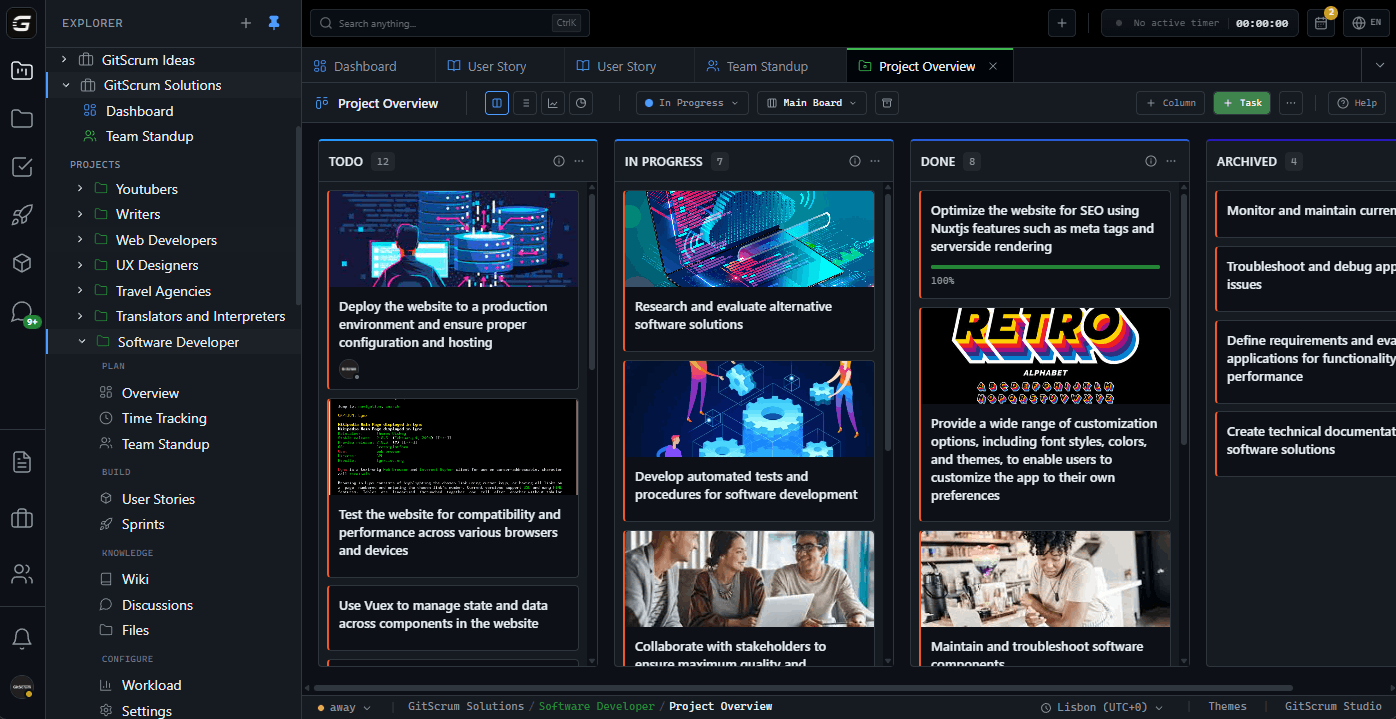
GitScrum eliminates handoff delays by unifying the workflow. Design links directly to tasks.
Code links directly to tasks. Deployment status reflects automatically.
No manual handoffs, no delays, no information loss.
The GitScrum Advantage
One unified platform to eliminate context switching and recover productive hours.