
VS Code

GitScrum for VS Code, Google Antigravity, Cursor and Windsurf!

GitScrum logo
Solution

Dependency Updates Break Things 2026 | Dreaded Day

Update the library—security vuln. Last time broke 3 things. Postpone until multi-version jump makes it worse. Track updates systematically. Free trial.

Dependency Updates Break Things 2026 | Dreaded Day

Dependency management is a trap.

Stay current and you risk breaking changes with every update. Fall behind and you accumulate risk—security vulnerabilities, compatibility issues, and the eventual forced update that spans too many versions to debug.

Most teams oscillate between 'update everything' binges that cause outages and 'touch nothing' periods that accumulate risk. Neither approach is sustainable.

The GitScrum Advantage

One unified platform to eliminate context switching and recover productive hours.

01

problem.identify()

The Problem

Updates cause unexpected breakages

Security vulnerabilities accumulate

Multi-version jumps are terrifying

No visibility into update impact

Team dreads dependency day

02

solution.implement()

The Solution

Dependency update tracking

Impact assessment before updates

Staged rollout procedures

Update history with issues logged

Automated vulnerability tracking

03

How It Works

1

Dependency Dashboard

GitScrum tracks all dependencies: 'Dependencies Overview: Total: 247 packages. Up to date: 189 (77%). Minor updates: 43 (18%). Major updates: 12 (5%). Security issues: 3 (critical: 1, high: 2). Last full update: 2024-01-10. Next scheduled: 2024-02-07.' The debt is visible.

2

Update Impact Assessment

Before updating, understand the risk: 'Update Assessment: react 18.2 → 19.0. Breaking changes: Concurrent mode default, new hooks API. Affected files: 47 components. Previous update issues: None recorded. Community reports: 12% report migration issues. Estimated effort: 2-3 days. Risk level: Medium.'

3

Staged Rollout

Updates follow a controlled process: 'Update Rollout: lodash 4.17.20 → 4.17.21. Stage 1: ✅ Dev environment (passed). Stage 2: ✅ Automated tests (passed). Stage 3: 🔄 Staging deployment (in progress). Stage 4: ⏳ Production canary. Stage 5: ⏳ Full production. Rollback prepared: Yes.'

4

Update History

Past updates inform future ones: 'Update History: axios. Version 0.26 → 0.27: ✅ Smooth, no issues. Version 0.27 → 1.0: ⚠️ Breaking change in error handling. Affected: 12 API calls. Fix time: 4 hours. Notes: Test error scenarios before updating major versions. Owner: @backend-team.'

04

Why GitScrum

GitScrum addresses Dependency Updates Always Break Something through Kanban boards with WIP limits, sprint planning, and workflow visualization

Problem resolution based on Kanban Method (David Anderson) for flow optimization and Scrum Guide (Schwaber and Sutherland) for iterative improvement

Capabilities

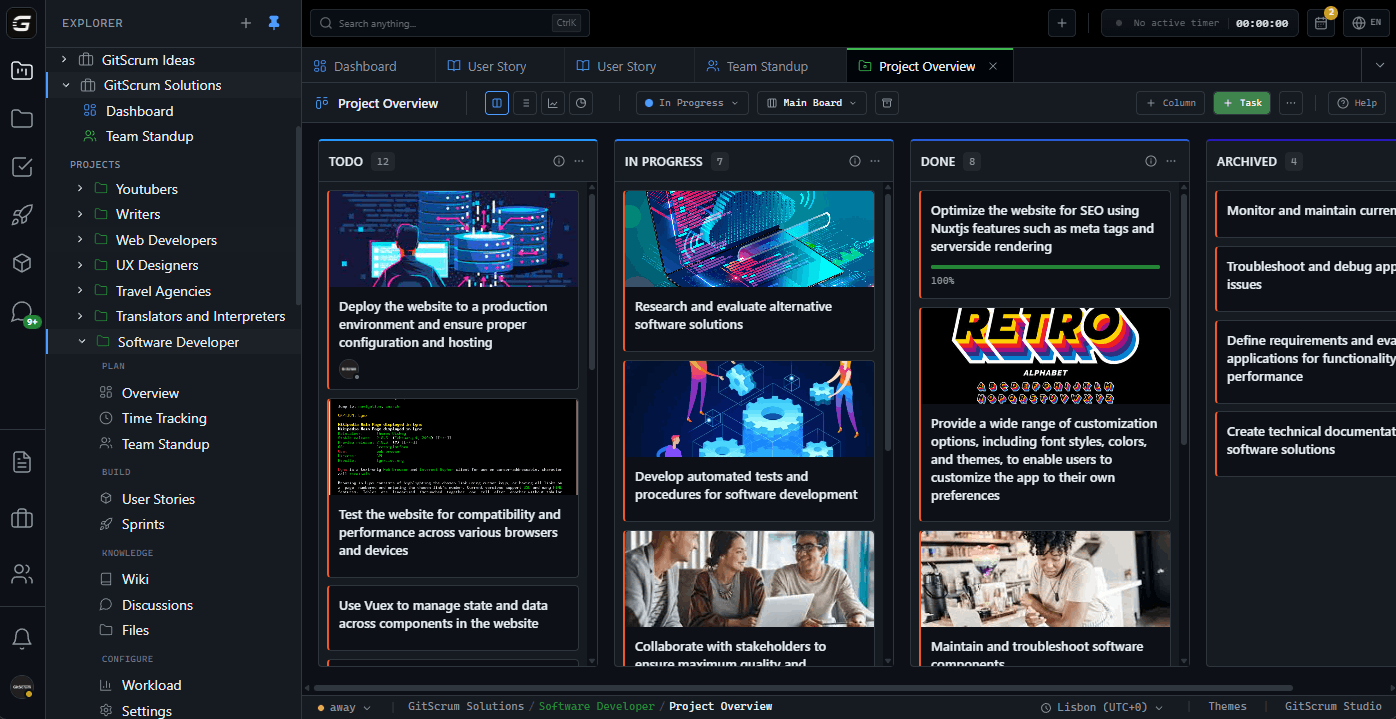
  • Kanban boards with WIP limits to prevent overload
  • Sprint planning with burndown charts for predictable delivery
  • Workload views for capacity management
  • Wiki for process documentation
  • Discussions for async collaboration
  • Reports for bottleneck identification

Industry Practices

Kanban MethodScrum FrameworkFlow OptimizationContinuous Improvement

Frequently Asked Questions

Still have questions? Contact us at customer.service@gitscrum.com

How often should dependencies be updated?

Regular small updates are better than infrequent large ones. Aim for weekly or bi-weekly minor/patch updates, monthly security reviews, and quarterly major version assessments. The key is consistency—dependency management should be continuous, not episodic.

How do you handle breaking changes in major updates?

Treat major updates as projects, not tasks. Read changelogs and migration guides first. Create a branch for the update. Run tests, fix issues, document changes. Don't rush major updates through—they deserve dedicated time and attention.

What if an update breaks production?

This is why staged rollouts exist. With canary deployments and monitoring, you catch issues before full rollout. If something does break: roll back immediately, investigate, fix, and document. The documentation prevents the same breakage next time.

How do you prioritize which dependencies to update?

Security vulnerabilities first, always. Then dependencies with known bugs affecting you. Then dependencies required by other updates. Finally, routine currency updates. Don't update just because new versions exist—update because it provides value or removes risk.

Ready to solve this?

Start free, no credit card required. Cancel anytime.

Works with your favorite tools

Connect GitScrum with the tools your team already uses. Native integrations with Git providers and communication platforms.

GitHubGitHub
GitLabGitLab
BitbucketBitbucket
SlackSlack
Microsoft TeamsTeams
DiscordDiscord
ZapierZapier
PabblyPabbly

Connect with 3,000+ apps via Zapier & Pabbly