VS Code

GitScrum for VS Code, Google Antigravity, Cursor and Windsurf!

GitScrum logo
Solution

Cross-Tool Blocker Tracking 2026 | 4 Systems, 1 Chain

Blocker in Jira. Request in ServiceNow. Approval in DocuSign. Discussion in Slack. 4 systems = PM manually reconstructs chain. Same dependency blocks 5 tasks invisibly. GitScrum: all blockers one view, dependencies clear. Free trial.

Cross-Tool Blocker Tracking 2026 | 4 Systems, 1 Chain

Blockers hidden across multiple systems create sprint surprises.

A single external dependency might block 5 tasks, but if each task is logged in different tools, the pattern isn't visible. Sprint retrospectives reveal 'we didn't realize how many things were waiting on X.' Cross-tool visibility gaps mean blockers aren't escalated until they've already damaged timelines.

Proactive blocker management is impossible without unified visibility.

The GitScrum Advantage

One unified platform to eliminate context switching and recover productive hours.

01

problem.identify()

The Problem

Blockers logged in different systems

Same dependency blocks multiple tasks invisibly

Manual reconstruction of blocker chains

Sprint surprises from hidden blockers

Escalation delayed by visibility gaps

02

solution.implement()

The Solution

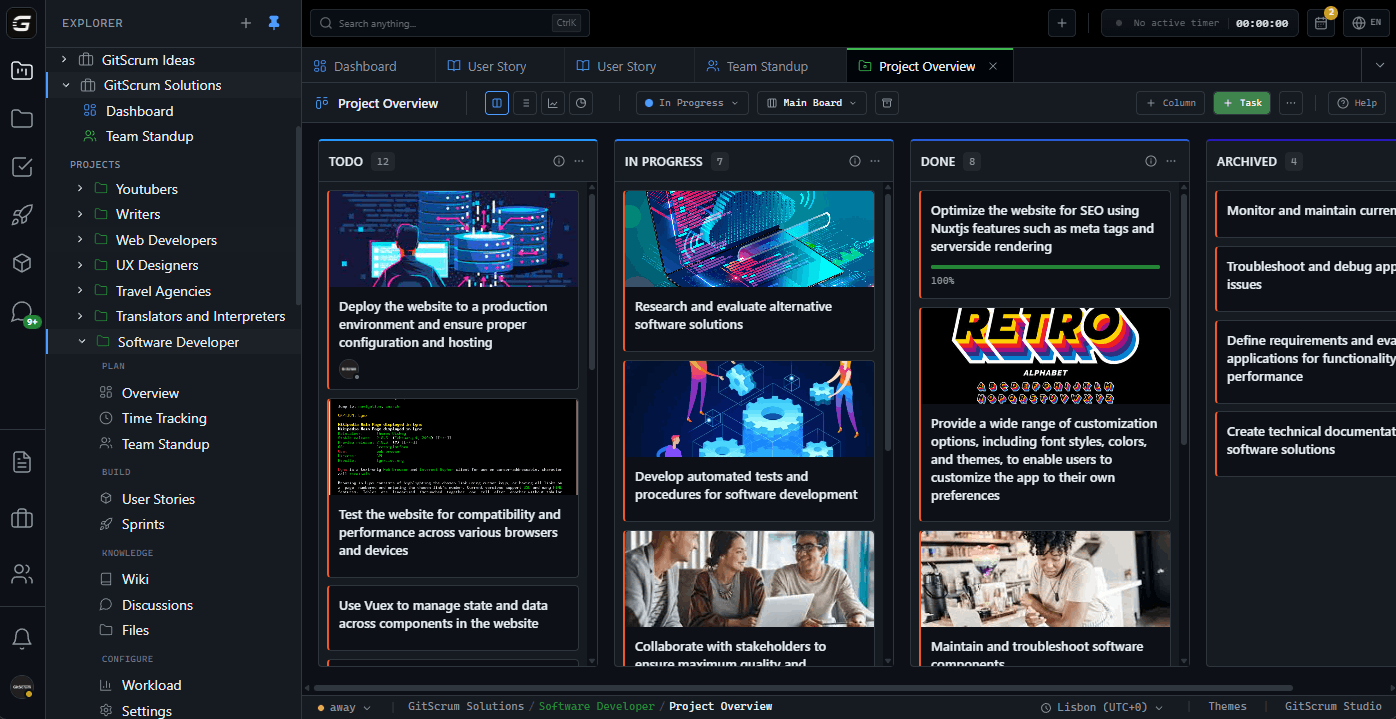
All blockers visible in one view

Blocked tasks grouped by dependency

Automatic blocker chain visibility

Sprint risks surfaced proactively

Immediate escalation when patterns emerge

03

How It Works

1

Unified Blocker View

All blockers one dashboard: 'GitScrum project view shows: Tasks marked blocked with reason. Dependencies between tasks visible. External blockers (waiting on client, waiting on vendor) flagged. No hunting through Jira, then Slack, then ServiceNow to understand what's stuck.'

2

Dependency Tracking

See what blocks what: 'Task A blocked by Task B? Visible link. Task B blocked by external approval? Visible flag. Chain visible: 5 tasks blocked by one approval. Pattern clear. Escalation justifiable. One view shows impact of resolving the root blocker.'

3

Automatic Aggregation

Patterns surfaced: 'Multiple tasks blocked by "waiting for design"? GitScrum shows: 3 tasks blocked by same dependency. Sprint impact: 15 story points at risk. Blocker age: 5 days. Pattern visible without manual analysis. PM sees aggregated risk.'

4

Proactive Alerts

Don't wait for standup: 'Blocker added → relevant stakeholders notified. Blocker aging → escalation reminder. Multiple tasks blocked by same thing → alert to PM. Sprint at risk due to blockers → dashboard warning. Blockers get attention before they derail sprints.'

04

Why GitScrum

GitScrum addresses Difficulty Tracking Blockers Across Project Management Tools through Kanban boards with WIP limits, sprint planning, and workflow visualization

Problem resolution based on Kanban Method (David Anderson) for flow optimization and Scrum Guide (Schwaber and Sutherland) for iterative improvement

Capabilities

  • Kanban boards with WIP limits to prevent overload
  • Sprint planning with burndown charts for predictable delivery
  • Workload views for capacity management
  • Wiki for process documentation
  • Discussions for async collaboration
  • Reports for bottleneck identification

Industry Practices

Kanban MethodScrum FrameworkFlow OptimizationContinuous Improvement

Frequently Asked Questions

Still have questions? Contact us at customer.service@gitscrum.com

How do you handle external dependencies (waiting on vendor, client, etc.)?

GitScrum supports blocking on external factors, not just internal tasks. Mark task blocked by 'Waiting on Client Approval' with expected resolution date. These external blockers appear in the same unified view as internal dependencies. Pattern visible: 5 tasks blocked by client, escalation conversation needed.

What if blockers are in systems we can't eliminate (ServiceNow, DocuSign)?

Note external blockers in GitScrum task with reference to external system. GitScrum becomes the visibility layer even if resolution happens elsewhere. The point: one place to see all blockers, even if some resolutions require action in specialized systems.

How do we encourage developers to log blockers promptly?

Make it easy: one-click blocker flag on any task. Make it visible: blockers get attention in standups via GitScrum dashboard. Make it matter: blocked time tracked, not counted against developer. Culture shift: blogging blockers = helping team, not admitting failure.

Can we set up automatic escalation for aging blockers?

Yes. Configure escalation rules: blocker older than 2 days → notify team lead. Blocker older than 5 days → notify PM. Critical path blocker → immediate alert. Automatic escalation ensures blockers don't silently age while everyone assumes someone else is handling it.

Ready to solve this?

Start free, no credit card required. Cancel anytime.

Works with your favorite tools

Connect GitScrum with the tools your team already uses. Native integrations with Git providers and communication platforms.

GitHubGitHub
GitLabGitLab
BitbucketBitbucket
SlackSlack
Microsoft TeamsTeams
DiscordDiscord
ZapierZapier
PabblyPabbly

Connect with 3,000+ apps via Zapier & Pabbly