
VS Code

GitScrum for VS Code, Google Antigravity, Cursor and Windsurf!

GitScrum logo
Solution

File Version Chaos 2026 | 4 Copies, Nobody Knows Current

Design spec: Drive, Jira, Confluence, Slack—4 versions, subtle differences. Nobody knows which is current. GitScrum: single-source files with version history. Free trial.

File Version Chaos 2026 | 4 Copies, Nobody Knows Current

Modern work involves files—design mockups, specification documents, contracts, presentations, reports.

These files need to be shared with team members working across different tools. The design spec starts in Google Drive where the designer created it.

It gets attached to a Jira ticket for the developers implementing it. A project manager uploads it to Confluence for documentation.

The client asks for it via email, so someone attaches it there. A team member shares a quick screenshot version in Slack during a discussion.

Now the file exists in five different places. When the designer makes an update, they update the Google Drive version.

But the Jira attachment is now outdated. The Confluence upload is outdated.

The email attachment is permanently outdated. The Slack screenshot never gets updated.

A developer grabs the file from Jira—which seemed like the right place—and builds against outdated specs. The error isn't discovered until review.

The multiplication of file versions creates confusion, wasted work, and rework. No one knows which version is authoritative.

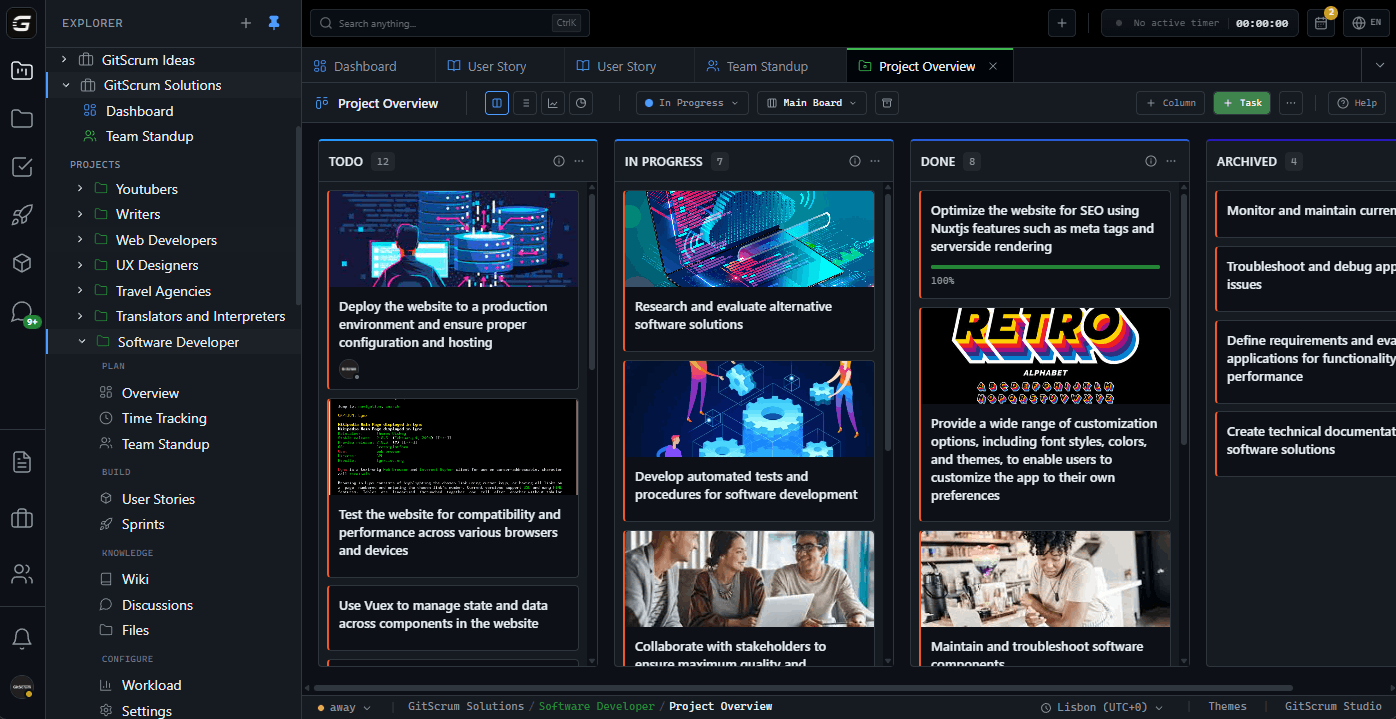
Even diligent teams struggle because the tools encourage this fragmentation—every tool wants its own copy of attachments rather than linking to a single source. GitScrum provides unified file management where attachments live in one place and link across tasks, discussions, and documentation.

Clear version history shows what changed and when. One source of truth for every file.

The GitScrum Advantage

One unified platform to eliminate context switching and recover productive hours.

01

problem.identify()

The Problem

Same file uploaded to multiple tools creates divergent versions

No clarity on which version is authoritative

Updates to source file do not propagate to copies

Developers build against outdated specs from wrong tool

Every tool maintains its own separate attachments

Version control chaos multiplied across platforms

02

solution.implement()

The Solution

Single file storage with links across platform areas

Clear version history showing changes and timing

One authoritative source for every file

Updates visible immediately across all linked contexts

No duplicate uploads across different tool areas

Unified attachment management eliminates version chaos

03

How It Works

1

Centralized Storage

Files uploaded once to unified storage system

2

Cross-Reference Links

Link files to tasks, docs, and discussions without duplication

3

Version Tracking

Clear history of file changes with timestamps and authors

4

Single Source Updates

Update file once and all references show current version

04

Why GitScrum

GitScrum addresses Duplicate File Versions Across Drive Docs and Project Storage through Kanban boards with WIP limits, sprint planning, and workflow visualization

Problem resolution based on Kanban Method (David Anderson) for flow optimization and Scrum Guide (Schwaber and Sutherland) for iterative improvement

Capabilities

  • Kanban boards with WIP limits to prevent overload
  • Sprint planning with burndown charts for predictable delivery
  • Workload views for capacity management
  • Wiki for process documentation
  • Discussions for async collaboration
  • Reports for bottleneck identification

Industry Practices

Kanban MethodScrum FrameworkFlow OptimizationContinuous Improvement

Frequently Asked Questions

Still have questions? Contact us at customer.service@gitscrum.com

Why do files end up duplicated across tools?

Most tools treat attachments as independent copies. When you attach a file to a Jira ticket, it uploads a copy. When you share in Slack, it creates another copy. When you add to Confluence, another copy. Each tool wants to own its attachments rather than linking to an external source. The result is multiple independent versions that diverge as soon as the source is updated.

What problems does file duplication cause?

The immediate problem is confusion—which version is correct? But the real damage comes from work done against outdated files. A developer implements features based on specs that were updated two days ago in the original location but not in the tool they pulled from. A client reviews an old version of a deliverable. Contracts get signed with outdated terms because someone used an old attachment. The rework and correction cost far exceeds the original file management effort.

How does unified file storage work?

Instead of copying files everywhere, a unified platform stores files once and creates links. Attach a file to a task and you create a link to the stored file, not a copy. Reference the same file in documentation and discussions—still links to one source. When the file is updated, every linked reference shows the current version. Version history tracks all changes with timestamps and authors. No more guessing which version is right.

Ready to solve this?

Start free, no credit card required. Cancel anytime.

Works with your favorite tools

Connect GitScrum with the tools your team already uses. Native integrations with Git providers and communication platforms.

GitHubGitHub
GitLabGitLab
BitbucketBitbucket
SlackSlack
Microsoft TeamsTeams
DiscordDiscord
ZapierZapier
PabblyPabbly

Connect with 3,000+ apps via Zapier & Pabbly