
Sprint planning happens with optimistic estimates.
Two days for this feature. One week for that integration.
By sprint end, half the committed work is incomplete, and the 'two-day' task is still in progress entering week three. This estimation dysfunction has multiple causes: optimism bias, unclear requirements discovered mid-development, underestimating integration complexity, not accounting for meetings and interruptions.
But the biggest cause is estimating in a vacuum without historical data. Nobody knows how long similar tasks actually took because that data isn't tracked or accessible.
Everyone estimates based on how long they think it should take, not how long similar work has taken. The result is chronic over-commitment and schedule slip.
Projects always run late. Deadlines are negotiation starting points, not actual targets.
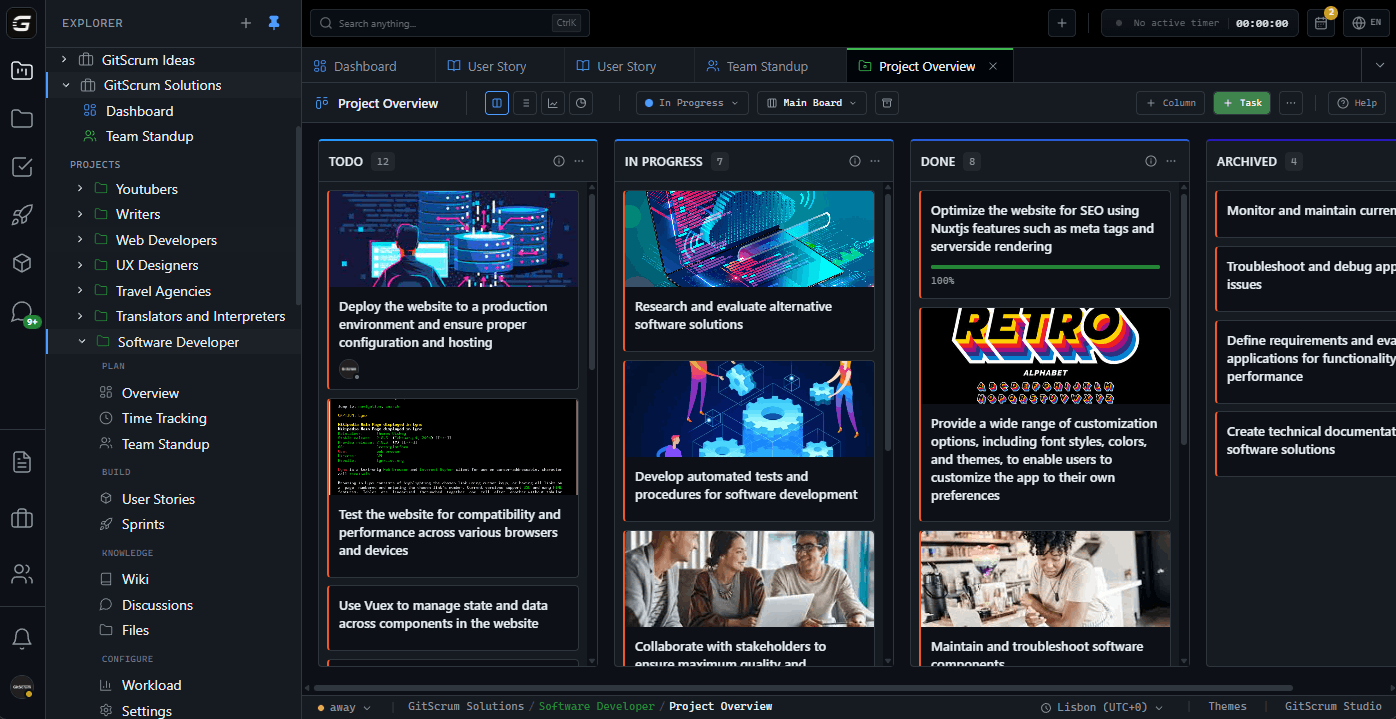
Trust erodes because delivery never matches prediction. GitScrum tracks actual time against estimates, building historical data for better future estimation.
Over time, teams calibrate their estimates to reality, improving prediction accuracy sprint over sprint.
The GitScrum Advantage
One unified platform to eliminate context switching and recover productive hours.