VS Code

GitScrum for VS Code, Google Antigravity, Cursor and Windsurf!

GitScrum logo
Solution

Feature Prioritization 2026 | End Loudest Voice Wins

Stakeholders disagree on priorities. No criteria. Loudest voice wins. GitScrum: transparent backlogs, value scoring, stakeholder-visible roadmaps. Free trial.

Feature Prioritization 2026 | End Loudest Voice Wins

Sales wants feature A.

Marketing needs feature B. The CEO asked about feature C.

Every stakeholder thinks their request is most important. Without clear criteria and visibility, prioritization becomes political.

The loudest voice wins, or the highest-paid person decides. Engineers get whiplash as priorities shift.

Features that would deliver most value get delayed for pet projects. Effective prioritization requires transparency.

Everyone sees the backlog. Everyone sees the criteria: business value, effort, risk, strategic alignment.

When sales asks 'why isn't my feature prioritized?', you can show them: 'It's 7 because the top 6 have higher business value scores. Here's the data.' GitScrum provides the structure for this: sortable backlogs visible to stakeholders, fields for scoring criteria, and clear ordering that anyone can see and question.

The GitScrum Advantage

One unified platform to eliminate context switching and recover productive hours.

01

problem.identify()

The Problem

Stakeholders each think their feature is most important—no shared criteria

Prioritization is political—loudest voice or highest rank decides

Priority changes constantly—engineers get whiplash from shifting focus

No transparency—stakeholders can't see why their request isn't higher

Strategic alignment unclear—features disconnected from business goals

02

solution.implement()

The Solution

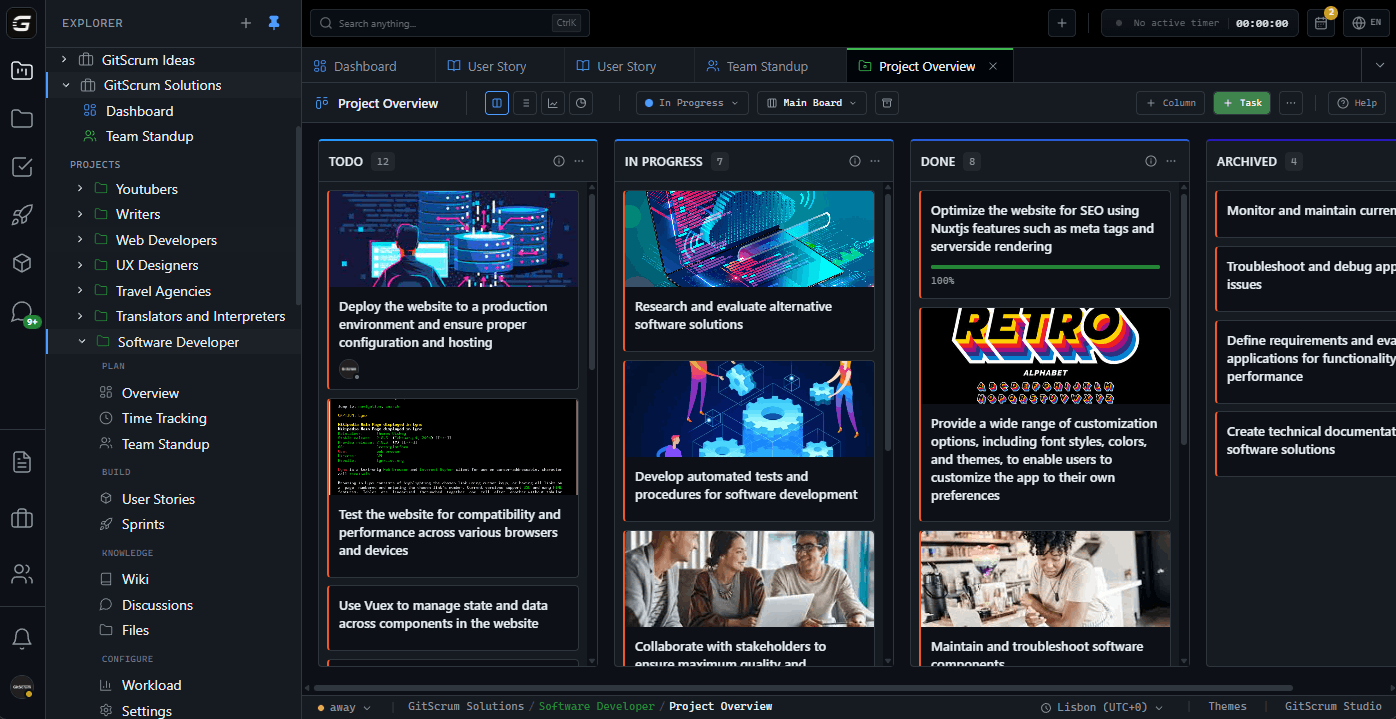
Backlog with visible priority order—stakeholders see what's planned when

Custom fields for scoring: business value, effort, strategic alignment

Clear prioritization criteria shared with all stakeholders

Product Manager controls order based on transparent criteria, not politics

Roadmap view connects features to business goals and timelines

03

How It Works

1

Define Prioritization Criteria

Establish shared criteria: business value (revenue impact, user impact), effort (development cost), risk (technical, market), strategic alignment (company goals). These become fields on each backlog item. Criteria are agreed by stakeholders upfront, not debated per-item.

2

Score Features Consistently

Each feature is scored on the criteria: business value 1-10, effort 1-10, risk 1-5. Product Manager scores with stakeholder input. 'Feature A: value 8, effort 5, risk 2. Feature B: value 6, effort 3, risk 1.' Scores are visible on each item.

3

Order Backlog by Priority

Sort backlog by weighted score (value ÷ effort × strategic fit). Higher scores rise to top. The order is visible to everyone. When stakeholder asks 'where's my feature?', they can see it's #12 and understand why based on scores.

4

Share Roadmap Visibility

Give stakeholders view access to the prioritized backlog or roadmap view. They see: top 10 features for next quarter, features planned for later, features in 'ideas' stage. Transparency reduces 'why isn't X being built?' conversations.

5

Re-Evaluate Periodically

Priorities change as market shifts. Quarterly, re-score features with current data. Feature that was low-value may become high-value. Communicate changes: 'Feature C moved from #15 to #3 because competitor launched similar feature.' Data-driven, not political.

04

Why GitScrum

GitScrum addresses Feature Prioritization with Stakeholder Alignment through Kanban boards with WIP limits, sprint planning, and workflow visualization

Problem resolution based on Kanban Method (David Anderson) for flow optimization and Scrum Guide (Schwaber and Sutherland) for iterative improvement

Capabilities

  • Kanban boards with WIP limits to prevent overload
  • Sprint planning with burndown charts for predictable delivery
  • Workload views for capacity management
  • Wiki for process documentation
  • Discussions for async collaboration
  • Reports for bottleneck identification

Industry Practices

Kanban MethodScrum FrameworkFlow OptimizationContinuous Improvement

Frequently Asked Questions

Still have questions? Contact us at customer.service@gitscrum.com

How do we get stakeholders to agree on prioritization criteria?

Start with workshop or discussion: what matters most for the business? Revenue impact, user satisfaction, strategic positioning? Document criteria and weights. Get sign-off from leadership. Criteria should be stable for at least a quarter. When stakeholders argue priorities, point back to agreed criteria. Data beats opinion.

What if an executive overrides the prioritized order?

Document it transparently. 'Feature X moved to #1 by CEO decision, overriding value/effort scoring.' This creates accountability. Track whether override items deliver expected value. Over time, data shows whether overrides are beneficial or disruptive. Transparency discourages arbitrary overrides.

How do we handle urgent requests that bypass normal prioritization?

Define 'urgent' criteria: security issues, customer-blocking bugs, legal requirements. Urgent items bypass normal queue but must still go through the process: documented, estimated, approved by designated authority. Track urgent requests separately. If 30% of work is 'urgent', your prioritization process isn't working.

Should developers see prioritization scoring?

Yes. Transparency helps everyone understand why they're working on something. 'This feature scores high on business value because it affects 40% of users' is more motivating than 'stakeholder asked for it.' Developers can also flag if effort estimates seem off, improving future scoring accuracy.

How often should we re-prioritize?

Major re-prioritization quarterly, aligned with planning cycles. Minor adjustments (new urgent items, completed work) as needed. Avoid constant re-ordering—it signals indecision and demoralizes teams. If priorities shift weekly, either criteria are wrong or business strategy is unclear.

Ready to solve this?

Start free, no credit card required. Cancel anytime.

Works with your favorite tools

Connect GitScrum with the tools your team already uses. Native integrations with Git providers and communication platforms.

GitHubGitHub
GitLabGitLab
BitbucketBitbucket
SlackSlack
Microsoft TeamsTeams
DiscordDiscord
ZapierZapier
PabblyPabbly

Connect with 3,000+ apps via Zapier & Pabbly