VS Code

GitScrum for VS Code, Google Antigravity, Cursor and Windsurf!

GitScrum logo
Solution

GitHub Projects Alt 2026 | When Issues Aren't Enough

GitHub Projects = no sprints, no time tracking, no client access. Outgrown issues? GitScrum: full PM + GitHub integration. 2 users free. Free trial.

GitHub Projects Alt 2026 | When Issues Aren't Enough

The GitHub Projects Reality GitHub Projects is convenient.

- Already in GitHub - Free with repos - Issues become cards - Basic automation For side projects, it works. For small teams starting out, it works.

For real projects with deadlines, clients, and process: It doesn't. Where GitHub Projects Falls Short 1.

Sprint Planning GitHub: No native sprints. Use milestones as workaround.

Reality: Milestones aren't sprints. No velocity.

Time Tracking GitHub: Doesn't exist. Reality: Agencies, consultancies, anyone billing needs time data.

3. Client Access GitHub: Give client GitHub access?

Reality: Clients shouldn't see code, branches, CI failures. 4.

Multiple Repos GitHub: Projects tied to single repo or org. Reality: Real projects often span repositories.

5. Advanced Boards GitHub: Basic columns.

Reality: Custom fields, swimlanes, WIP limits need workarounds. 6.

Reporting GitHub: Minimal. Reality: Leadership needs dashboards, not issue queries.

The Outgrown Pattern Week 1: "GitHub Projects is fine." Month 2: "I need to track time somewhere." Month 4: "How do I show progress to client?" Month 6: "We need real sprint planning." Month 8: "I'm managing three tools now." GitHub Projects doesn't grow with you. You bolt on tools until it's Frankenstein.

GitScrum + GitHub: The Integration GitScrum connects to GitHub: - Commits appear on tasks - PR status visible - Branch names linked - Merge triggers task updates You keep GitHub for code. You use GitScrum for project management.

They talk to each other. What GitScrum Adds 1.

Real Sprints - Sprint planning with velocity - Burndown charts - Backlog grooming - Story points 2. Time Tracking - Timer on every task - Export for billing - Utilization reports - No separate tool 3.

Client Portals - Client sees project progress - Client doesn't see code - Professional interface - Always free for clients 4. Cross-Repo Visibility - Multiple GitHub repos - One GitScrum project - Unified view - Single dashboard 5.

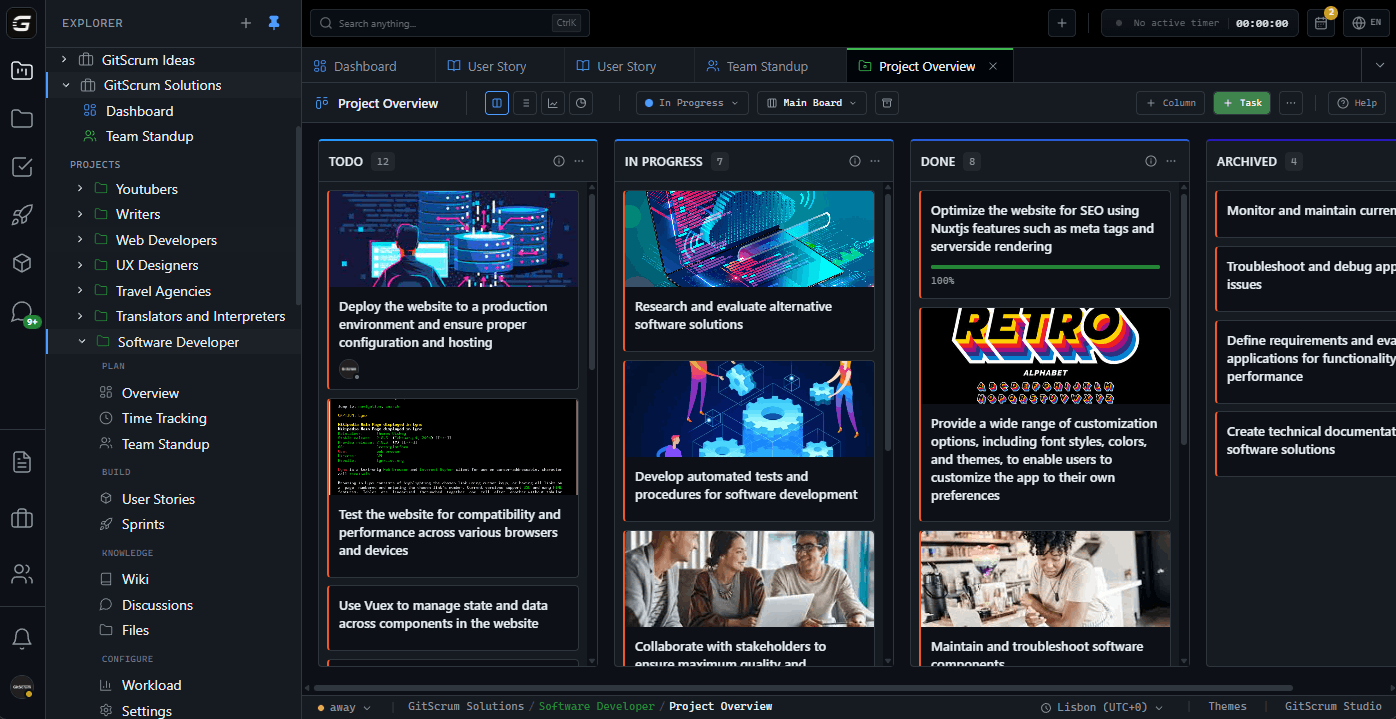
Advanced Boards - Custom fields - Multiple views - WIP limits native - Swimlanes 6. Real Reporting - Sprint reports - Team dashboards - Velocity trends - Client-friendly views For Teams at the Tipping Point You've outgrown GitHub Projects if: - Need to track time - Need client visibility - Need real sprints - Using multiple tools already - Leadership asking for reports You're fine with GitHub Projects if: - Solo or tiny team - Internal project only - No time tracking needed - No client communication - Basic visibility enough Be honest about which stage you're at.

Migration Path From GitHub Projects: 1. Connect GitScrum to GitHub 2.

Import issues as tasks 3. Set up sprints 4.

Configure client access 5. Keep coding in GitHub No disruption to code workflow.

Project management elevated. Pricing Logic GitHub Projects: Free (but limited).

Adding tools to compensate: $$$ and complexity. GitScrum: - 2 users FREE forever - Full features (sprints, time, clients) - $8.90/user/month for larger teams One tool that does PM properly.

Connected to GitHub for code. Simpler and often cheaper than tool sprawl.

The GitScrum Advantage

One unified platform to eliminate context switching and recover productive hours.

01

problem.identify()

The Problem

No real sprints - Milestones aren't sprints. No velocity tracking. No burndown charts. No capacity planning.

No time tracking - Zero time tracking capability. Billing? Use another tool. Reports? Use another tool.

No client access - Give client GitHub access? They'll see code, branches, CI failures. Unprofessional.

Single repo focus - Project tied to one repo. Real projects span multiple repositories. No unified view.

Basic boards only - Simple columns. No custom fields. No swimlanes. No WIP limits. Limited automation.

Minimal reporting - No dashboards. No velocity trends. No sprint reports. Leadership flies blind.

02

solution.implement()

The Solution

Full sprint planning - Real sprints with velocity tracking, burndown charts, backlog grooming. Not milestone workarounds.

Built-in time tracking - Timer on every task. Export for billing. Utilization reports. No third tool needed.

Client Flow portals - Clients see progress without code access. Professional interface. Controlled visibility. Always free.

Cross-repo projects - Connect multiple GitHub repos to one GitScrum project. Unified view across codebase.

Advanced boards - Custom fields, swimlanes, WIP limits, multiple views. Board capabilities that match needs.

Real reporting - Sprint reports, velocity trends, team dashboards. Insights leadership can use.

03

How It Works

1

Connect GitHub

Link your GitHub organization or repos to GitScrum. One-time setup. Automatic syncing from then on.

2

Import or Create

Import existing GitHub issues or create fresh tasks. Set up sprints. Configure boards. Minutes to ready.

3

Code Normally

Keep coding in GitHub. Commits appear on GitScrum tasks. PRs link automatically. Branch names connected.

4

Manage Properly

Sprint planning, time tracking, client access. Full PM capabilities. GitHub handles code, GitScrum handles project.

04

Why GitScrum

GitScrum addresses GitHub Projects Alternative - When Issues Aren't Enough through Kanban boards with WIP limits, sprint planning, and workflow visualization

Problem resolution based on Kanban Method (David Anderson) for flow optimization and Scrum Guide (Schwaber and Sutherland) for iterative improvement

Capabilities

  • Kanban boards with WIP limits to prevent overload
  • Sprint planning with burndown charts for predictable delivery
  • Workload views for capacity management
  • Wiki for process documentation
  • Discussions for async collaboration
  • Reports for bottleneck identification

Industry Practices

Kanban MethodScrum FrameworkFlow OptimizationContinuous Improvement

Frequently Asked Questions

Still have questions? Contact us at customer.service@gitscrum.com

Can I keep using GitHub for code while using GitScrum for PM?

Yes. That's the point. GitHub handles code, pull requests, CI/CD. GitScrum handles sprints, time tracking, client communication. They connect. Commits appear on tasks. Best of both worlds.

What does GitScrum add that GitHub Projects doesn't have?

Real sprints with velocity tracking, built-in time tracking, client portals without code access, cross-repo project views, advanced board features, actual reporting dashboards. Everything you eventually need to bolt onto GitHub Projects.

How does the GitHub integration work?

Connect your GitHub org once. From then on, commits and PRs appear on related tasks automatically. Reference task IDs in commits. Merge a PR, task can update. Code stays in GitHub, context flows to GitScrum.

Is GitScrum free like GitHub Projects?

2 users FREE forever with full features. That's more than GitHub Projects when you count the tools you'd add for time tracking, client access, and sprint planning. $8.90/user/month for larger teams. Simpler than tool sprawl.

Ready to solve this?

Start free, no credit card required. Cancel anytime.

Works with your favorite tools

Connect GitScrum with the tools your team already uses. Native integrations with Git providers and communication platforms.

GitHubGitHub
GitLabGitLab
BitbucketBitbucket
SlackSlack
Microsoft TeamsTeams
DiscordDiscord
ZapierZapier
PabblyPabbly

Connect with 3,000+ apps via Zapier & Pabbly