
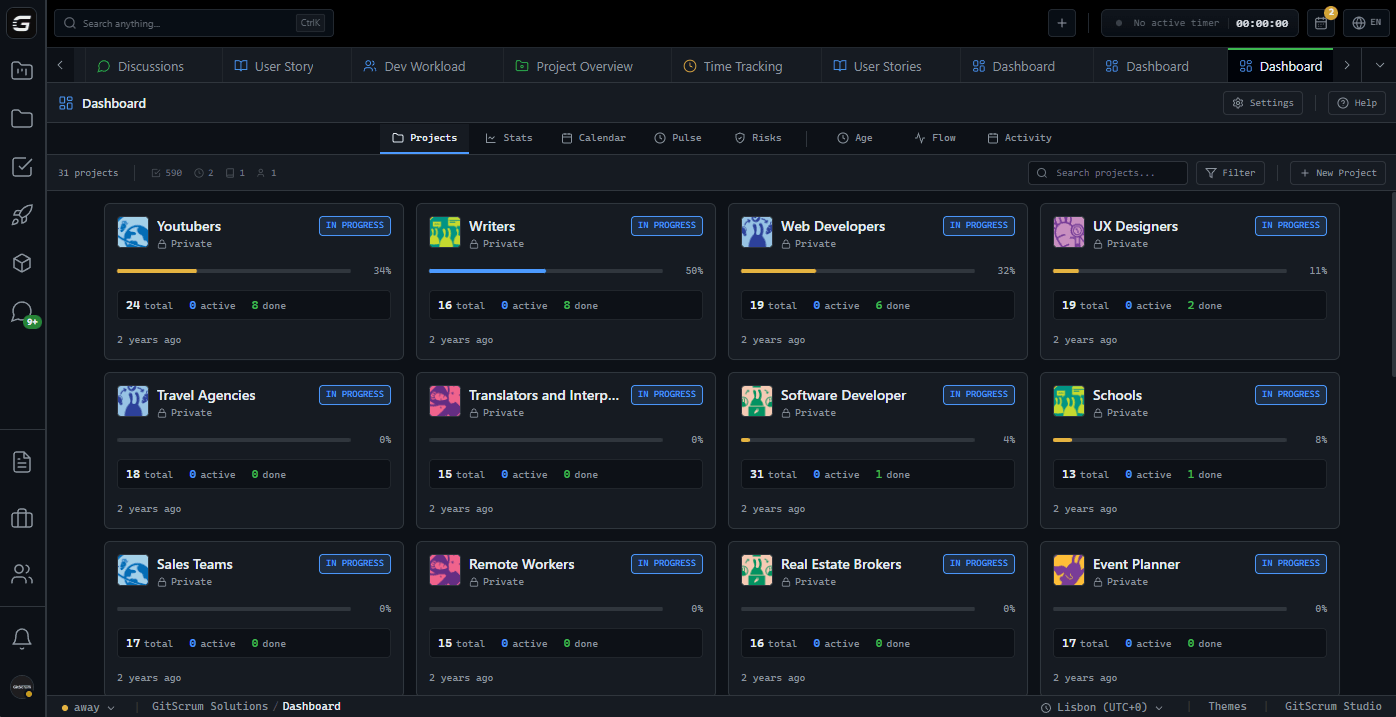








The average developer jounces between a dozen tools a day, and the jumping is the work Each tool keeps its own truth, so the day ends with five versions of the same status Licenses and logins multiply while the work itself stays in one place, a codebase GitScrum answers: One command palette reaches tasks, projects, notes, people and invoices from anywhere in the stack NoteVault and Wiki carry the context, so the tool set shrinks to what the work needs Agents connected through one MCP link do the cross-tool bookkeeping for you Start with one MCP link: connect the workspace so your agents share context with your team.
Launch offer: 87% off the first year — $106.80 instead of $854.40 on the annual Team plan.
The GitScrum Advantage
One unified platform to eliminate context switching and recover productive hours.