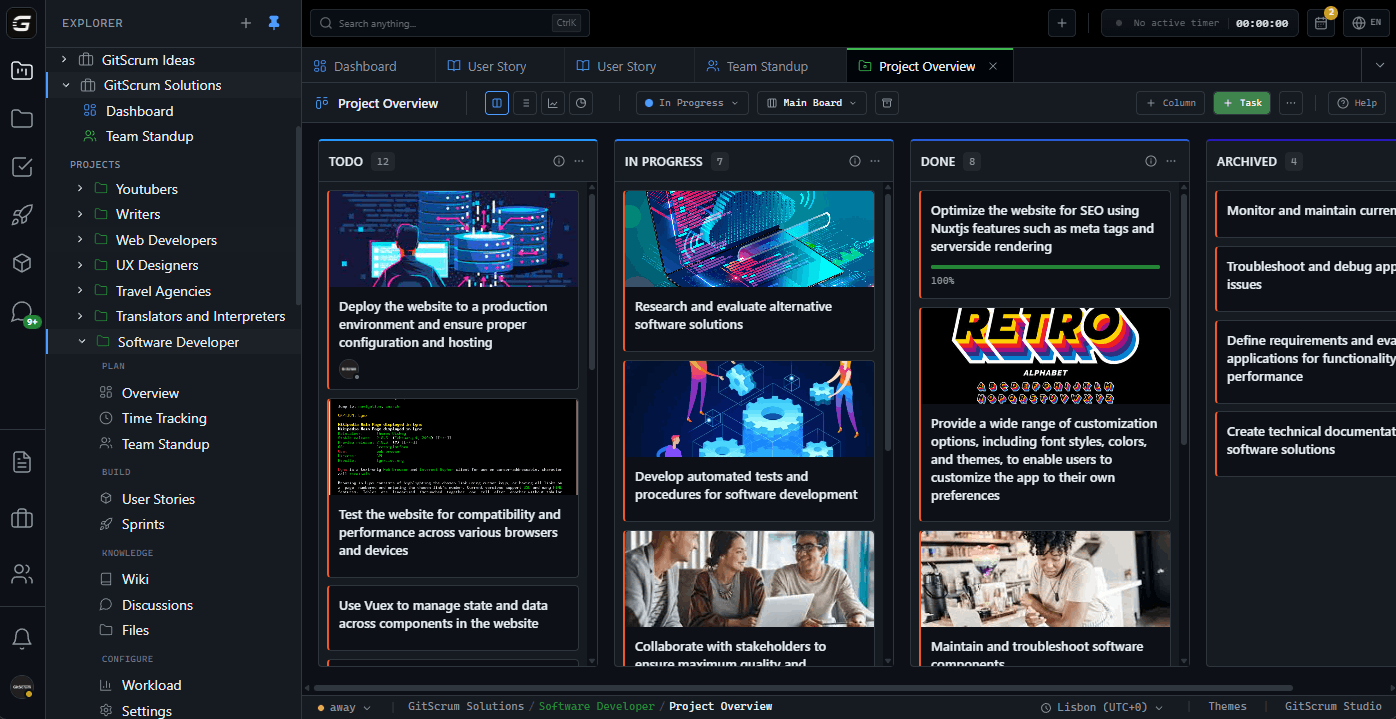
VS Code

GitScrum for VS Code, Google Antigravity, Cursor and Windsurf!

GitScrum logo
Solution

Incident Response Chaos 2026 | Reduce MTTR 50%

3 AM alert fires and nobody knows who owns it. Uncoordinated fixes extend MTTR by hours. GitScrum provides incident commander, coordinated response, and post-incident reviews. Free trial.

Incident Response Chaos 2026 | Reduce MTTR 50%

Production is down.

Customers are complaining. The Slack channel explodes.

Everyone has opinions, but nobody has ownership. Someone restarts the service—did it help?

Who knows, someone else made a database change at the same time. The CEO is asking for updates.

Engineering is heads-down trying to fix. Nobody is communicating.

The fix that works gets discovered by accident, not by systematic investigation. Post-incident, nobody knows what actually happened or what actually fixed it.

The same incident will happen again because the response was chaotic and the learning was minimal.

The GitScrum Advantage

One unified platform to eliminate context switching and recover productive hours.

01

problem.identify()

The Problem

Unclear who owns incident response

Uncoordinated actions make things worse

Outdated runbooks provide wrong guidance

No single source of truth during incident

Post-incident learning doesn't happen

02

solution.implement()

The Solution

Clear incident commander assignment

Coordinated response workflow

Linked and versioned runbooks

Real-time incident timeline

Structured post-incident review

03

How It Works

1

Incident Declaration

GitScrum creates structured incident response: 'Incident #42: API timeout affecting checkout. Severity: P1. Commander: Sarah. Communications: Mike. Status: Investigating. Timeline: Started 03:14 UTC.' Roles are assigned, not assumed.

2

Coordinated Response

Actions are tracked and coordinated: '03:18: Sarah investigating DB connections. 03:22: Mike posting customer communication. 03:25: Sarah: DB connections normal, investigating app servers. 03:28: Tom joining to check deployment history.' Everyone sees what everyone is doing.

3

Linked Resources

Runbooks attach to incidents: 'API timeout runbook: Step 1 (check DB) complete—normal. Step 2 (check app servers) in progress. Last updated: 2 weeks ago by Sarah.' Guidance is current and tracked.

4

Post-Incident Learning

After resolution, structured review: 'Incident #42: Root cause (memory leak in v4.2.1). Contributing factors (no memory monitoring). Action items (add monitoring—assigned to Tom, review deploy process—assigned to Sarah). Review complete, learning documented.'

04

Why GitScrum

GitScrum addresses Incident Response Chaos through Kanban boards with WIP limits, sprint planning, and workflow visualization

Problem resolution based on Kanban Method (David Anderson) for flow optimization and Scrum Guide (Schwaber and Sutherland) for iterative improvement

Capabilities

  • Kanban boards with WIP limits to prevent overload
  • Sprint planning with burndown charts for predictable delivery
  • Workload views for capacity management
  • Wiki for process documentation
  • Discussions for async collaboration
  • Reports for bottleneck identification

Industry Practices

Kanban MethodScrum FrameworkFlow OptimizationContinuous Improvement

Frequently Asked Questions

Still have questions? Contact us at customer.service@gitscrum.com

What if the incident commander is unavailable?

Escalation chain activates: 'Sarah unavailable after 2 pages (5 min). Escalating to Tom (backup commander).' Commander role has explicit backup. No incident waits for one person.

How do we prevent chaos from too many people trying to help?

Commander controls who's actively working. 'Investigators: Sarah, Tom. Observers: All others stay out of systems.' Help is welcome, but coordinated. Random helpers can watch the timeline and offer suggestions through the commander.

What if the runbook is wrong during an incident?

Mark it wrong and continue: 'Step 3 incorrect—DB path changed. Updating runbook during incident.' The fix for the runbook is part of the incident timeline. Next time, the runbook is correct.

How do we make post-incident reviews happen?

Schedule them automatically: 'Incident resolved. Post-incident review scheduled: 48 hours from now. Required attendees: Incident participants.' Reviews aren't optional—they're part of the incident lifecycle.

Ready to solve this?

Start free, no credit card required. Cancel anytime.

Works with your favorite tools

Connect GitScrum with the tools your team already uses. Native integrations with Git providers and communication platforms.

GitHubGitHub
GitLabGitLab
BitbucketBitbucket
SlackSlack
Microsoft TeamsTeams
DiscordDiscord
ZapierZapier
PabblyPabbly

Connect with 3,000+ apps via Zapier & Pabbly