Development work requires sustained attention.
Writing code, debugging problems, designing architecture—these activities benefit from uninterrupted focus. But the tools and processes surrounding development work constantly interrupt that focus.
A developer needs to update a ticket—the project management tool takes ten seconds to load, another five to navigate, and the interface requires multiple clicks to change a simple status. That is a minute lost, plus the mental context switch.
The build system sends a notification—checking it requires switching applications, which might lead to checking email or Slack, which triggers another context switch. The daily standup requires summarizing work that should be visible in the tools but is not, so developers prepare updates rather than coding.
A code review comment requires navigating between GitHub and the task tracker to link context. Each process step designed to provide visibility or coordination creates its own interruption.
Developers describe death by a thousand cuts—no single inefficiency is catastrophic, but the cumulative effect destroys the flow state that productive development requires. Teams try to protect developer time with no-meeting blocks or focus hours, but the tools themselves continue to interrupt.
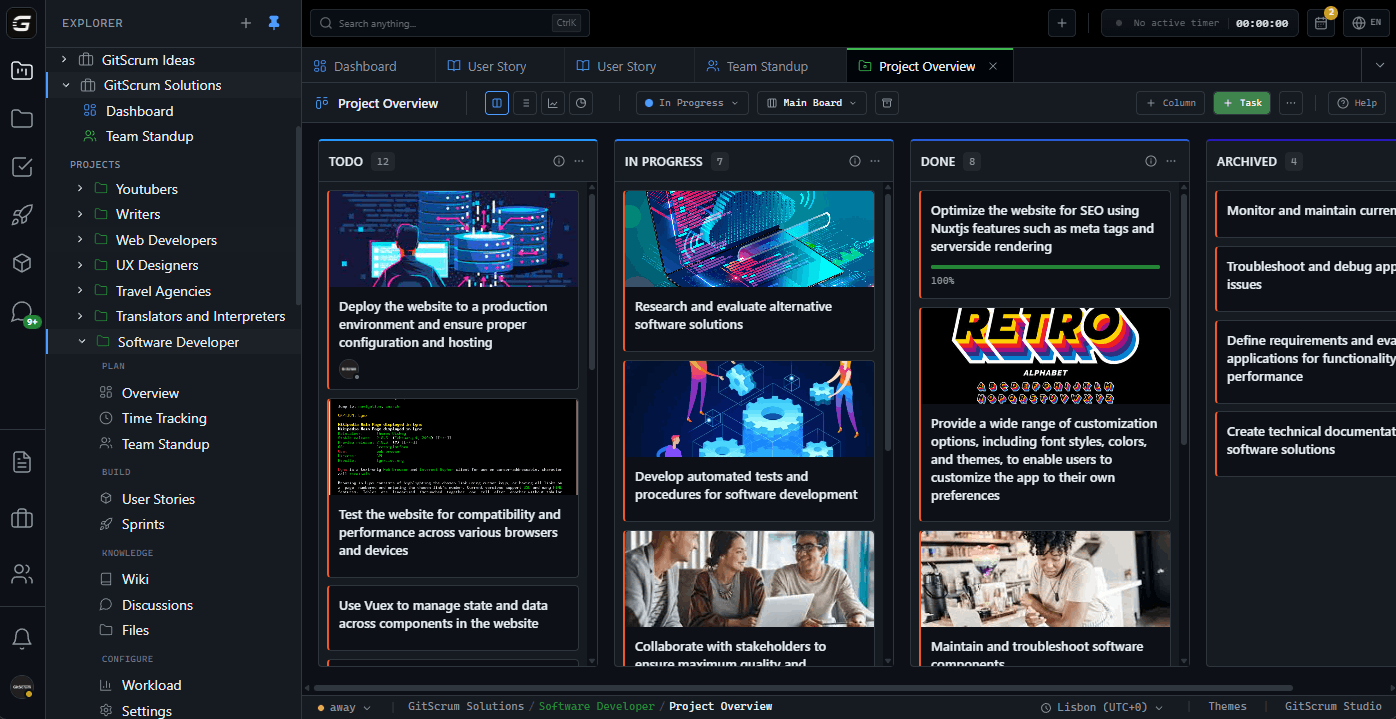
The inefficiency is baked into the operational infrastructure. GitScrum provides a streamlined development workflow with fast, integrated interfaces.
Quick actions, connected context, and minimal process friction. The tools enable work rather than interrupting it.
The GitScrum Advantage
One unified platform to eliminate context switching and recover productive hours.