Linear: The Developer's Darling Linear is genuinely great.
What Linear does well: ├─ Beautiful, fast UI ├─ Keyboard-first design ├─ Clean aesthetic ├─ Developer-focused mindset ├─ Good GitHub integration ├─ Cycles (their sprint concept) ├─ Roadmaps ├─ Minimal but powerful └─ Genuinely enjoyable to use No shade at Linear. It's excellent.
But There Are Reasons to Look Elsewhere 1. Pricing Barrier Linear pricing: ├─ Free: Only for 250 issues (total, ever) ├─ Standard: $8/user/month ├─ Plus: $14/user/month ├─ Enterprise: Custom └─ No free tier for teams That '250 issues forever' free tier: - Not 250 active issues - 250 issues TOTAL in workspace lifetime - Most teams hit that in 1-2 months - Then it's $8/user minimum For a 10-person startup: $8 x 10 = $80/month $960/year from day one 2.
Feature Set Differences Linear keeps things minimal. Great for some, limiting for others.
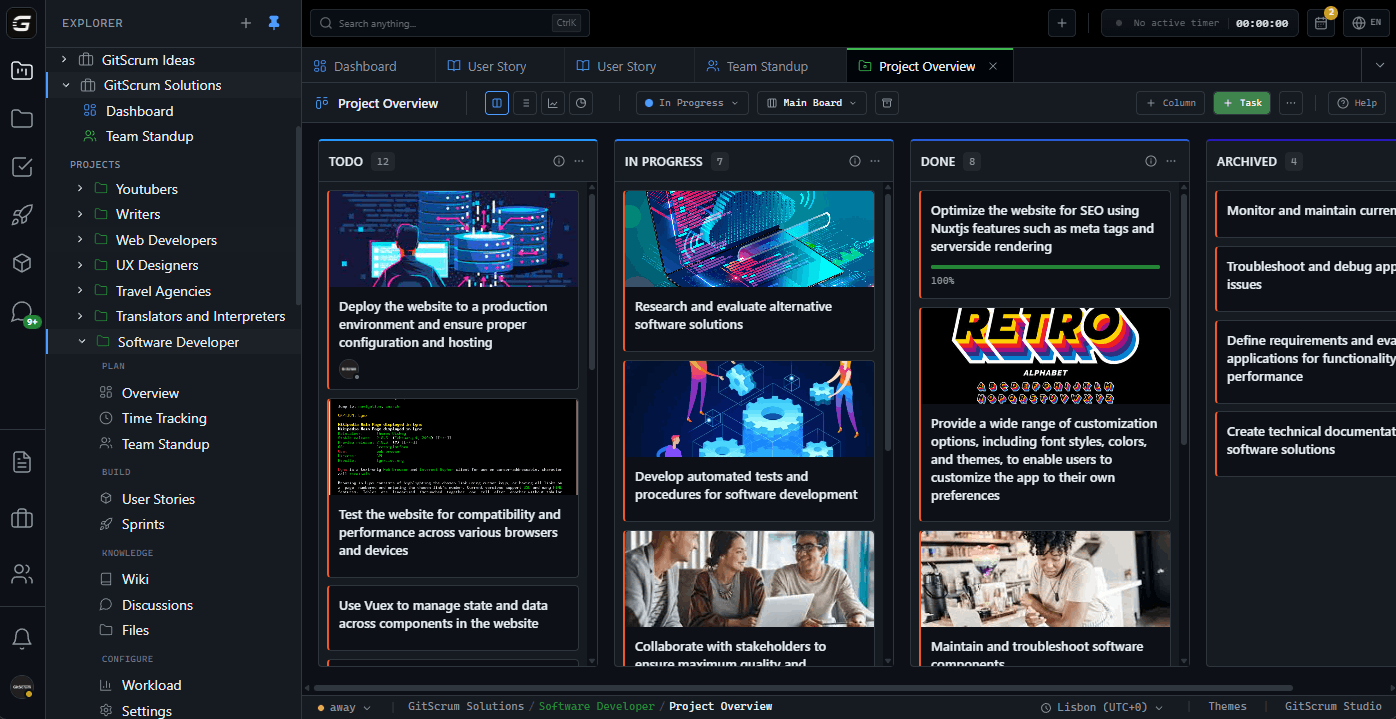
What Linear has: ├─ Issues ├─ Cycles (sprints) ├─ Projects ├─ Roadmaps ├─ Teams ├─ Views └─ Integrations What Linear doesn't have: ├─ Built-in time tracking ├─ Story points (uses estimates differently) ├─ Traditional burndown charts ├─ Detailed velocity tracking ├─ Client management ├─ Wiki/documentation └─ As flexible customization 3. GitHub Integration Comparison Linear GitHub integration: ├─ Link PRs to issues ├─ Auto-close on merge (with keywords) ├─ Branch name suggestions ├─ PR status visible └─ Good, but not automatic status flow GitScrum GitHub integration: ├─ Auto move task on branch create ├─ Auto move task on PR open ├─ Auto complete on merge ├─ Auto time tracking from commits ├─ Full status automation └─ Zero manual updates needed The Difference: - Linear: Shows GitHub activity on issues - GitScrum: Drives task workflow from GitHub activity Pricing Deep Dive Linear Total Cost: ├─ 2 users: $16/month (no free option) ├─ 5 users: $40/month ├─ 10 users: $80/month ├─ 20 users: $160/month ├─ 50 users: $400/month └─ Year 1 for 10 users: $960 GitScrum Total Cost: ├─ 2 users: $0/month (free forever) ├─ 5 users: $26.70/month (3 paid) ├─ 10 users: $71.20/month (8 paid) ├─ 20 users: $160.20/month (18 paid) ├─ 50 users: $427.20/month (48 paid) └─ Year 1 for 10 users: $854.40 Savings for 10-person team: ├─ Monthly: $8.80 ├─ Yearly: $105.60 ├─ 3 years: $316.80 └─ Plus: 2 users always free Small savings, but: - 2 free users is significant for bootstrapped startups - Can start building without any cost - Scale up organically Feature Comparison | Feature | Linear | GitScrum | |----------------------|---------------|------------------| | Task management | ✓ | ✓ | | Clean UI | ✓ | ✓ | | Fast performance | ✓ | ✓ | | Sprint/Cycles | ✓ | ✓ | | GitHub integration | Good | Native/Auto | | Auto status updates | Partial | Full | | Story points | Estimates | Traditional | | Velocity tracking | Limited | Full | | Burndown charts | Basic | Full | | Time tracking | ✗ | Built-in + Git | | Wiki | ✗ | Built-in | | Client management | ✗ | Client-flow | | Free tier | 250 issues | 2 users forever | | Price/user | $8 | $8.90 | When Linear Is Better Stick with Linear if: ├─ You love Linear's aesthetic (it IS beautiful) ├─ Keyboard-driven workflow is essential ├─ Team already uses and loves it ├─ Budget isn't a primary concern ├─ Don't need time tracking ├─ Don't need detailed velocity metrics ├─ Roadmaps feature is critical └─ Integration ecosystem is important When GitScrum Is Better Switch to GitScrum if: ├─ 2 free users matters for bootstrap stage ├─ Want automatic status from Git activity ├─ Need built-in time tracking ├─ Want traditional story points ├─ Need detailed burndown charts ├─ Client visibility matters ├─ Need project wiki ├─ GitHub integration should drive workflow └─ Starting fresh without tool investment The Startup Consideration Bootstrapping a startup?
Linear path: ├─ Day 1: $0 (250 issues limit) ├─ Month 2: Hit limit, pay $8/user ├─ 3 founders: $24/month ├─ First year: ~$250 ├─ Must budget from early stage GitScrum path: ├─ Day 1: $0 (2 users free forever) ├─ Month 12: Still $0 if 2 founders ├─ Add 3rd person: $8.90/month ├─ First year (2 people): $0 ├─ Scale when ready For pre-revenue startups, $0 > $24/month. Migration Approach If you're on Linear and want to try: 1.
Export Linear issues (CSV) 2. Sign up GitScrum free 3.
Import issues 4. Connect GitHub repos 5.
Run parallel for 2 weeks 6. Compare experience 7.
Choose what works No commitment required. What You Lose from Linear Being honest: ├─ Linear's polish and animations ├─ Specific keyboard shortcuts ├─ Roadmap visualization style ├─ Linear's unique estimate system ├─ Triage workflow ├─ Specific integrations (Figma, etc.) └─ 'Linear aesthetic' What You Gain in GitScrum ├─ 2 users free forever ├─ Full Git workflow automation ├─ Built-in time tracking ├─ Traditional story points ├─ Detailed velocity tracking ├─ Full burndown charts ├─ Project wiki ├─ Client management └─ Auto time from Git commits Real Team Perspective 'We started with Linear because everyone said it was the best for devs.
And it is beautiful. But when we went from 2 to 5 people, suddenly $40/month for a PM tool felt steep for a bootstrapped startup.
GitScrum's 2 free users let us delay that cost, and the auto-status from Git actually saves more time than Linear's manual linking.' - CTO, Early-stage startup Vs Other Alternatives Jira: - Enterprise bloat - Complex setup - Expensive - Not developer-focused Asana: - Marketing-focused - No Git integration - No sprints ClickUp: - Feature bloated - Slow performance - Developer unfriendly GitHub Issues: - Too basic - No sprints - Limited views GitScrum: - Developer-focused like Linear - Better Git automation - Time tracking included - 2 users free Pricing Summary 2 users: $0/month (free forever, all features) 5 users: $26.70/month 10 users: $71.20/month No issue limits. No feature restrictions.
All integrations included. Try Free 1.
Sign up (2 users free forever) 2. Connect GitHub/GitLab 3.
Import backlog or start fresh 4. Create sprint 5.
Experience full Git automation $8.90/user/month. 2 users free forever.
The Linear alternative with free tier and Git automation.
The GitScrum Advantage
One unified platform to eliminate context switching and recover productive hours.