VS Code

GitScrum for VS Code, Google Antigravity, Cursor and Windsurf!

GitScrum logo
Solution

Task Dependency Management 2026 | Blocker Tracking

Hidden task dependencies cause 35% of sprint delays. GitScrum shows blockers via swimlanes, parent-child hierarchies, and flags. Resolve critical path issues fast. Free trial.

Task Dependency Management 2026 | Blocker Tracking

Dependencies are the hidden landmines of software development.

Developer A starts work on the payment integration, not knowing that Developer B's authentication refactor will break the API they depend on. Work proceeds in parallel until the integration point—then everything stops while dependencies are untangled.

Critical path isn't visible: which tasks block other tasks? What needs to finish first?

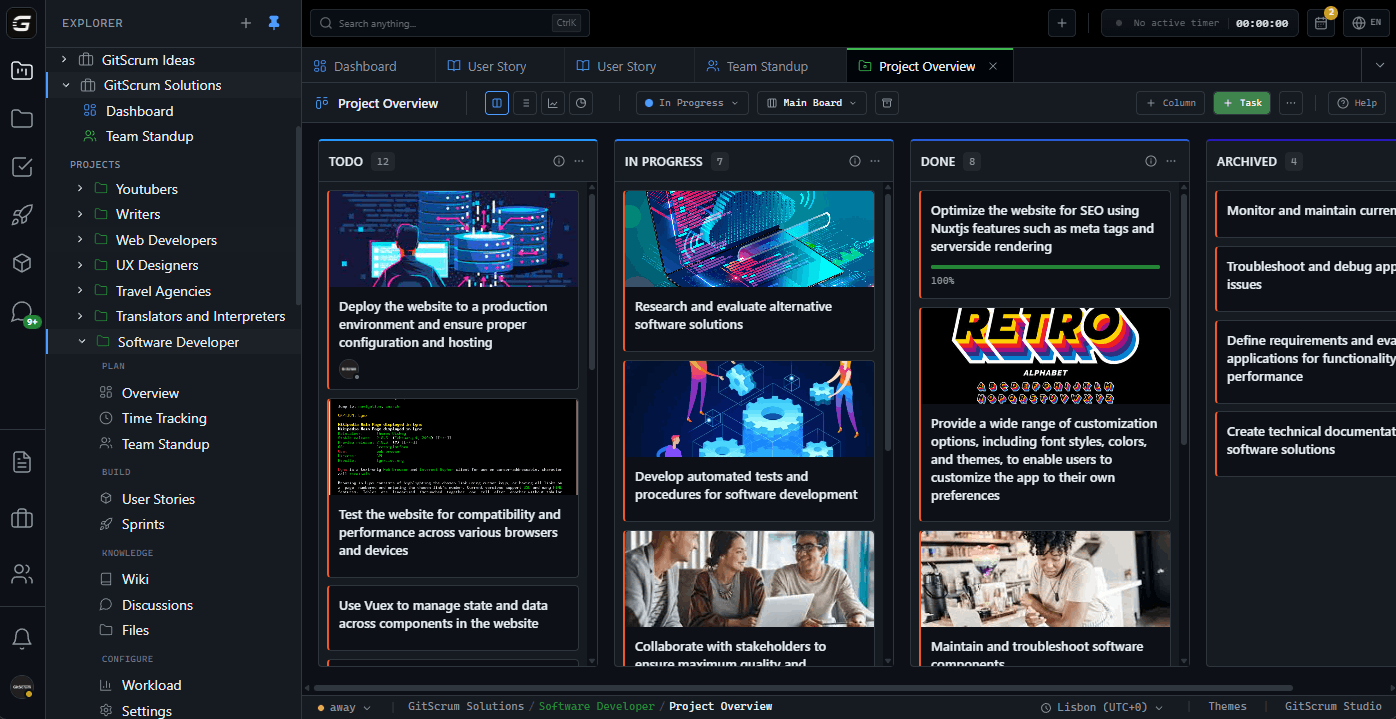
Without explicit dependency tracking, teams discover blockers reactively, when someone tries to start work and can't. GitScrum addresses this through visual organization: parent-child task relationships, blocker flags that surface blocked work, board swimlanes that group related work.

Dependencies become visible before they become problems.

The GitScrum Advantage

One unified platform to eliminate context switching and recover productive hours.

01

problem.identify()

The Problem

Work blocked by dependencies discovered only when trying to start

No visibility into which tasks block other tasks

Critical path unclear—don't know what needs to finish first

Parallel work creates merge conflicts and integration nightmares

Cross-team dependencies managed through meetings instead of tracking

02

solution.implement()

The Solution

Parent-child task hierarchy shows decomposition and relationships

Blocker flags surface blocked tasks visually on the board

Swimlanes organize dependent work streams for visual clarity

Task comments document dependencies and handoff requirements

Backlog ordering respects dependency sequence naturally

03

How It Works

1

Structure with Parent Tasks

Use User Stories as parent tasks with implementation sub-tasks. The hierarchy makes dependencies implicit: sub-tasks contribute to parent completion. For technical dependencies, create explicit parent tasks: 'Auth API v2' with sub-tasks that must complete before consuming tasks can start.

2

Mark Blockers Explicitly

When a task can't proceed because another task must finish first, mark it blocked. GitScrum shows blocked tasks distinctly on the board. Include what it's blocked by in the task description or comments: 'Blocked by: Auth API migration (TASK-234)'. The blocker is visible to everyone.

3

Organize Swimlanes by Workstream

Use board swimlanes to group related work: Frontend, Backend, Infrastructure. Dependent work flows through swimlanes: Backend API must reach 'Done' before Frontend integration starts. The visual layout makes handoff points obvious. Bottlenecks appear as work piles up waiting for dependencies.

4

Sequence Backlog Correctly

Order backlog items respecting dependencies: task that must finish first appears higher. When pulling into sprint, pull dependencies first. If you can't complete the dependency in this sprint, don't pull the dependent task. Backlog order enforces sequence naturally.

5

Communicate at Handoff Points

When completing a task that unblocks others, notify in the task comments: 'API ready for integration. Endpoint docs: [link]'. The dependent task assignee gets notified. Include what they need: API specs, test credentials, expected behavior. Clean handoffs prevent 'it works on my machine' delays.

04

Why GitScrum

GitScrum addresses Managing Dependencies Between Tasks through Kanban boards with WIP limits, sprint planning, and workflow visualization

Problem resolution based on Kanban Method (David Anderson) for flow optimization and Scrum Guide (Schwaber and Sutherland) for iterative improvement

Capabilities

  • Kanban boards with WIP limits to prevent overload
  • Sprint planning with burndown charts for predictable delivery
  • Workload views for capacity management
  • Wiki for process documentation
  • Discussions for async collaboration
  • Reports for bottleneck identification

Industry Practices

Kanban MethodScrum FrameworkFlow OptimizationContinuous Improvement

Frequently Asked Questions

Still have questions? Contact us at customer.service@gitscrum.com

How do we identify dependencies before they block work?

During planning: for each task ask 'What do we need before starting?' Document answers in task description. Look for: API contracts, database schemas, external services, other team's output. If something isn't ready, don't pull the dependent task into sprint. Identify dependencies upfront, not when blocked.

How do we handle cross-team dependencies?

Create shared visibility. The depending team creates a task referencing what they need. Share with providing team: 'We need Auth API v2 by end of Sprint 5.' Both teams track the dependency. Regular sync (async or brief meeting) surfaces blockers early. Cross-team dependencies need more explicit communication.

What if a dependency is delayed?

Adapt early. If blocker won't clear in time: can you work around it? Mock the dependency? Parallelize differently? If not, dependent work moves to next sprint—better than sitting blocked. Communicate the delay impact immediately. Dependency delays are normal; late discovery is the problem.

Should we avoid all dependencies?

No—some are unavoidable. Backend before frontend, infrastructure before deployment. But minimize unnecessary dependencies: design for parallel work, use contracts/interfaces over implementations, avoid work that requires sequential handoffs. Dependencies have cost; don't create them casually.

How do we track dependencies in a visual board?

Multiple approaches: swimlanes for workstreams, blocker labels/flags for blocked tasks, comments linking dependent tasks. The board shows flow—if work piles up in one swimlane waiting for another, the dependency bottleneck is visible. You don't need formal Gantt charts; visual flow reveals dependencies.

Ready to solve this?

Start free, no credit card required. Cancel anytime.

Works with your favorite tools

Connect GitScrum with the tools your team already uses. Native integrations with Git providers and communication platforms.

GitHubGitHub
GitLabGitLab
BitbucketBitbucket
SlackSlack
Microsoft TeamsTeams
DiscordDiscord
ZapierZapier
PabblyPabbly

Connect with 3,000+ apps via Zapier & Pabbly