GitScrum PRO Annual — 2,500+ SaaS apps via MCP

GitScrum logo
Solution

Dependency Chains in Large Backlogs 2026 | Guide

Hidden dependencies cause 40% of sprint failures. GitScrum tracks parent-child relationships and blockers with timestamps in standup views. Prevent delays. Free trial.

Dependency Chains in Large Backlogs 2026 | Guide

Large product backlogs often hide complex dependency chains that surface during sprint execution, causing unexpected delays.

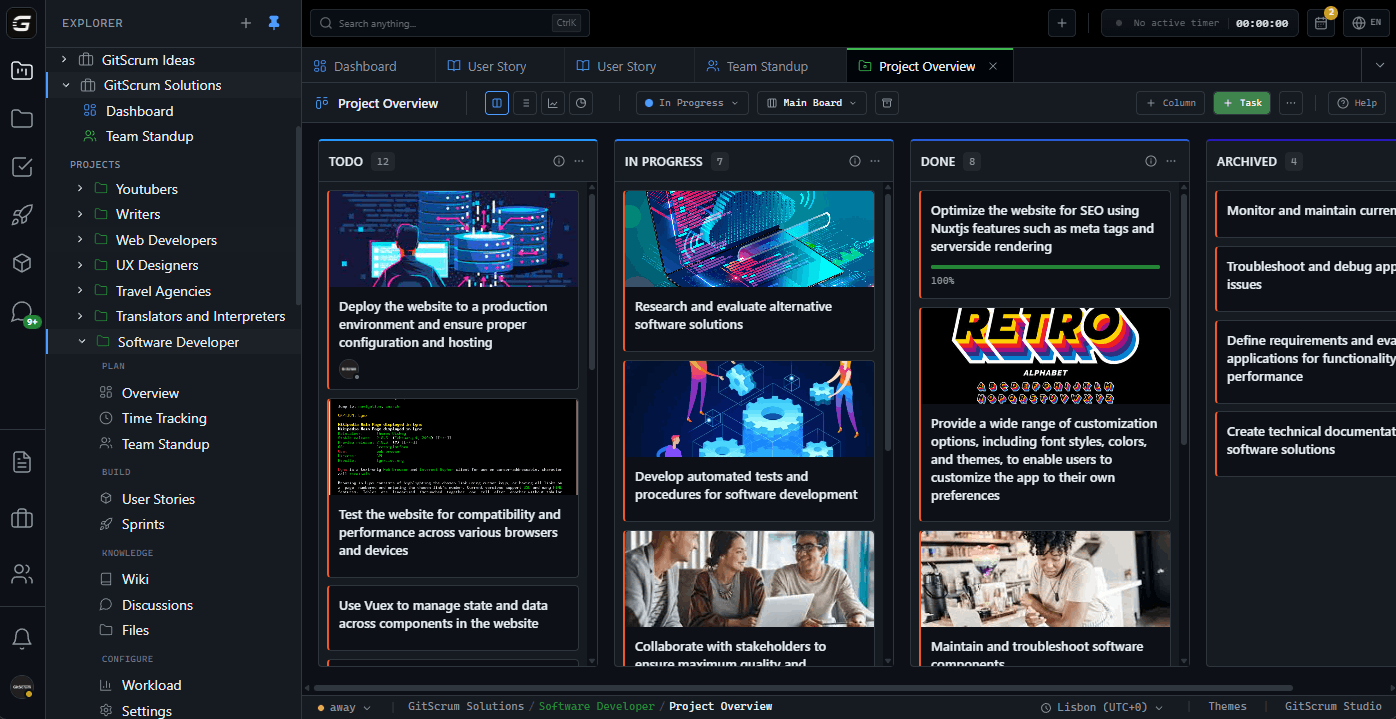
GitScrum provides robust dependency management through parent-child task relationships, subtask linking capabilities, and explicit blocker tracking. Teams can link existing tasks as subtasks, view related tasks in a dedicated panel, and mark tasks as blocked with user attribution and timestamps.

The standup blockers view aggregates all blocked items across projects, showing hours blocked and critical status for immediate escalation.

The GitScrum Advantage

One unified platform to eliminate context switching and recover productive hours.

01

problem.identify()

The Problem

Teams lack visibility into bottlenecks and delays

Manual coordination wastes time and creates errors

No unified view of work across teams and stages

Blockers remain hidden until they cause major delays

Metrics and reporting require manual data gathering

02

solution.implement()

The Solution

Automated workflows eliminate manual coordination overhead

Real-time dashboards provide instant visibility into work status

Unified boards show all work across teams in one place

Blocker tracking surfaces hidden delays before they escalate

Built-in metrics provide automatic reporting without manual effort

03

How It Works

1

Create Task Hierarchies

Structure work into parent tasks with subtasks to represent natural dependency flows

2

Link Related Tasks

Search and link existing tasks as subtasks to create cross-cutting dependency relationships

3

Track Blockers Explicitly

Mark tasks as blocked with who blocked them and when, triggering email notifications

4

Monitor Standup Blockers

Review all blocked tasks in the team standup view with hours blocked and critical status

04

Why GitScrum

GitScrum addresses Managing Dependency Chains in Large Product Backlogs through Kanban boards with WIP limits, sprint planning, and workflow visualization

Problem resolution based on Kanban Method (David Anderson) for flow optimization and Scrum Guide (Schwaber and Sutherland) for iterative improvement

Capabilities

  • Kanban boards with WIP limits to prevent overload
  • Sprint planning with burndown charts for predictable delivery
  • Workload views for capacity management
  • Wiki for process documentation
  • Discussions for async collaboration
  • Reports for bottleneck identification

Industry Practices

Kanban MethodScrum FrameworkFlow OptimizationContinuous Improvement

Frequently Asked Questions

Still have questions? Contact us at customer.service@gitscrum.com

How does GitScrum help with managing dependency chains in large product backlogs?

GitScrum provides integrated tools including tasks, board, team-standups, project-management, workflow-builder that work together to address this challenge. The unified platform eliminates the need for multiple disconnected tools and manual coordination.

How quickly can teams see results?

Most teams see immediate improvements in visibility and coordination within the first sprint. Quantifiable productivity gains typically appear within 2-4 weeks as teams adapt to the streamlined workflows.

Ready to solve this?

Start free, no credit card required. Cancel anytime.

Works with your favorite tools

Connect GitScrum with the tools your team already uses. Native integrations with Git providers and communication platforms.

GitHubGitHub
GitLabGitLab
BitbucketBitbucket
SlackSlack
Microsoft TeamsTeams
DiscordDiscord
ZapierZapier
PabblyPabbly

Connect with 3,000+ apps via Zapier & Pabbly