Modern development workflows generate data in multiple systems: project requirements in documentation tools, task breakdowns in project management, time entries in tracking systems, client details in CRMs, financial data in invoicing platforms.
These systems typically do not communicate with each other. The result is constant manual data transfer.
A project manager creates a requirements document, then manually creates corresponding tasks in the project tool. A developer logs time against a task, then manually enters the same information in a separate time tracking system for billing.
A team lead compiles a status report by manually copying information from four different tools into a slide deck. Each manual transfer has multiple costs: the time to perform the transfer, the risk of transcription errors, the possibility of inconsistency when source data changes, and the cognitive overhead of remembering what data needs to go where.
Organizations develop elaborate processes for data synchronization—weekly reconciliation tasks, monthly audits, dedicated roles for data entry. All of this exists because the tools do not share information.
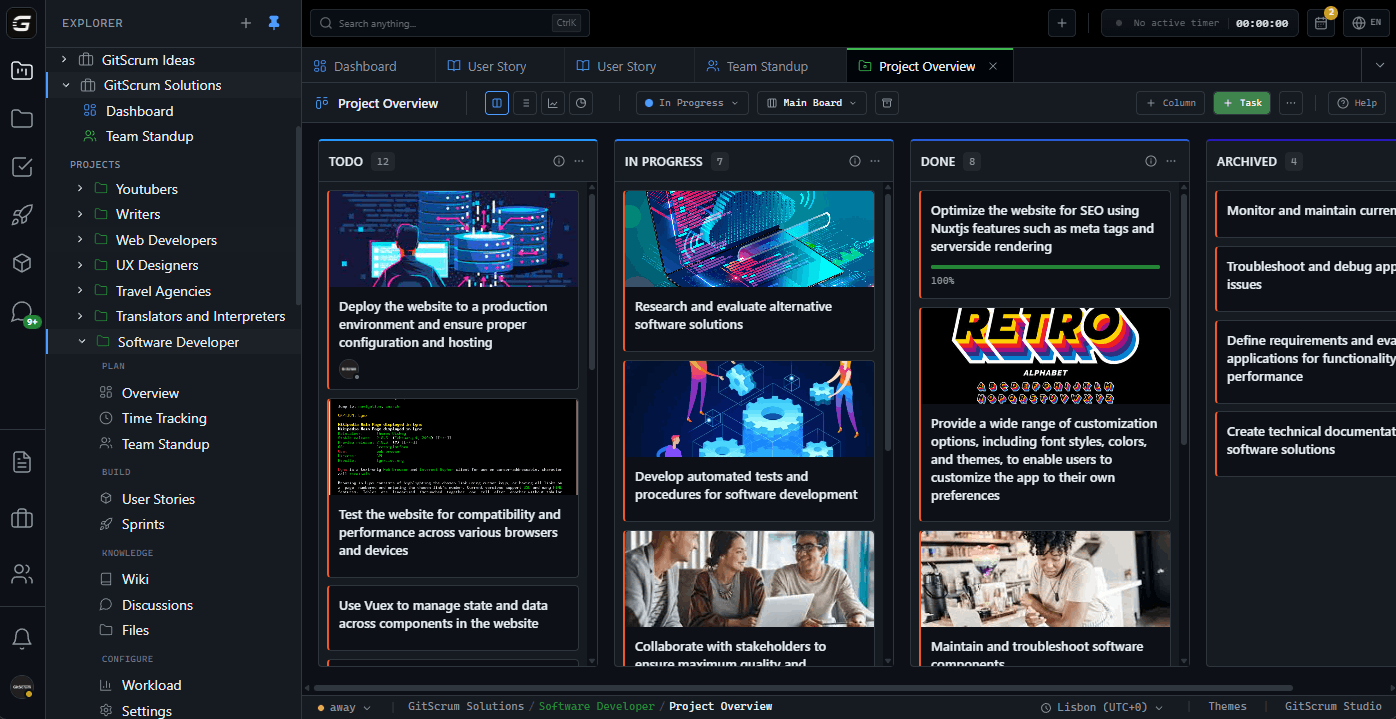
GitScrum provides a unified platform where tasks, time tracking, documentation, and communication share a common data layer. Information entered once is available everywhere it is needed.
No more manual copying between systems. No more transcription errors.
No more reconciliation overhead.
The GitScrum Advantage
One unified platform to eliminate context switching and recover productive hours.