




Meetings generate valuable outcomes: decisions, action items, priority changes, deadline adjustments.
But those outcomes live in meeting notes, and meeting notes rarely live where work gets done. Someone takes notes in Notion, Confluence, Google Docs, or even a shared document.
The notes are comprehensive, well-organized, and completely disconnected from task management. The gap between meeting output and task input is entirely manual.
Someone has to read the notes, identify action items, create corresponding tasks in the project management tool, assign them to the right people, and set appropriate deadlines. In most organizations, this translation happens inconsistently or not at all.
The person taking notes is not always the person managing tasks. Meeting attendees assume someone else will handle the translation.
The PM creates some tasks but misses others. By the time the sprint starts, half the meeting decisions have not made it into the actual work system.
Teams operate on incomplete information. Developers work from their Jira board, which does not reflect the full context from the meeting.
Priority changes discussed verbally never became visible in the task system. The meeting was productive; the execution is broken because the two systems never connected.
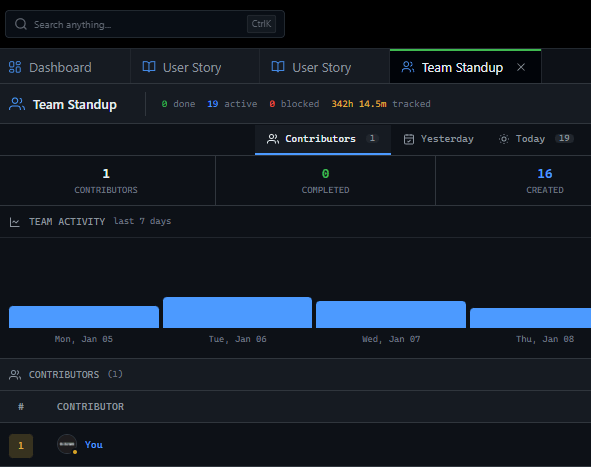
A unified platform eliminates this translation gap. Meeting notes become action items become tasks in a single flow.
Decisions documented in meetings automatically link to affected work. The context from discussion follows through to execution.
The GitScrum Advantage
One unified platform to eliminate context switching and recover productive hours.


